
Bulgaria Facts: 10 Fascinating Things About an Ancient Nation
Discover 10 fascinating Bulgaria facts, from its 681 AD founding and Cyrillic heritage to rose oil, Thracian treasures, and Black Sea resorts.

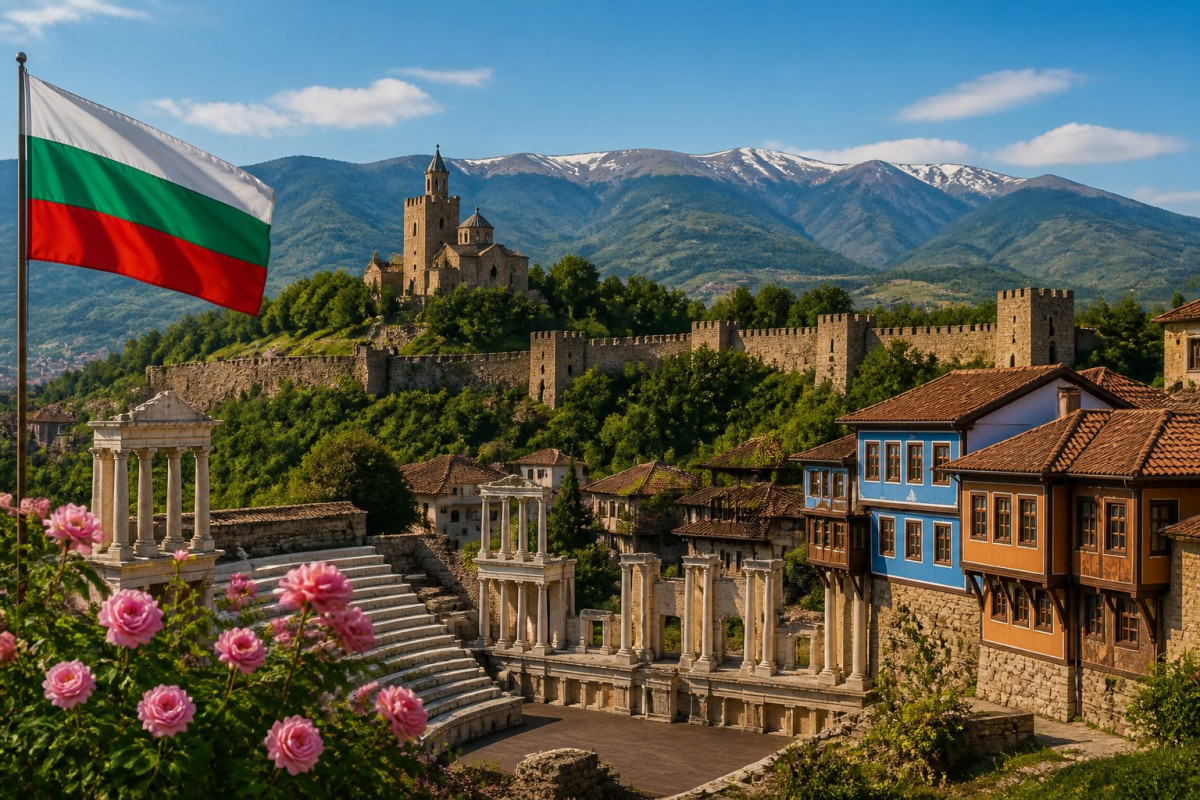
Bulgaria sits in Southeast Europe on the Balkan Peninsula, where it has maintained its identity for over 1,300 years. This country is one of Europe's oldest states, founded in 681 AD, and has kept the same name longer than almost any other nation on the continent. The capital city of Sofia serves as the cultural and commercial heart of the nation, while the Black Sea coastline draws visitors to its eastern shores.
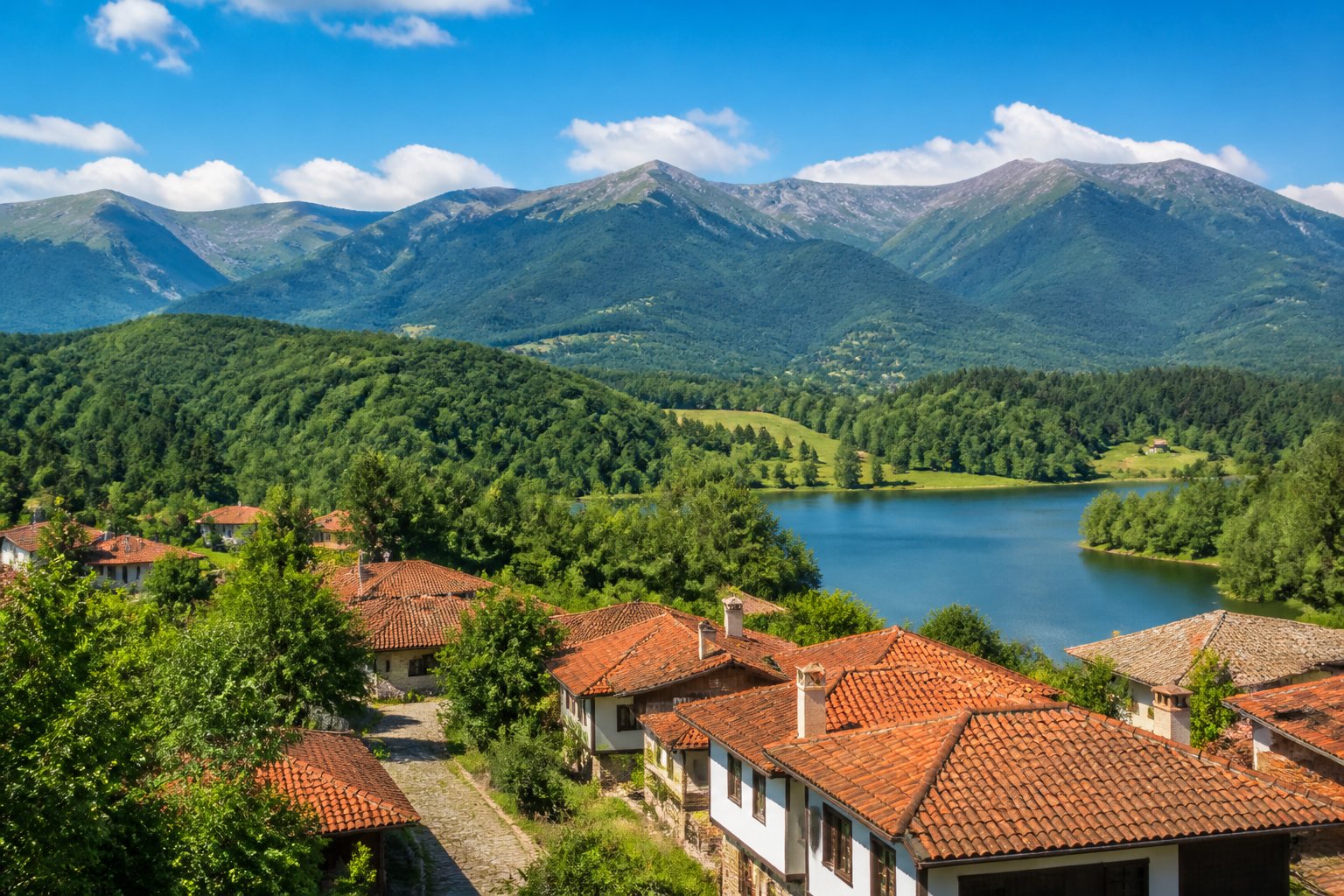
You'll find Bulgaria positioned where the Danube River meets ancient trade routes between Europe and Asia. The country spans diverse landscapes from coastal beaches to the Rila Mountains, the highest range in the Balkans. With a population of about 6.4 million people, Bulgaria offers a mix of historic monasteries, traditional villages, and modern cities.
Bulgaria's cultural contributions extend far beyond its borders. The Cyrillic alphabet was developed here in the First Bulgarian Empire before spreading across Eastern Europe. Today, the country remains a leading producer of rose oil and preserves centuries-old traditions through its folklore, cuisine, and UNESCO World Heritage Sites like the Rila Monastery.
- Bulgaria is one of Europe's oldest countries, founded in 681 AD and located on the Balkan Peninsula between the Danube River and Black Sea
- The country developed the Cyrillic alphabet and contains some of the oldest continuously inhabited cities in the world
- Bulgaria features diverse landscapes from mountain ranges to coastal beaches and is famous for rose oil production and historic monasteries
Essential Facts and Geographic Overview
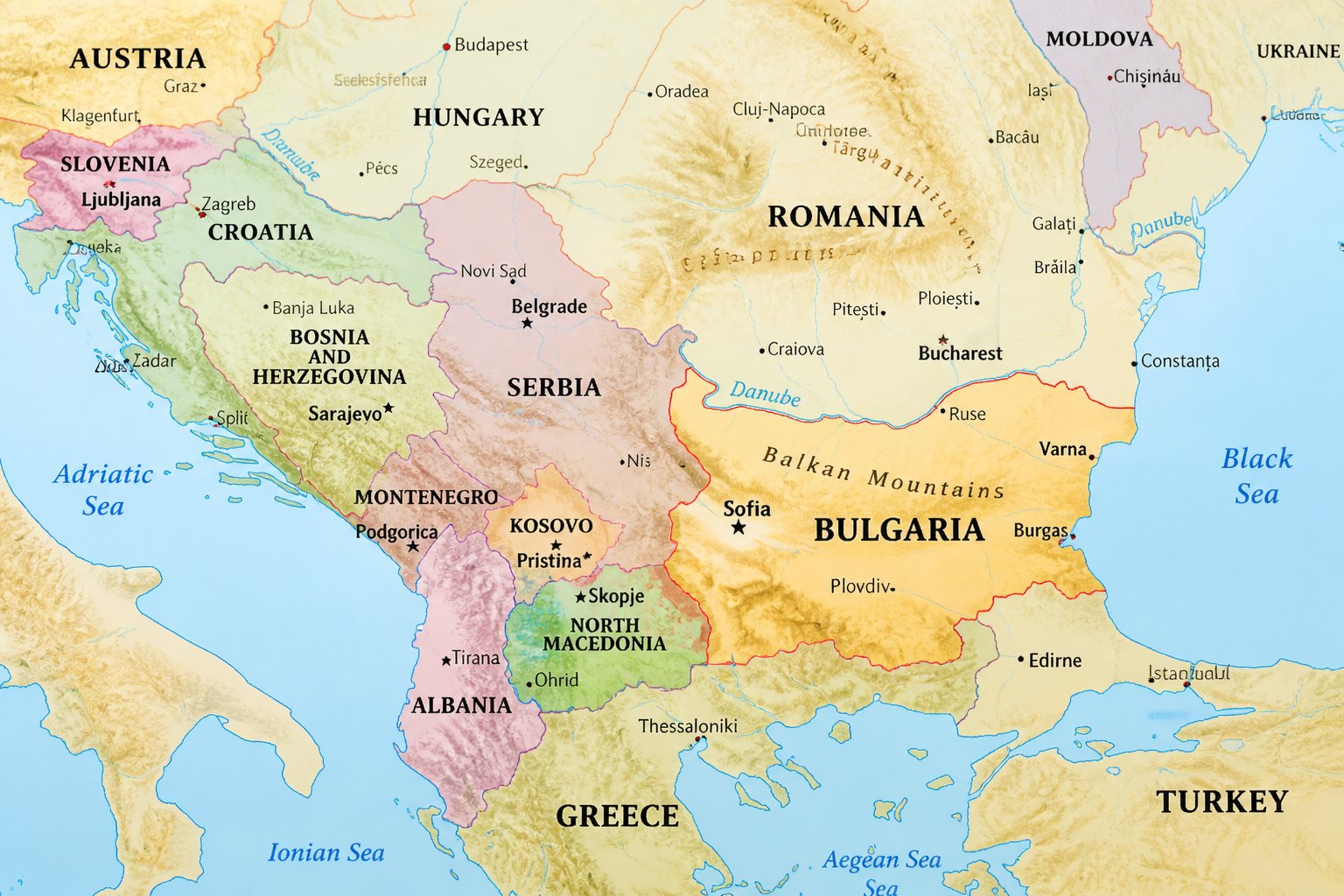
Bulgaria spans 42,615 square miles across the Balkan Peninsula, bordered by five countries and the Black Sea. The nation features diverse terrain from coastal plains to mountain ranges, supports a population of around 6.4 million people, and maintains a temperate continental climate with regional variations.
Location and Borders
Bulgaria is located in Southeast Europe on the eastern portion of the Balkan Peninsula. You'll find it positioned in both the Northern and Eastern hemispheres of Earth.
The country shares borders with five neighbors. Romania lies to the north across the Danube River. Serbia and North Macedonia border Bulgaria to the west. Greece sits along the southern border, while Turkey occupies the southeastern edge.
The Black Sea forms Bulgaria's eastern coastline, stretching for approximately 230 miles. This strategic location has made Bulgaria a crossroads between Europe, Asia, and the Mediterranean for centuries.
Population and Demographics
Bulgaria's population stands at approximately 6.4 million people. Most Bulgarians live in urban areas, with the capital Sofia housing around 1.3 million residents.
The population has been declining in recent decades due to emigration and low birth rates. Ethnic Bulgarians make up about 85% of the population. Turkish and Roma minorities form the largest ethnic groups after Bulgarians.
Bulgarian is the official language, written in the Cyrillic alphabet. The majority of the population identifies as Eastern Orthodox Christian. You'll find the highest population densities in major cities like Sofia, Plovdiv, Varna, and Burgas.
Currency and Economy
Bulgaria uses the Bulgarian lev and in 2026 its official currency, will be the euro.
Modern Bulgaria has a market-based economy. Key industries include manufacturing, agriculture, tourism, and information technology. The country exports machinery, metals, chemicals, and agricultural products.
Bulgaria produces significant quantities of rose oil, wheat, and tobacco. Tourism along the Black Sea coast and in mountain regions contributes substantially to the economy. The service sector employs the largest portion of the workforce.
Climate and Landscapes
Bulgaria experiences a temperate continental climate with four distinct seasons. Winters are cold with snow, especially in mountainous areas. Summers are warm to hot, particularly in lowland regions.
The Balkan Mountains divide the country horizontally, creating different climate zones. North of the range, you'll find the Danubian Plain with colder winters. South of the mountains lies the Thracian Plain, which experiences warmer Mediterranean influences.
The Rila Mountains contain the highest peak in the Balkans at 9,596 feet. Other major ranges include the Pirin and Rhodope Mountains. Coastal areas along the Black Sea enjoy milder winters and sea breezes. The Danube River forms most of the northern border, creating fertile plains for agriculture.
Political Structure and Recent Developments
Bulgaria operates as a parliamentary republic with a president as head of state and a prime minister leading the government. The country has faced significant political instability in recent years, experiencing seven elections between 2021 and 2024 before forming a stable coalition government.
Government and Leadership
Bulgaria's constitution establishes a parliamentary government with separation of powers among executive, legislative, and judicial branches. The president serves as head of state, while the prime minister acts as head of government.
Rumen Radev currently holds the position of president. Rosen Zhelyazkov of the GERB party serves as prime minister after parliament approved a coalition government following years of political deadlock.
The National Assembly functions as Bulgaria's legislative body. You'll find it creates laws and oversees government activities. The constitution guarantees direct presidential elections and protects freedom of speech, press, and religion.
Political Parties
The GERB party emerged as the plurality winner in recent elections. Citizens for European Development of Bulgaria holds the most seats but lacks a clear majority.
A coalition government formed between GERB and We Continue the Change after the 2023 election. This ended two years of caretaker cabinets and repeated early elections. The Bulgarian Socialist Party remains another major political force.
Bulgaria has experienced a multi-party system since the end of single-party communist rule in 1991. This transition brought democratic reforms and new political freedoms to Bulgarians.
European Union and International Relations
Bulgaria joined the European Union in 2007. However, you should note the country has not yet adopted the euro as its currency.
Bulgaria's EU membership has attracted foreign investment in information technology and automotive industries. The World Bank classifies Bulgaria as an upper-middle-income country. Its strategic location in Southeastern Europe and relatively low business costs make it attractive to international companies.
The country maintains diplomatic relations with neighboring Balkan states and participates in European political institutions. Sofia serves as the capital and center of political activity.
Historical Timeline and National Heritage
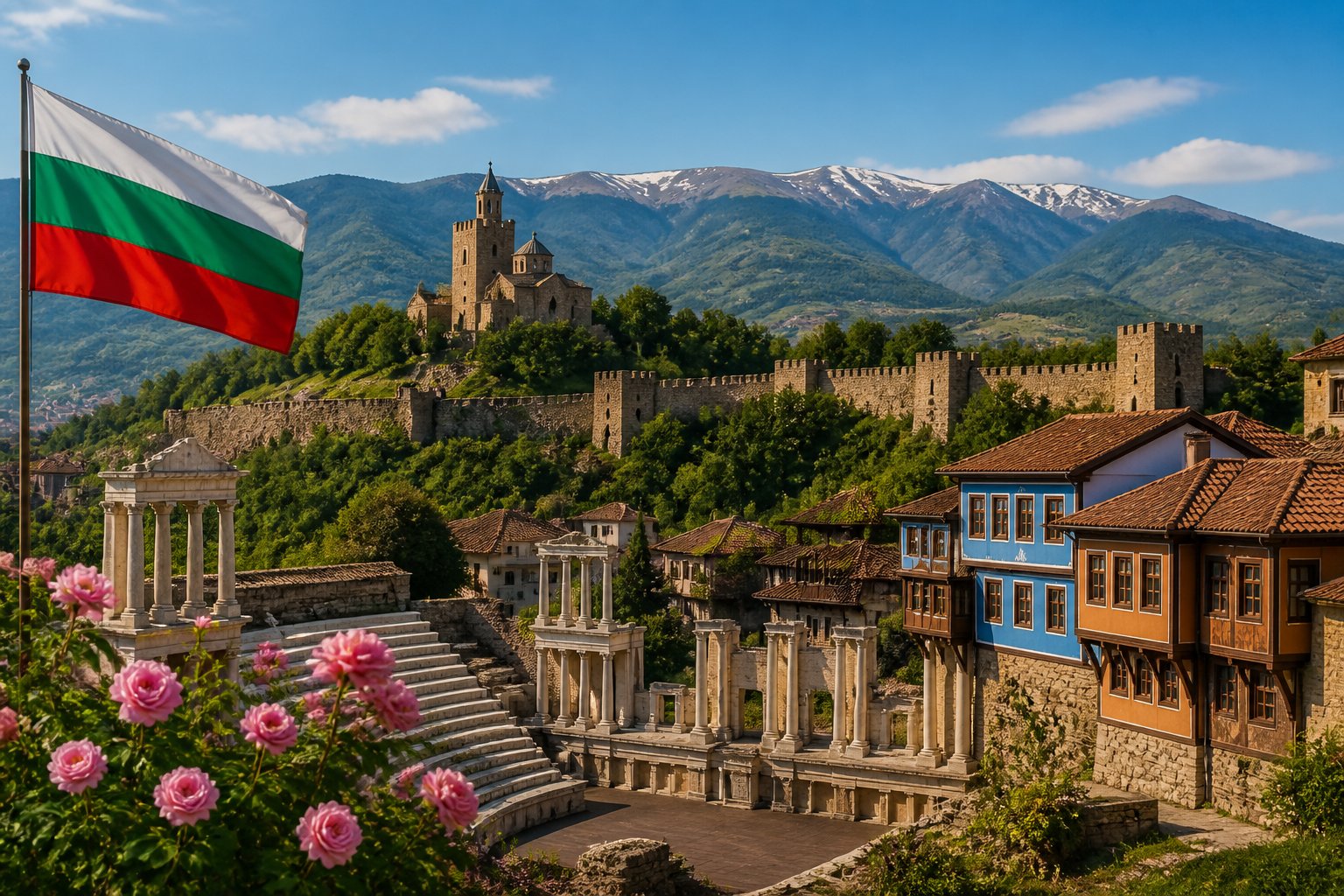
Bulgaria's history spans over 8,000 years, beginning with ancient Thracian civilizations and evolving through powerful medieval empires, five centuries of Ottoman rule, and eventual independence. The Bulgarian state was founded in 681 AD, making it one of the oldest countries in Europe that has maintained its original name.
Origins: Thracians and Bulgars
The Thracian tribes settled in southeastern Bulgaria around 500 BC, establishing one of Europe's earliest advanced civilizations. The Varna Necropolis, discovered near the Black Sea coast, contains the world's oldest processed gold artifacts dating back to 4500 BC. These Thracian societies developed sophisticated metalworking, art, and religious practices before being conquered by Alexander the Great and later the Roman Empire.
The Bulgars, a Turkic-speaking nomadic people, arrived in the region during the 7th century. Khan Asparukh led the Bulgars across the Danube River and united them with the local Slavic tribes. This merger created a tribal amalgam dominated by the Odrysians that would become the foundation of the Bulgarian nation. In 681 AD, the Byzantine Empire officially recognized the new Bulgarian state through a peace treaty.
First and Second Bulgarian Empires
The First Bulgarian Empire reached its peak during the 9th and 10th centuries under Khan Krum and Tsar Simeon the Great. The Cyrillic alphabet was developed by the brothers Cyril and Methodius during this period, becoming a defining element of Slavic culture. The empire expanded its territory significantly and became a major power in the Balkans.
After a period of Byzantine rule, the Second Bulgarian Empire was established in 1185 and flourished under rulers like Ivan Asen II. During his reign from 1218 to 1241, Bulgaria controlled territories from the Black Sea to the Adriatic and became one of the strongest states in medieval Europe. The Rila Monastery, founded in the 10th century, served as a spiritual and cultural center throughout both empires.
Ottoman Era and National Revival
The Ottoman Empire conquered Bulgarian lands in the late 14th century, beginning a period of rule that lasted nearly 500 years. Despite efforts to suppress Bulgarian culture, the population preserved its language, traditions, and Orthodox Christian faith through monastery schools and secret education.
The Bulgarian National Revival began in the 18th century as intellectuals and clergy worked to restore national consciousness. This movement emphasized education, literature, and cultural preservation. The April Uprising of 1876, though unsuccessful, drew international attention to Bulgarian independence efforts.
The Russo-Turkish War of 1877-1878 ended with the Treaty of San Stefano, which created a large Bulgarian state. However, the Treaty of Berlin later that year significantly reduced Bulgaria's territory to satisfy other European powers' interests.
Modern History and Independence
Bulgaria gained full independence in 1908 and participated in the Balkan Wars of 1912-1913, which altered regional borders. The country joined the losing side in both World Wars, resulting in territorial losses and economic hardship.
After World War II, Bulgaria became a communist state under Soviet influence. Georgi Dimitrov became the first communist leader, followed by Todor Zhivkov, who ruled from 1954 to 1989 as one of the longest-serving leaders in the Eastern Bloc. The Siege of Pleven in 1877 remains a significant historical event commemorated in Bulgarian national memory.
The communist regime fell peacefully in 1989 during the broader collapse of Soviet-controlled governments across Eastern Europe. Bulgaria transitioned to democracy and a market economy, eventually joining NATO in 2004 and the European Union in 2007.
Major Cities and Regions
Bulgaria's urban centers range from ancient cities with thousands of years of history to modern coastal resorts along the Black Sea. Each region offers distinct cultural experiences, from mountain-backed capitals to historic trading ports.
Sofia
Sofia is Bulgaria's capital and largest city, home to roughly 1.2 million people. The city sits at the foot of Vitosha Mountain in western Bulgaria.
You'll find Sofia University, the country's oldest and most prestigious higher education institution, in the city center. The university was founded in 1888 and remains a key academic hub.
The city blends Roman ruins, Orthodox churches, Ottoman mosques, and Soviet-era architecture. You can visit the Alexander Nevsky Cathedral, one of the largest Eastern Orthodox cathedrals in the world. Sofia also serves as Bulgaria's economic and cultural center, with museums, theaters, and government buildings concentrated in the downtown area.
Plovdiv
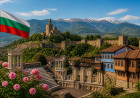
Plovdiv is one of the oldest continuously inhabited cities in Europe, with settlement dating back over 8,000 years. The city is Bulgaria's second-largest urban center and was named a European Capital of Culture in 2019.
The city's Old Town features colorful Bulgarian Revival houses built on ancient foundations. You can explore a remarkably well-preserved Roman amphitheater that still hosts concerts and performances today.
Plovdiv sits on seven hills along the Maritsa River. The city has been ruled by Thracians, Romans, Byzantines, and Ottomans, and each civilization left visible marks on its architecture and culture.
Varna
Varna is Bulgaria's third-largest city and the country's main port on the Black Sea coast. The city functions as both a commercial shipping hub and a major tourist destination.
You'll find the Varna Archaeological Museum here, which houses the oldest processed gold in the world, dating to around 4,600 BC. The Sea Garden, a large public park along the coast, stretches for miles and includes beaches, attractions, and restaurants.
Varna serves as Bulgaria's premier seaside resort city. Nearby Golden Sands is a popular resort area with hotels, nightclubs, and beaches just north of the city.
Burgas and the Black Sea Coast
Burgas is Bulgaria's fourth-largest city and an important industrial and maritime center on the southern Black Sea coast. The city has a major port and serves as a gateway to several historic coastal towns.
South of Burgas, you'll find Sozopol, one of Bulgaria's oldest towns with a history spanning over 2,600 years. The town features a charming old quarter with wooden houses and narrow cobblestone streets. Nessebar, another ancient town and UNESCO World Heritage Site, sits on a rocky peninsula connected to the mainland by a narrow causeway. The town preserves medieval churches and fortifications.
North of Burgas lies Sunny Beach, Bulgaria's largest resort complex with hundreds of hotels and a wide sandy beach. The area attracts millions of visitors each summer with its affordable accommodations and active nightlife.
Natural Wonders and Outdoor Destinations
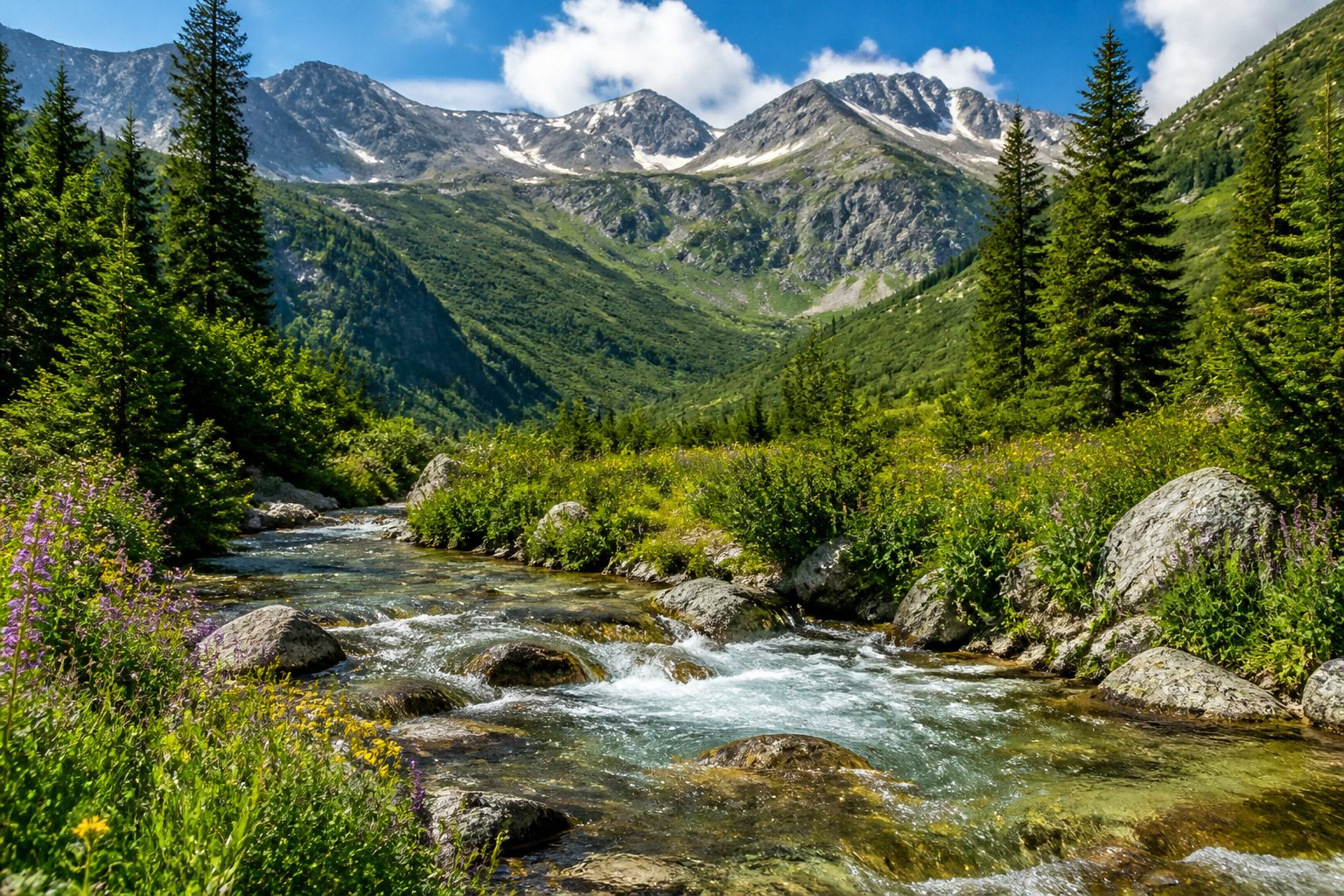
Bulgaria offers stunning mountain ranges, glacial lakes, coastal ecosystems, and protected natural sites that make it one of Europe's most biodiverse countries. You can explore everything from high alpine peaks to Black Sea beaches within this compact country.
Mountains and National Parks
The Rila Mountains contain the highest peaks in the Balkans, including Mount Musala at 2,925 meters. You'll find the famous Seven Rila Lakes here, a group of glacial lakes connected by small streams at different elevations. The nearby Rila Monastery sits at the base of these mountains as a spiritual and cultural landmark.
Pirin National Park protects ancient forests and over 70 glacial lakes in the Pirin mountain range. The park contains rare plant species and wildlife including brown bears and wolves. You can visit year-round, with popular ski resorts like Bansko operating in winter months.
The Balkan Mountains stretch across central Bulgaria from the Serbian border to the Black Sea coast. Shipka Pass cuts through this range and offers dramatic mountain views. The resort town of Borovets sits on the northern slopes and provides access to hiking trails and ski runs.
Vitosha Mountain rises just south of Sofia and serves as the city's natural playground. Strandzha mountain and nature park near the Black Sea contains some of Bulgaria's last remaining old-growth forests.
Lakes, Rivers, and Beaches
The Seven Rila Lakes form a stunning alpine landscape with each lake positioned at a different elevation between 2,100 and 2,500 meters. You can reach them by chairlift from the Rila Lakes resort area during summer months. Each lake has a unique name based on its shape or characteristics.
Bulgaria's Black Sea coastline stretches for 378 kilometers and includes sandy beaches, rocky cliffs, and coastal wetlands. The northern coast near Varna features wide sandy beaches, while the southern areas around Burgas contain important wetland ecosystems for migrating birds.
The Danube River forms much of Bulgaria's northern border and creates fertile floodplains. You'll find the Rose Valley between the Balkan Mountains and Sredna Gora range, where Bulgaria grows the roses used for its famous rose oil production.
UNESCO Sites and Protected Landscapes
Pirin National Park earned UNESCO World Heritage status for its limestone peaks, glacial lakes, and biodiversity. The park contains over 1,300 plant species and provides habitat for rare Balkan wildlife. You can access numerous hiking trails that range from easy walks to challenging alpine routes.
Bulgaria's diverse natural resources include forests, canyons, gorges, and cave systems scattered throughout the country. These protected areas maintain ecosystems that support unique flora and fauna found nowhere else in Europe.
Culture, Traditions, and Language
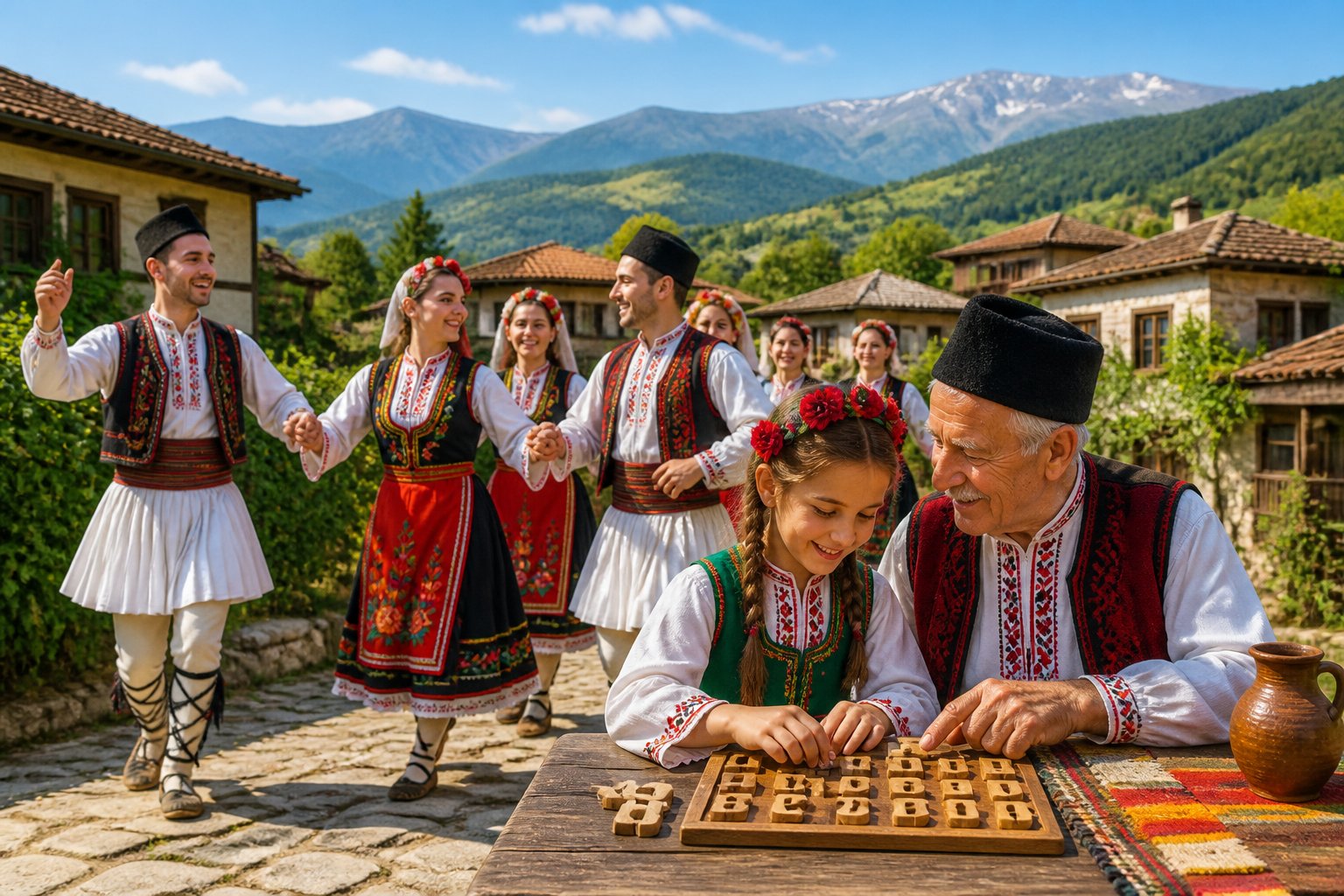
Bulgaria maintains ancient cultural traditions that are still actively practiced today. The country's heritage blends Slavic customs, Eastern Orthodox Christianity, and centuries of historical influences into a distinct national identity.
Cyrillic Alphabet and Language
The Cyrillic alphabet originated in the First Bulgarian Empire during the 9th century. Scholars created this writing system to translate religious texts and spread literacy among Slavic peoples. Today, the Cyrillic alphabet is used by over 250 million people across Eastern Europe and Central Asia.
Bulgarian is a South Slavic language and the official language of Bulgaria. It uses the Cyrillic script exclusively and has some unique features compared to other Slavic languages. Bulgarian does not use noun cases like Russian or Polish, which makes its grammar simpler in some ways.
The language preserves many old Slavic words and has borrowed vocabulary from Greek, Turkish, and Russian throughout history. You'll find Bulgarian spoken primarily in Bulgaria, though diaspora communities exist across Europe and North America.
Religion and the Bulgarian Orthodox Church
The Bulgarian Orthodox Church is the dominant religious institution in Bulgaria. About 60% of Bulgarians identify as Eastern Orthodox Christians. The church gained autocephalous status (independence) in 927 AD, making it one of the oldest independent Orthodox churches.
Bulgarian customs are closely tied to Eastern Orthodox Christianity, which shapes many national holidays and celebrations. The church survived suppression during Communist rule from 1944 to 1989 and has regained prominence in Bulgarian society.
Historic monasteries dot the Bulgarian landscape, serving as centers of faith and cultural preservation. The Rila Monastery stands as the most famous, but you'll also find significant sites like the Boyana Church near Sofia, known for its medieval frescoes.
Festivals and Folklore
Bulgarian folklore traditions remain vibrant in modern times. Martenitsa is celebrated on March 1st, when people exchange red and white tassels symbolizing health and happiness for the coming spring. You wear these ornaments until you see the first stork or blossoming tree.
Kukeri festivals feature dancers in elaborate costumes with bells and masks performing rituals to chase away evil spirits. These ceremonies typically occur during winter months, especially around New Year and before Lent.
Nestinarstvo is a fire-dancing ritual practiced in some Bulgarian villages. Dancers enter a trance-like state and walk barefoot across hot embers while holding icons. UNESCO recognizes this tradition as intangible cultural heritage.
Traditional Bulgarian holidays follow both Christian and pre-Christian agricultural calendars. You'll encounter unique customs like rose festivals in the Valley of Roses and various harvest celebrations throughout rural areas.
Music and Performing Arts
Bulgarian folk music features complex rhythms and distinctive vocal styles. The music often uses asymmetric time signatures like 7/8 or 11/8, creating patterns that sound unusual to Western ears. Women's vocal groups perform polyphonic singing with tight harmonies and unique ornamentation.
The gaida is Bulgaria's traditional bagpipe and a central instrument in folk music. Other common instruments include the kaval (wooden flute), gadulka (bowed string instrument), and tupan (large drum). These instruments accompany both dance music and ritual performances.
Traditional Bulgarian dances include the horo, a circle dance performed at celebrations and festivals. Each region has its own style and variations. Folk ensembles preserve these performing arts traditions while also adapting them for contemporary audiences.
Cuisine and Local Products
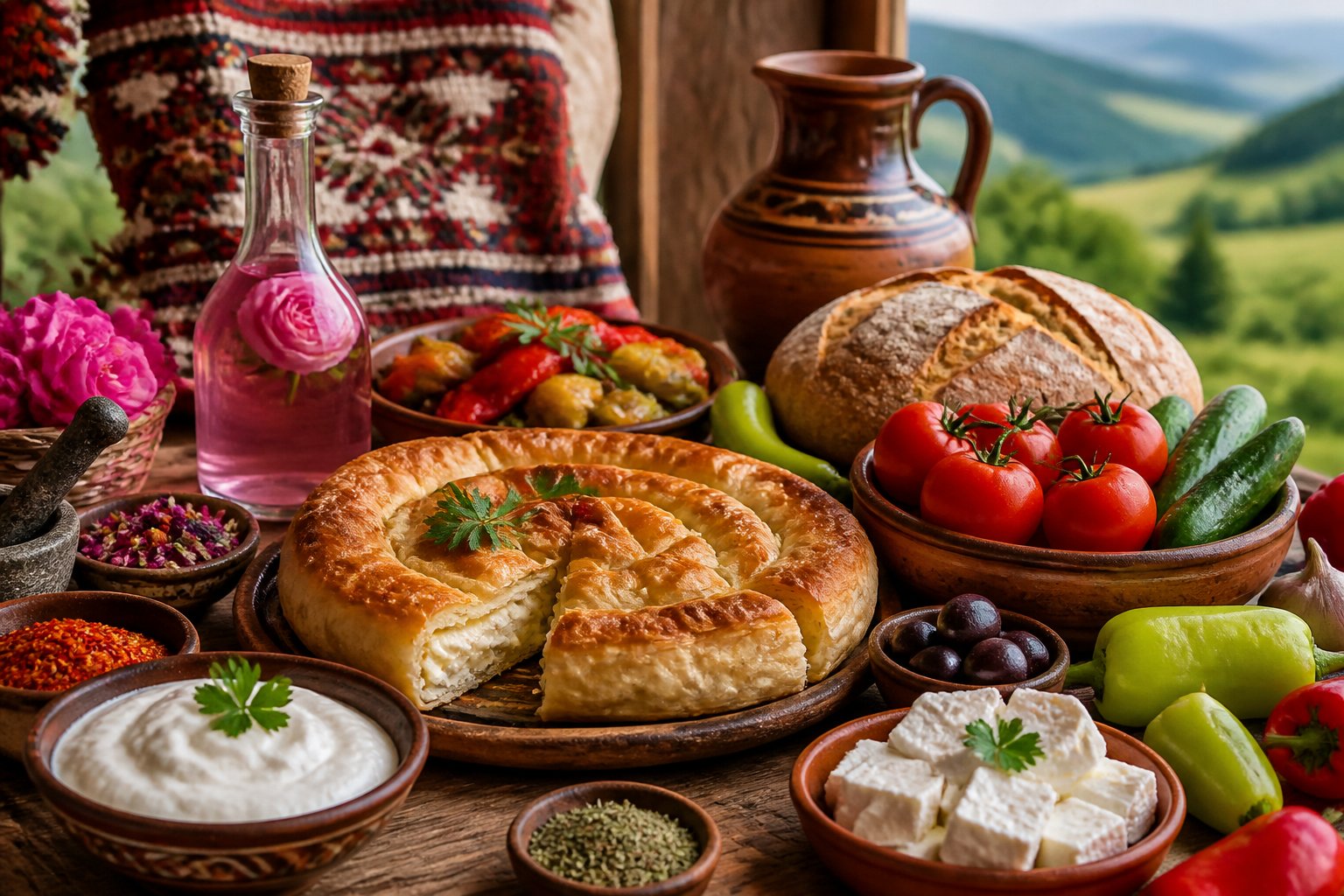
Bulgarian cuisine blends Balkan, Mediterranean, and Eastern European flavors using fresh vegetables, herbs, and seasonal ingredients. The country produces distinctive wines, strong fruit spirits, and unique dairy products that have influenced food science worldwide.
Traditional Dishes
Bulgarian food features dishes shared across the Balkans but with distinct local flavors. Banitsa is a popular pastry made with layers of filo dough filled with eggs and cheese, often eaten for breakfast or special occasions.
Shopska salad stands out as a national favorite. You'll find it made with tomatoes, cucumbers, onions, peppers, and topped with crumbled white cheese. Tarator offers refreshing relief during hot summers as a cold soup combining yogurt, cucumbers, garlic, dill, and walnuts.
Lyutenitsa is a thick vegetable spread made from roasted red peppers, tomatoes, and eggplant. Bulgarian dishes include kebapche (grilled meat rolls), kavarma (slow-cooked meat stew), and stuffed vegetables that show Ottoman influence. Many traditional foods work well for vegetarians despite meat being common in the cuisine.
Wines and Spirits
Bulgaria has thousands of years of winemaking history. Your wine choices include varieties made from both international grapes and local types like Mavrud and Melnik. The country's geographic location creates ideal conditions for vineyards in regions like the Thracian Valley.
Rakia dominates as the national spirit. This strong fruit brandy typically reaches 40% alcohol content and comes in flavors including plum, grape, apricot, and pear. Bulgarians drink rakia before meals as an appetizer and during celebrations.
Dairy and Unique Ingredients
Bulgarian yogurt gained worldwide recognition due to Lactobacillus bulgaricus, a bacteria strain unique to the region. This bacteria gives the yogurt its distinctive taste and texture. Scientists have studied it for potential health benefits.
White brined cheese similar to feta appears in many dishes. You'll taste it in salads, pastries, and as a table cheese. Rose oil production makes Bulgaria one of the top global suppliers, particularly from the Rose Valley region where damascena roses grow. The country also produces honey, herbs, and spices that define its cooking traditions.
Notable Figures and Unique National Facts
Bulgaria has produced world-class athletes who've set records that still stand today, while its soil holds some of Europe's most significant archaeological finds. The country also claims several unusual distinctions that set it apart from its neighbors.
Athletes and Public Figures
Stefka Kostadinova holds the women's high jump world record at 2.09 meters, set in 1987. This record has remained unbroken for nearly four decades, making it one of the longest-standing records in track and field history.
Hristo Stoichkov became one of football's greatest players during the 1990s. He won the Ballon d'Or in 1994 and led Bulgaria's national team to fourth place in the 1994 World Cup. His powerful left foot and fierce playing style made him a legend at FC Barcelona.
Bulgaria has produced many notable figures across various fields. The country's athletes and leaders have shaped both national identity and international recognition in sports and politics.
Archaeological and Cultural Treasures
The Varna Necropolis contains the oldest processed gold in the world, dating back to 4,600 BC. This discovery changed historians' understanding of early European civilization and metalworking.
Thracian tombs scattered across Bulgaria reveal the advanced culture of this ancient civilization. The Kazanlak tomb features stunning frescoes that have survived for over 2,000 years. These burial sites demonstrate the Thracians' artistic skills and complex social structures.
The Rose Valley near Kazanlak produces some of the world's finest rose oil. Bulgaria supplies a large portion of the global rose oil market, with this precious liquid worth more than gold by weight.
Curiosities and World Records
Bulgaria is one of the oldest countries in Europe, maintaining its name unchanged since 681 AD. Few nations can claim such continuity in their identity and nomenclature.
Bulgarians shake their heads to say "yes" and nod to say "no," the opposite of most other cultures. This unique custom can confuse visitors but remains a distinctive part of Bulgarian communication.
The country ranks among the top yogurt consumers worldwide. Bulgarian yogurt contains a specific bacterial strain, Lactobacillus bulgaricus, found naturally in the region and prized for its health benefits.
Bulgaria's location at the crossroads of Europe and Asia has shaped its role as one of the continent's oldest nations. The country's geography spans from the Danube River to the Black Sea coast, while its cultural legacy includes developing the Cyrillic alphabet and preserving ancient cities and monasteries.
Bulgaria Frequently Asked Questions
What's Your Reaction?
 Like
0
Like
0
 Dislike
0
Dislike
0
 Love
0
Love
0
 Funny
0
Funny
0
 Wow
0
Wow
0
 Sad
0
Sad
0
 Angry
0
Angry
0





Comments (0)