
Panama: The Bridge of the World
Panama is much more than the famous canal that bears its name. Nestled at the precise point where North America meets South America, this slender S-shaped isthmus literally changed the course of natural history. When the landmass rose from the ocean millions of years ago, it divided the Atlantic and Pacific oceans, altering global ocean currents and allowing an unprecedented migration of flora and fauna between two continents. Today, Panama retains this identity as the ultimate connector.

The geography of Panama is incredibly diverse for a country roughly the size of South Carolina. Visitors can watch the sun rise over the Caribbean Sea and set over the Pacific Ocean on the exact same day. Between these two vast bodies of water lies a rugged spine of mountains, dense cloud forests, and some of the most biologically diverse tropical rainforests on the planet.
Culturally, Panama is a vibrant tapestry. The indigenous roots of groups like the Guna, Emberá, and Ngäbe-Buglé are tightly woven with Spanish colonial heritage, Afro-Caribbean traditions, and the global influences brought by a century of international canal workers. Whether you are seeking the cosmopolitan energy of a thriving modern metropolis, the deep serenity of untouched tropical archipelagos, or the adrenaline rush of world-class surf and highland treks, Panama delivers an unforgettable, multifaceted travel experience.
Best Places to Visit in Panama
To truly experience Panama, you must venture beyond the transit hubs and explore the distinct micro-regions that make this country so special. Each province offers a completely different climate, culture, and adventure.
1. Panama City & Casco Viejo
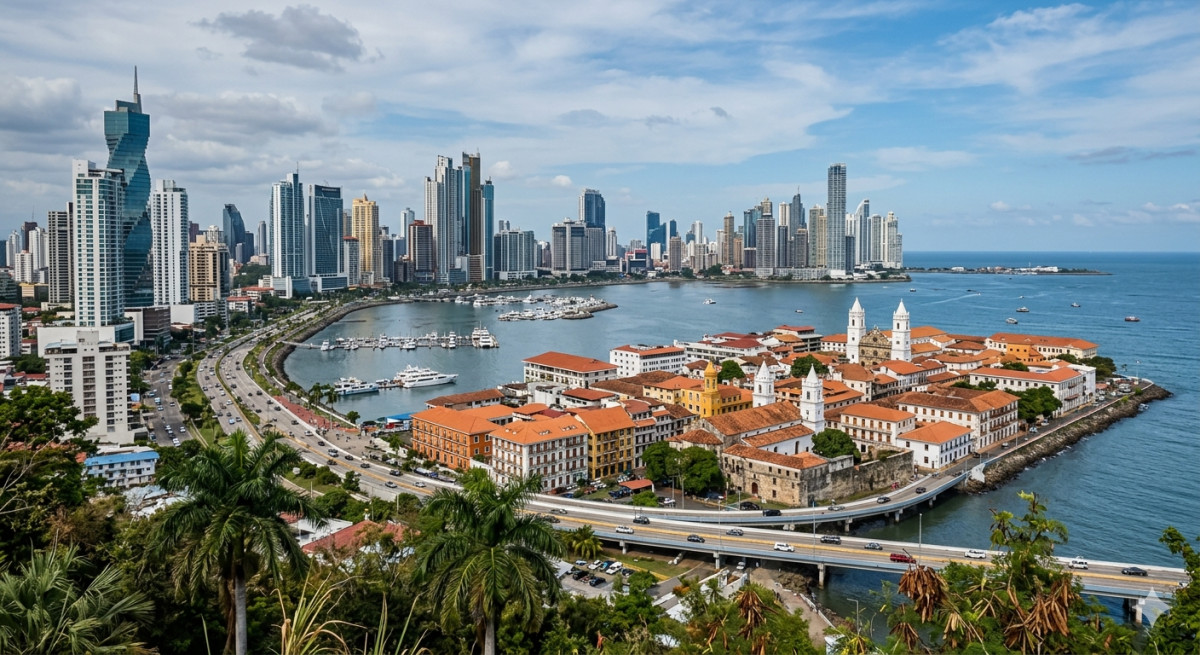
Panama City is a true anomaly in Central America. Approaching the city from the airport, you are greeted by a glittering, Miami-esque skyline of towering glass skyscrapers curving along the Bay of Panama. This modern financial hub is driven by international banking and global trade, featuring upscale rooftop bars, massive shopping centers, and a bustling urban energy.
However, just a few miles down the coastal beltway (the Cinta Costera) lies Casco Viejo, the historic colonial heart of the city. Founded in 1673 after the original city (Panamá Viejo) was sacked by the infamous pirate Henry Morgan, Casco Viejo is a UNESCO World Heritage site that transports you back in time. Walking its brick-paved streets, you will find beautifully restored Spanish colonial and French neoclassical buildings painted in pastel hues, featuring ornate wrought-iron balconies dripping with bougainvillea.
The contrast is mesmerizing. By day, you can sip world-class coffee in a 300-year-old plaza, visit the majestic Metropolitan Cathedral, or buy a traditional, hand-woven mola from indigenous vendors. By night, Casco Viejo transforms into the city's premier nightlife district, where historic ruins serve as the backdrop for trendy speakeasies, fine-dining restaurants, and vibrant salsa clubs.
2. The Panama Canal
No trip to the country is complete without witnessing one of the greatest engineering achievements of the 20th century. The Panama Canal is a 50-mile marvel that fundamentally altered global maritime trade by eliminating the treacherous journey around the southern tip of South America.
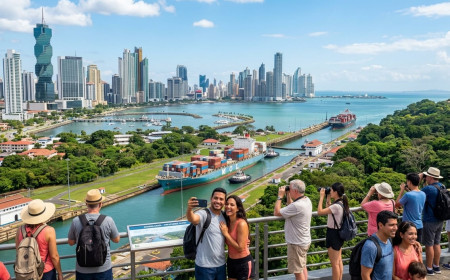
For visitors, the most accessible and impressive vantage point is the Miraflores Visitor Center, located just outside downtown Panama City. Here, you can stand on multi-level observation decks merely feet away from massive "Panamax" cargo ships and luxury cruise liners as they are seamlessly raised and lowered through the lock system.
The mechanism itself is powered entirely by gravity and fresh water from the artificial Gatun Lake. Watching the heavy steel gates close and millions of gallons of water flood the chamber to lift a 100,000-ton vessel is an awe-inspiring experience. The visitor center also features a highly detailed, interactive museum and an IMAX theater showcasing a 3D documentary narrated by Morgan Freeman, which provides deep context on the grueling history, the tragic loss of life during construction, and the modern expansion of this logistical wonder.
3. Bocas del Toro
If your travel goal is to find laid-back Caribbean island vibes, you need to head to Bocas del Toro. Located in the northwestern corner of Panama near the Costa Rican border, this archipelago consists of nine main islands and thousands of tiny islets surrounded by crystal-clear, turquoise waters.
The main hub is Bocas Town on Isla Colón, a brightly colored, slightly gritty, and endlessly charming town where bicycles and water taxis are the primary modes of transportation. The culture here is distinctly Afro-Caribbean, characterized by the sounds of reggae, the smell of coconut rice, and a fiercely relaxed pace of life.
Bocas is globally renowned for its Caribbean surf culture, offering powerful reef breaks that attract experienced surfers from around the world. For those seeking relaxation, the region is famous for its overwater bungalows, allowing you to wake up and step directly from your deck into the warm sea. Island hopping is the daily routine here: you can hire a local panga (small boat) to visit Starfish Beach (famous for its giant red starfish), snorkel the vibrant reefs of Zapatilla Cays, or watch dolphins play in the calm waters of Dolphin Bay.
4. Boquete
Leaving the heat of the coast behind, travelers seeking cooler temperatures and lush mountain scenery should journey to Boquete in the western Chiriquí Province. Nestled in a deep valley surrounded by the towering Talamanca mountain range, Boquete enjoys a perpetual spring-like climate that provides a refreshing break from tropical humidity.
The rich, volcanic soil and ideal elevation make Boquete the epicenter of Panama’s booming coffee industry. Visitors can tour sprawling highland coffee plantations, learning about the meticulous process of growing, harvesting, and roasting some of the world's most premium beans.
Beyond coffee, Boquete is Panama’s outdoor adventure capital. The crown jewel for hikers is the challenging trek up Volcán Barú, Panama’s highest peak at 11,400 feet. Hikers who begin their ascent at midnight are often rewarded at the summit with a spectacular sunrise and the rare, simultaneously visible coastlines of both the Caribbean Sea and the Pacific Ocean. Other local adventures include zip-lining through the cloud forest canopy, white-water rafting on the Chiriquí Viejo river, and spotting the elusive, brilliantly colored Resplendent Quetzal bird on the Los Quetzales Trail.
5. San Blas Islands
For a truly off-the-grid, pristine tropical escape, the San Blas Islands (also known as Guna Yala) are unparalleled. This archipelago of 365 islands—one for every day of the year—stretches along Panama’s northern Caribbean coast. What makes San Blas entirely unique is its political and cultural autonomy.
The territory is fiercely protected and governed by the indigenous Guna people. There are no mega-resorts, massive cruise ship ports, or commercial chain restaurants here. Instead, visitors stay in simple, eco-friendly bamboo huts with thatched roofs, sleep in hammocks, and eat whatever fresh seafood the local fishermen catch that morning.
Visiting San Blas is a lesson in disconnecting. It is a place to read a book under a swaying palm tree, snorkel over vibrant, untouched coral reefs, and respect the traditions of the Guna culture. It is an authentic, raw, and staggeringly beautiful island experience that feels entirely removed from the modern world.
6. Santa Catalina or Coiba National Park
Located on the Pacific coast in the province of Veraguas, the small fishing village of Santa Catalina has evolved from a secret surfers' hideaway into a premier destination for marine eco-tourism. While the town itself remains rustic and charmingly undeveloped, the waves here are legendary, offering some of the most consistent and powerful point breaks in Central America.
However, Santa Catalina’s biggest draw is its role as the primary launching point for Coiba National Park. Often referred to as the "Galapagos of Central America," Coiba Island was a notorious penal colony for decades. Because access was heavily restricted, the island's jungle and the surrounding marine ecosystem were left almost completely untouched by development.
Today, it is a UNESCO World Heritage site and offers what is arguably the best world-class diving and snorkeling in the region. The nutrient-rich currents attract massive pelagic life; divers routinely swim alongside whale sharks, giant manta rays, humpback whales, and massive schools of hammerhead sharks, making it a bucket-list destination for underwater enthusiasts.
A Culinary Journey: Authentic Panamanian Food You Must Try
Panamanian cuisine is a deeply comforting, hearty, and flavorful reflection of its history as a global crossroads. The local palate is a beautiful amalgamation of Native American agricultural staples (corn, yucca, plantains), Spanish colonial techniques, and vibrant Afro-Caribbean spices. While international cuisine thrives in the capital, you must seek out these authentic local flavors to truly understand the culture.
Sancocho
Sancocho is the undisputed national dish of Panama, a beloved staple found everywhere from high-end restaurants to humble roadside fondas. This traditional chicken soup is deeply savory and incredibly hearty, designed to restore energy and, according to local legend, cure any hangover.
The foundation of a proper Panamanian Sancocho is gallina de patio (free-range, yard-raised chicken), which provides a much richer, deeper broth than standard poultry. The soup is thickened with massive chunks of starchy ñame (a type of local yam) and flavored aggressively with culantro—an herb similar to cilantro but with a much stronger, earthier bite. It is invariably served steaming hot, regardless of the tropical weather outside, alongside a generous mound of white rice intended to be soaked in the broth.
Ropa Vieja with Arroz con Gandules
While often associated with Cuba, Ropa Vieja is deeply embedded in Panamanian culinary tradition. The name translates to "old clothes," referencing the shredded, stringy appearance of the flank or skirt steak used in the dish. The beef is slow-cooked for hours until incredibly tender, then pulled apart and simmered in a rich, slightly sweet tomato-based sofrito heavily seasoned with garlic, onions, sweet peppers, and cumin.
In Panama, it is almost always paired with Arroz con Gandules (rice cooked with pigeon peas) or arroz con coco(coconut rice). The savory depth of the beef perfectly complements the slightly nutty, starchy rice, usually accompanied by a side of sweet, caramelized plantains to balance the salty, rich flavors of the meat.
Patacones and Carimañolas
When it comes to side dishes and street food, Panama excels at the art of frying. Patacones are an absolute daily requirement. Made from green, unripe plantains, thick slices are fried, smashed flat with a heavy wooden press, and then fried a second time until they are crispy on the outside and starchy on the inside. They are served with almost every meal, acting as a savory vehicle for dipping in garlic sauce or scooping up ceviche.
Carimañolas, on the other hand, are a breakfast favorite or mid-day snack. These are torpedo-shaped fritters made from a dough of mashed, boiled yucca (cassava). The dough is stuffed with seasoned ground beef or local white cheese, then deep-fried until golden and blistered. The contrast between the crunchy exterior and the soft, slightly sweet yucca yielding to a savory meat center makes them completely addictive.
Geisha Coffee
For coffee enthusiasts, a trip to Panama is a pilgrimage. The highlands of Boquete are the exclusive home to the world-renowned Geisha Coffee, an Ethiopian varietal that found its absolute perfect terroir in the volcanic soils and high altitudes of the Chiriquí province.
Geisha is considered the most expensive and sought-after coffee in the world, regularly breaking auction records (often selling for thousands of dollars per pound). Why? Its flavor profile is unlike any standard cup of coffee. When roasted lightly and brewed carefully (usually via pour-over), Geisha tastes more like an elegant tea. It boasts intense floral aromatics—often smelling of jasmine—with bright, complex tasting notes of bergamot, mango, peach, and honey. Drinking a fresh cup of Geisha at the farm where it was grown is a profound culinary experience.
Fresh Seafood
Given that Panama is bordered by two oceans, Fresh Seafood is abundant, incredibly fresh, and deeply ingrained in the local diet. The absolute best place to experience this in Panama City is at the Mercado de Mariscos (Seafood Market), located right where the Cinta Costera meets Casco Viejo.
The outdoor pavilion of the market is surrounded by small, bustling stalls selling paper cups overflowing with Ceviche. Panamanian ceviche differs slightly from its Peruvian cousin; the fish (often corvina/sea bass), octopus, or shrimp is diced very finely and marinated for a longer period in intensely tart lime juice, mixed with finely chopped onions, habanero peppers, and celery. It is sharp, acidic, spicy, and perfectly paired with saltine crackers and an ice-cold local Balboa beer.
Essential Panama Travel Tips: Currency, Safety, and Logistics
Navigating Panama is generally straightforward, but knowing the local systems and customs will make your journey much smoother.
Currency & Economy
The official currency of Panama is the Balboa, but in practice, the US Dollar is the paper currency used everywhere. The Balboa only exists in coin form, which are minted to be identical in size, weight, and value to US coins (a 1 Balboa coin equals a $1 coin, a "cuarto" equals a quarter). You do not need to exchange currency if you are coming from the US; simply bring dollars. ATMs are widely available in cities and larger towns, but always carry small bills ($1, $5, $10) for rural areas, taxis, and small vendors who frequently cannot make change for a $50 or $100 bill.
Getting Around
Panama City boasts the only metro train system in Central America. The Panama City Metro is incredibly clean, safe, efficient, and cheap (usually $0.35 per ride), making it the best way to bypass the city's notorious rush-hour traffic. For point-to-point urban travel, Uber is highly reliable, safe, and often cheaper than negotiating with yellow street taxis.
For cross-country travel, domestic flights via Air Panama out of Albrook Airport are the fastest way to reach distant spots like Bocas del Toro or David (for Boquete). If you are on a budget or seeking cultural immersion, you can ride the famous "Chicken Buses" (Diablos Rojos). These are decommissioned US school buses that have been wildly painted with murals, outfitted with chrome exhaust pipes, and rigged with massive sound systems. They are cheap and an adventure in themselves, though not the most comfortable for long-haul journeys.
Best Time to Visit
Panama’s climate is tropical and humid year-round, but it is strictly divided into two seasons.
The dry season (referred to locally as "summer") runs from mid-December through mid-April. This is the peak tourist season, offering clear blue skies, constant trade winds, and virtually zero rain. It is the best time for beach lounging and mountain hiking, but expect higher prices and larger crowds.
The green season (winter/rainy season) runs from May through November. While it will rain almost every day, it rarely rains all day. You can expect bright, sunny mornings followed by intense, dramatic tropical downpours in the mid-afternoon that clear up by evening. The green season is favored by surfers (the swells are bigger), scuba divers, and those who want to see the rainforest at its most vibrant and lush.
Safety and Health
Panama is generally one of the safest countries in Central America for travelers. Violent crime against tourists is rare, but petty theft and pickpocketing can happen in crowded urban areas and bus terminals. Always keep your valuables secure and avoid walking through unfamiliar, unlit neighborhoods at night in Panama City.
Health-wise, tap water in Panama City and most major towns is safe to drink, which is a rarity in the region. However, stick to bottled water in Bocas del Toro, San Blas, and rural villages. Malaria is virtually non-existent in the tourist corridors, but dengue fever (transmitted by mosquitoes) is present. Critical travel tip: Always carry and use a high-quality DEET insect repellent, especially during the green season and dawn/dusk hours.
1. Is Panama safe for solo tourists and families?
Yes, Panama is widely considered a safe destination for both solo travelers and families. The country has a stable government, a strong economy, and a dedicated tourist police force (Policía de Turismo) that patrols major hubs like Casco Viejo and Boquete. Families will find that Panamanians are incredibly welcoming to children, and there are countless family-friendly infrastructure options, from modern medical facilities in the capital to well-paved highways. Solo female travelers often report feeling secure, though standard travel street smarts—like avoiding isolated areas at night, not flashing expensive jewelry, and using registered Ubers rather than hailing random cabs—should always be practiced.
2. Do I need to speak Spanish to travel around Panama?
While Spanish is the official language, you do not need to be fluent to enjoy Panama. Because of the US military's historical presence in the Canal Zone and the country's status as an international banking hub, English is widely spokenin Panama City, Boquete (which has a massive expat community), and Bocas del Toro. Hotel staff, tour guides, and many restaurant workers will speak excellent English. However, if you venture into rural areas, the Azuero Peninsula, or take local buses, English speakers will be sparse. Learning a few basic Spanish phrases (greetings, numbers, and polite requests) will go a long way in showing respect and connecting with locals.
3. What is the best way to see the Panama Canal?
The "best" way depends entirely on your time and budget. For the most efficient and educational experience, visit the Miraflores Visitor Center just outside Panama City. Arrive either early in the morning (around 8:00 AM) or late in the afternoon (after 3:00 PM) to ensure you actually see massive ships actively passing through the locks, as mid-day traffic is often light. If you want a more immersive experience, you can book a partial or full transit tour, where you actually ride a smaller passenger ferry through the locks themselves, experiencing the rising and falling of the water firsthand. Alternatively, taking a jungle boat tour on Gatun Lake allows you to get up close to the container ships while also spotting monkeys and crocodiles on the lake's islands.
4. How many days do you need to fully experience Panama?
To get a comprehensive feel for the country’s diverse offerings, you need at least 10 to 14 days. A standard two-week itinerary allows you to spend 3 days exploring the urban contrast and Canal in Panama City, 3 days hiking and drinking coffee in the cool highlands of Boquete, and 4 to 5 days relaxing on the Caribbean beaches of Bocas del Toro or the San Blas Islands, leaving a couple of days for internal travel. If you only have 5 to 7 days, it is best to base yourself in Panama City and take shorter day trips (to the Canal, nearby rainforests, and perhaps a quick overnight trip to San Blas) rather than trying to rush across the entire country.
5. What should I pack for a trip to Panama given its microclimates?
Packing for Panama requires versatility because you will encounter multiple microclimates. For Panama City and the beaches, pack lightweight, breathable, moisture-wicking clothing (linen and light cotton) to combat the intense tropical heat and humidity. Panama City is quite cosmopolitan; locals dress sharply, so bring a nice outfit (long pants or a nice dress) for dining in Casco Viejo. If you are heading to the highlands of Boquete or Volcán, you must pack layers, a warm fleece or sweater, and a lightweight waterproof rain jacket, as evening temperatures can drop significantly. Regardless of your itinerary, sturdy walking shoes, a wide-brimmed hat, reef-safe sunscreen, and heavy-duty insect repellent are absolute must-haves.
Frequently Asked Questions About Traveling to Panama
What's Your Reaction?
 Like
0
Like
0
 Dislike
0
Dislike
0
 Love
0
Love
0
 Funny
0
Funny
0
 Wow
0
Wow
0
 Sad
0
Sad
0
 Angry
0
Angry
0

Comments (0)