
Greece Tourism Plan Targets Overtourism and Preservation
Greece unveils a sustainable tourism framework to curb overtourism, protect coasts, and shift growth to alternative destinations.

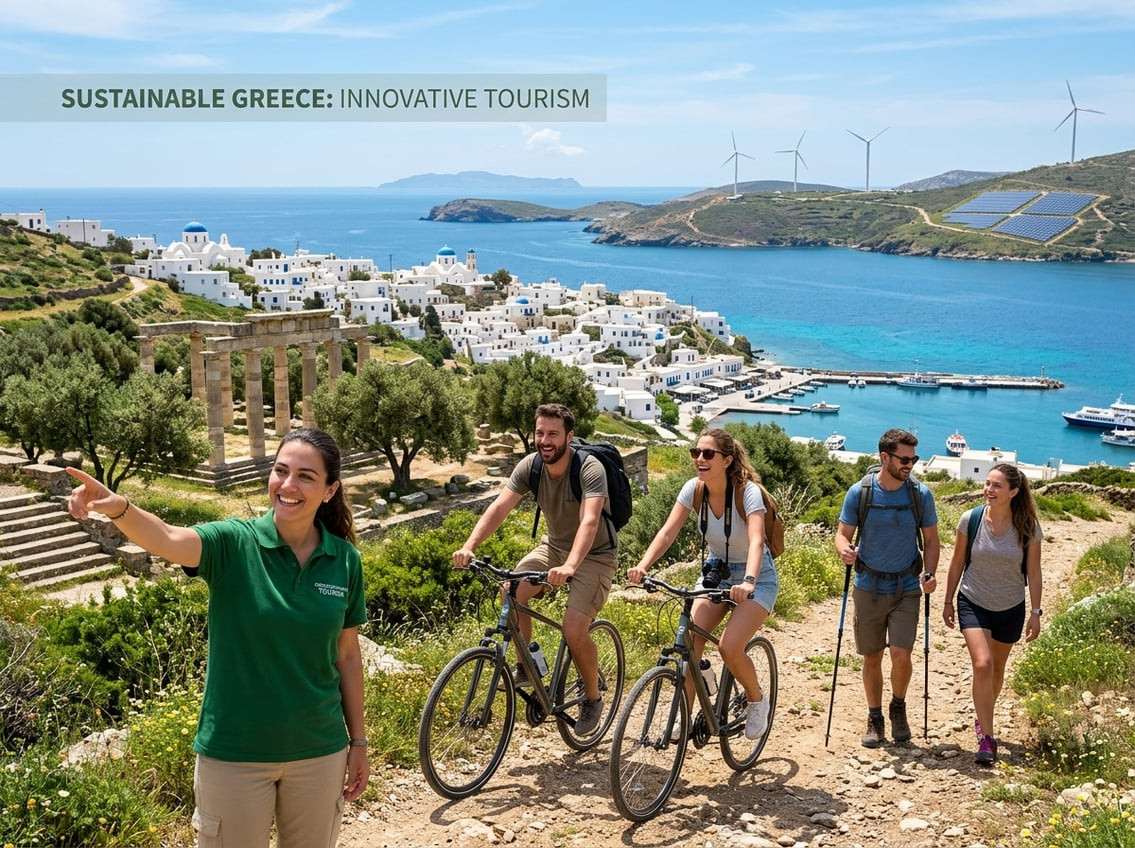
Greece has long occupied a rare place in global travel: a country where ancient heritage, island beauty, and Mediterranean culture combine into one of the world’s most recognizable tourism brands. But success has brought pressure. In recent years, famous destinations such as Santorini, Mykonos, and parts of Crete have become symbols of a wider challenge facing modern travel economies: how to welcome millions of visitors without overwhelming local communities, coastlines, infrastructure, and natural resources. That is why Greece’s newly announced sustainable tourism program matters far beyond its borders. It signals a strategic shift in how Greece Tourism will grow in the years ahead.
At the center of the new approach is Greece’s Special Spatial Framework for Tourism, a planning strategy designed to combat overtourism by dividing the country into five distinct tourism zones. The idea is straightforward but ambitious: limit additional pressure in saturated hotspots, enforce stricter environmental and coastal development rules, and steer new investment toward underdeveloped or alternative destinations, including mountainous regions and lesser-known mainland areas. In doing so, Greece is trying to preserve the assets that made it famous while building a more resilient, balanced tourism economy.
This shift comes at a critical moment. Tourism is one of Greece’s most important economic sectors, supporting jobs, regional development, transport, hospitality, and foreign exchange earnings. Yet unchecked growth can produce the opposite of prosperity if roads, water systems, housing markets, beaches, and local ecosystems begin to break under demand. Greece’s new framework acknowledges a reality that many destinations are only beginning to confront: tourism policy can no longer focus only on volume. It must also manage capacity, sustainability, and long-term quality.
For travelers, investors, hotel operators, and local communities, the new program could reshape where and how tourism develops in Greece over the next decade. It may also offer a model for other countries trying to balance preservation with economic opportunity.
Introduction
The debate over overtourism is no longer theoretical. Across Europe, popular destinations have struggled with crowding, rising rents, environmental degradation, and public frustration over the effects of mass tourism. Greece, one of the continent’s most visited countries relative to its size, has experienced many of these pressures firsthand. During peak summer months, some islands face water stress, traffic congestion, waste management challenges, and strains on public services. Meanwhile, tourism demand remains highly concentrated in a limited number of iconic destinations.
Greece’s response is notable because it does not reject tourism growth. Instead, it seeks to guide it more intelligently. The new sustainable tourism program recognizes that preservation and profitability do not have to be opposing goals. In fact, for a destination built on landscape, culture, and authenticity, preservation may be the only path to durable growth.
The government’s strategy reflects broader industry trends. Around the world, tourism authorities are moving away from simple arrival targets and toward more sophisticated planning models that measure carrying capacity, environmental impact, seasonality, and local quality of life. In this sense, the latest changes in Greece Tourism are part of a larger global movement toward destination management rather than destination promotion alone, much like the sustainability focus discussed in Thailand nature tourism.
Key Facts
- Five-zone tourism model: Greece’s Special Spatial Framework for Tourism classifies regions into five categories to better manage where tourism can expand and where it must be restrained.
- Caps in saturated hotspots: The policy limits additional visitor beds in areas already under heavy pressure, especially famous island and coastal destinations.
- Investment redirection: New tourism development is being encouraged in alternative destinations, including mountainous regions and less-visited mainland areas.
Main Analysis
The most important feature of the new framework is its spatial logic. Tourism planning in many countries has often been reactive, with development following demand rather than policy shaping demand. Greece is attempting to reverse that pattern. By categorizing regions into five tourism zones, the government can tailor rules to local conditions instead of applying one national formula.
Although the full implementation details will determine the program’s success, the concept itself is significant. A zoning-based approach allows authorities to distinguish between:
- Areas already suffering from excessive tourism pressure
- Regions with moderate tourism development that can still absorb growth
- Places with strong potential for alternative tourism models
- Environmentally sensitive zones requiring strict protection
- Areas where strategic infrastructure investment could unlock sustainable opportunities
This marks a more mature phase for Greece Tourism. Rather than seeing every region as equally suitable for expansion, the framework recognizes that destinations have different ecological limits, infrastructure capacities, and social realities.
One of the headline measures is the capping of visitor beds in saturated hotspots. This is a direct response to overtourism. In practical terms, it means there will be tighter control over the expansion of hotels and other accommodation in places already stretched by demand. Such a measure is especially relevant in destinations where accommodation growth has outpaced infrastructure upgrades, leading to pressure on water supply, waste systems, roads, and local housing.
Bed caps are often controversial because they can constrain short-term investment opportunities. However, they can also protect destination value. If a place becomes too crowded, too expensive, or visibly degraded, the visitor experience declines. Over time, that can damage the destination’s premium appeal. For high-profile Greek islands, maintaining quality may be more economically rational than pursuing unlimited volume.
The framework’s strict coastal building restrictions are equally important. Greece’s coastline is one of its greatest tourism assets, but also one of its most vulnerable. Uncontrolled development along coastal areas can lead to habitat loss, erosion, visual pollution, and long-term environmental damage. Tightening building rules sends a clear message that future tourism growth must respect the physical and ecological integrity of the landscape.
This matters not only from an environmental perspective but also from a market perspective. Today’s travelers are increasingly sensitive to sustainability, authenticity, and destination quality. A coastline dominated by overbuilding can weaken the very brand identity that attracts visitors in the first place. Protecting coastal areas is therefore both a conservation strategy and a competitiveness strategy.
Perhaps the most transformative part of the plan is the deliberate redirection of investment toward alternative destinations. Greece is globally known for its islands, but its tourism map has always been broader than the postcard image suggests. Mountain villages, inland cultural routes, agritourism experiences, hiking regions, thermal destinations, and smaller mainland towns all represent underused assets. By encouraging tourism development in these areas, Greece can diversify its product, extend the season, and spread economic benefits more evenly.
This is where the new framework aligns strongly with current industry trends. Travelers are increasingly looking for experiences beyond crowded flagship destinations. Many want slower travel, local food, nature-based activities, wellness, and cultural immersion. Mountainous regions in Greece are well positioned to benefit from this shift, especially if investments are paired with infrastructure upgrades, digital connectivity, local business support, and destination marketing.
There is also a seasonality advantage. Coastal and island tourism is often heavily concentrated in summer, while mountain and inland tourism can attract visitors in spring, autumn, and even winter. If managed well, this could help Greece reduce dependence on a short high-season window and create more stable year-round economic activity.
Still, the strategy will not be easy to implement. Sustainable tourism policies often look strong on paper but face resistance in practice. Local business owners in high-demand destinations may worry that restrictions will limit revenue. Developers may push back against tighter building rules. Municipalities in emerging regions may welcome investment but lack the infrastructure or planning capacity to manage it effectively. Enforcement will be critical. Without clear monitoring, permitting discipline, and coordination between national and local authorities, even well-designed frameworks can lose impact.
Another challenge is transport connectivity. Redirecting tourism to alternative destinations only works if those places are accessible and appealing. That means roads, regional airports, public transport links, signage, digital booking visibility, and service quality all matter. Greece will need to ensure that destination diversification is not just a planning principle but a practical travel option.
Housing is another issue closely tied to overtourism. In many popular destinations, the growth of short-term rentals has affected affordability for residents and seasonal workers. If Greece wants to preserve local communities in tourism hotspots, accommodation policy will need to work alongside broader housing and labor measures. Sustainability in tourism is not just about landscapes; it is also about whether local people can continue living and working in the places visitors come to enjoy.
Experts in destination management have long argued that the strongest tourism economies are not necessarily those with the highest visitor numbers, but those that generate high value with manageable impact. Greece’s new framework appears to embrace that logic. It suggests that future success in Greece Tourism will depend less on simply attracting more tourists and more on shaping better tourism flows, better investments, and better outcomes for residents and ecosystems.
Benefits
If implemented effectively, the new sustainable tourism program could deliver meaningful gains across the economy, environment, and visitor experience.
- Protection of iconic destinations: Bed caps and development controls can reduce pressure on overcrowded islands and coastal zones.
- Stronger long-term tourism brand: Preservation helps maintain the beauty, authenticity, and quality that define Greece’s global appeal.
- More balanced regional growth: Redirecting investment can bring jobs and business opportunities to less-visited areas.
- Reduced seasonality: Mountain and inland tourism can support travel outside the summer peak.
- Improved resident quality of life: Better planning can ease congestion, environmental stress, and housing pressure.
- Greater resilience: A diversified tourism portfolio makes the sector less vulnerable to demand shocks in a few concentrated hotspots.
There are also strategic benefits for investors and hospitality brands. In saturated markets, returns can be threatened by overcompetition, infrastructure stress, and regulatory tightening. Emerging destinations, by contrast, may offer first-mover advantages, lower land pressure, and stronger alignment with future sustainability policies. For tourism businesses willing to adapt, the policy shift may open new opportunities rather than simply impose limits.
Expert Perspectives
From a destination strategy standpoint, Greece’s move reflects a broader evolution in tourism governance. Leading tourism economists and planners increasingly emphasize carrying capacity, resident sentiment, and environmental thresholds as core indicators of destination health. That is especially relevant in Mediterranean markets where climate pressure, water scarcity, and coastal vulnerability are growing concerns.
Hospitality experts often note that premium destinations can damage their own market position when growth becomes excessive. Crowding, service strain, and loss of local character may initially be tolerated during boom periods, but over time they weaken visitor satisfaction and pricing power. In that sense, Greece’s effort to limit growth in certain hotspots is not anti-business. It may be a way to protect long-term value.
Environmental planners would likely view the coastal restrictions as a necessary correction. Coastlines are finite assets, and once degraded, they are difficult and costly to restore. Preventive planning is usually more effective than trying to reverse damage after overdevelopment has occurred.
Expert Tips
- Look beyond the headline islands: Travelers planning a Greek holiday should consider inland and mountain destinations for a quieter, more authentic experience.
- Book shoulder-season travel: Visiting in spring or autumn can reduce crowding while supporting a more sustainable tourism model.
- Choose locally rooted accommodations: Smaller properties and community-based stays often distribute tourism income more directly to residents.
- Watch infrastructure signals: Investors should evaluate water, transport, and local planning capacity before entering emerging destinations.
- Prioritize sustainability credentials: Hotels, tour operators, and developers that align with environmental standards are likely to be better positioned under future regulations.
Industry Comparison: Greece and the Wider Mediterranean
Greece is not alone in confronting overtourism. Spain, Italy, Croatia, and parts of Portugal have all faced mounting pressure in coastal and historic destinations. What makes Greece’s new framework noteworthy is its explicit use of spatial categorization and targeted development controls. While many countries discuss sustainable tourism in broad terms, Greece is moving toward a more concrete territorial planning model.
Compared with destinations that rely heavily on reactive restrictions such as entry limits or visitor taxes alone, Greece appears to be focusing on the supply side of tourism development: where hotels can expand, where building must slow, and where new demand should be encouraged. That may prove more effective in the long run because it addresses structural imbalances rather than only peak-time symptoms.
At the same time, Greece can learn from other destinations that have experimented with tourism caps, cruise regulations, and short-term rental controls. The best outcomes usually come from integrated policy, not one-off measures. Land use planning, environmental regulation, infrastructure investment, housing policy, and destination marketing all need to work together.
Future Outlook
The future of Greece Tourism will depend on execution. The framework provides a strong strategic direction, but results will hinge on enforcement, local coordination, and investment discipline. If Greece can maintain political commitment, improve regional infrastructure, and market alternative destinations effectively, the country could emerge as one of Europe’s leading examples of sustainable tourism management.
There is also a branding opportunity. Travelers increasingly want destinations that take sustainability seriously. If Greece can show that it is protecting coastlines, preserving communities, and opening up richer travel experiences beyond overcrowded hotspots, it may strengthen its appeal rather than reduce it. In a competitive global market, responsible destination management can become a point of differentiation.
For local communities, the stakes are high. Done well, the new program could help ensure that tourism remains a source of prosperity without undermining the places and lifestyles that make Greece distinctive. Done poorly, the country risks continuing the cycle of concentration, seasonal pressure, and environmental strain. The framework is therefore more than a planning reform; it is a test of how one of the world’s most beloved destinations chooses to define its future.
Frequently Asked Questions
1. What is Greece’s new sustainable tourism program?
It is a policy approach centered on the Special Spatial Framework for Tourism, which organizes regions into five zones to manage tourism growth, protect sensitive areas, and reduce overtourism in saturated destinations.
2. Why is Greece changing its tourism strategy?
Greece is responding to mounting pressure on popular islands and coastal areas, including congestion, environmental stress, infrastructure strain, and the need to preserve long-term destination quality.
3. What does capping visitor beds mean?
It means limiting the expansion of accommodation capacity in areas that are already overcrowded, helping prevent further pressure on local infrastructure, housing, and ecosystems.
4. Which areas could benefit from redirected investment?
Mountainous regions, inland cultural destinations, and lesser-known mainland areas are likely to benefit as Greece encourages more balanced tourism development beyond the classic island hotspots.
5. Will this affect travelers planning a trip to Greece?
Potentially yes, but often in positive ways. Over time, travelers may see better-managed destinations, more diverse itinerary options, and stronger promotion of less crowded regions that offer authentic experiences.
Call to Action
Travelers, tourism businesses, and investors should pay close attention to this policy shift. If you are planning your next trip, consider exploring a different side of Greece beyond the busiest summer hotspots. If you work in hospitality or destination development, now is the time to align with the country’s sustainability direction and identify opportunities in emerging regions. The future of Greece Tourism will belong to those who understand that preservation is not a barrier to growth, but the foundation of it.
Conclusion
Greece’s new sustainable tourism program represents a decisive attempt to balance one of the country’s greatest economic strengths with the urgent need for preservation. By categorizing regions into five zones, capping visitor beds in saturated hotspots, tightening coastal building restrictions, and directing investment toward alternative destinations such as mountainous regions, Greece is moving toward a smarter and more resilient tourism model.
The significance of this strategy goes beyond regulation. It reflects a new understanding of what successful tourism looks like in the 21st century: not endless expansion in the same famous places, but carefully managed growth that protects landscapes, supports communities, and enhances the visitor experience. For a country whose appeal rests so deeply on beauty, heritage, and authenticity, that may be the most important investment of all.
As the framework takes shape, Greece will be watched closely by the global travel industry. Its choices could influence how other destinations respond to overtourism and sustainability pressures. For readers, travelers, and stakeholders alike, the message is clear: the next chapter of Greece Tourism is not just about where people go, but about how a destination preserves what makes it worth visiting. Learn more, travel more thoughtfully, and keep exploring the evolving future of sustainable travel in Greece, along with broader ideas on unique places in the world to visit once in your life.
Frequently Asked Questions
What's Your Reaction?
 Like
0
Like
0
 Dislike
0
Dislike
0
 Love
0
Love
0
 Funny
0
Funny
0
 Wow
0
Wow
0
 Sad
0
Sad
0
 Angry
0
Angry
0




Comments (0)