
How Carnival Cruise Line Uses AI to Transform Cruising
Discover how Carnival Cruise Line uses artificial intelligence to personalize journeys, speed embarkation, improve service, and reshape cruise travel.

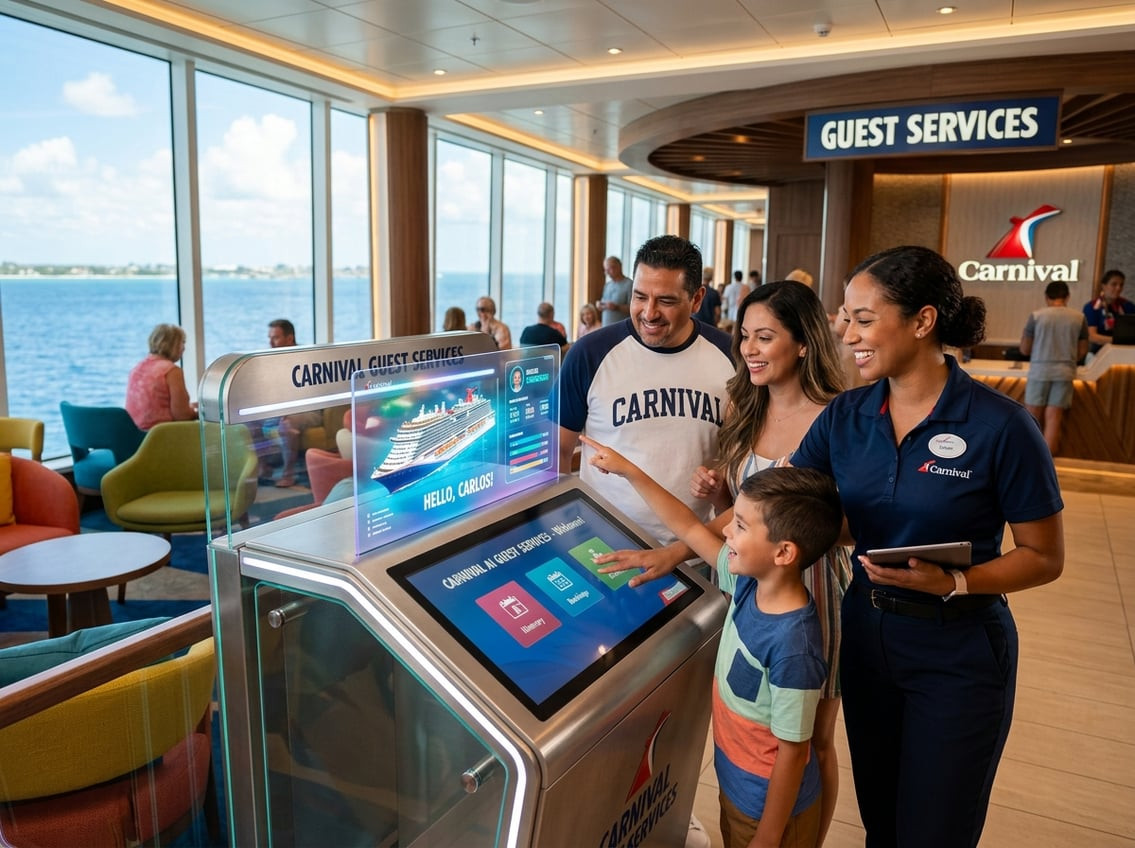
If you are planning a cruise or tracking the future of travel, now is the time to pay attention to how Carnival Cruise Line is using artificial intelligence to reshape the passenger experience. Explore the latest cruise technology trends, compare digital guest features across brands, and consider how smarter service can influence your next vacation choice. The cruise industry is entering a new era, and informed travelers will be best positioned to benefit from it.
Cruise travel has always promised escape, convenience, and memorable experiences, but guest expectations have changed dramatically. Today’s travelers want speed, personalization, and service that feels intuitive from the moment they book to the moment they disembark. That is why Carnival Cruise Line’s expanding use of artificial intelligence matters far beyond one brand. It reflects a wider shift in hospitality and travel, where digital systems are no longer just back-end tools. They are becoming active partners in shaping the customer journey.
For Carnival Cruise Line, AI is helping transform nearly every stage of the voyage. Pre-cruise communications are becoming more relevant and timely. Embarkation is becoming faster and less stressful. Galley operations are getting smarter, with data helping crews better anticipate demand and reduce waste. Onboard service requests can now be routed and resolved in real time with greater precision. The result is a more seamless experience for guests and a more efficient operation for the company.
This evolution is important because cruising is a uniquely complex form of travel. A ship is not just transportation. It is a floating hotel, restaurant network, entertainment venue, and logistics hub. Managing thousands of passengers and crew while maintaining service quality requires extraordinary coordination. AI gives cruise operators new ways to connect data, automate routine tasks, and support staff in delivering better experiences at scale.
As Carnival Cruise Line invests in smarter systems, it is also signaling where the industry may be headed next: toward more responsive, data-informed, and personalized vacations. For travelers, that could mean less friction and more enjoyment. For the business, it could mean stronger loyalty, better resource management, and a competitive edge in a crowded market.
Key Facts
- AI now touches multiple stages of the Carnival Cruise Line journey, including pre-voyage communication, embarkation, food operations, and onboard guest service.
- Personalization is a major goal, with artificial intelligence helping tailor information, offers, and support to passenger behavior and preferences.
- Operational efficiency is just as important as guest convenience, especially in areas such as staffing coordination, service response times, and galley planning.
Why AI Is Becoming Essential in the Cruise Industry
The cruise sector has recovered into a more digitally aware era. Guests who are used to one-click retail, app-based transportation, and personalized streaming recommendations increasingly expect travel brands to know their preferences and remove unnecessary friction. Cruise lines, historically reliant on large-scale manual coordination, are under pressure to modernize.
Artificial intelligence is especially useful in cruise operations because it can process large volumes of data quickly and identify patterns that humans alone would struggle to manage in real time. Passenger movement, dining demand, service requests, weather conditions, itinerary changes, and staffing availability all create a constant stream of operational variables. AI can help turn that complexity into actionable insight.
For Carnival Cruise Line, this is not simply about adding futuristic features. It is about making a massive hospitality operation feel more human. When AI works well, guests do not necessarily notice the technology itself. They notice that lines move faster, recommendations feel relevant, and support arrives sooner.
Pre-Voyage Communications Are Becoming More Personal
One of the first places passengers feel the impact of AI is before they ever step onboard. Traditional pre-cruise communication often overwhelms travelers with generic reminders, upsell messages, and logistical details. AI can improve this by helping Carnival Cruise Line segment guests more intelligently and deliver information based on timing, booking behavior, travel history, and likely interests.
Instead of sending the same message to every passenger, AI-supported systems can prioritize what matters most to each traveler. A first-time cruiser may need guidance on embarkation documents, dining reservations, and packing essentials. A repeat guest may be more interested in loyalty perks, specialty dining upgrades, or shore excursion suggestions. Families, couples, and solo travelers all have different needs, and AI can help reflect those differences.
This matters for more than convenience. Better communication can reduce confusion, lower call-center demand, and improve satisfaction before the vacation even begins. It also creates a stronger sense that the brand understands the traveler, which is increasingly important in a competitive leisure market.
Embarkation Gets Faster and Less Stressful
Embarkation is one of the most important moments in the cruise experience because it sets the tone for the trip. Guests arrive excited, but they may also be tired, rushed, or anxious about documents, luggage, and boarding procedures. A slow or confusing check-in can undermine the vacation mood before it starts.
AI can support expedited embarkation in several ways. It can help optimize passenger flow, flag bottlenecks, improve document verification processes, and support staffing decisions based on expected arrival patterns. When integrated with mobile tools and digital check-in systems, AI can also help identify where intervention is needed in real time.
For Carnival Cruise Line, this means a more efficient terminal experience and a smoother transition from land to sea. Faster embarkation is not just a nice feature. It reduces crowding, improves security coordination, and helps guests begin enjoying onboard amenities sooner.
In practical terms, travelers benefit from:
- Shorter wait times at check-in and security checkpoints
- Clearer guidance before arrival at the terminal
- More predictable boarding windows
- Fewer manual errors in processing travel details
That combination of speed and clarity can make a significant difference, especially on high-volume sailings.
Smart Galley Operations Could Redefine Food Service at Sea
Food is central to the cruise experience, but feeding thousands of people across multiple venues each day is one of the most complex tasks on a ship. Demand changes constantly based on itinerary, weather, demographics, excursion schedules, and guest preferences. Overproduction creates waste, while underproduction can hurt satisfaction.
AI-supported galley operations offer Carnival Cruise Line a smarter way to balance supply and demand. By analyzing historical consumption patterns and real-time behavior, AI can help forecast what passengers are likely to order, when they are likely to dine, and which venues may experience surges.
This has several important implications. First, it can improve availability and freshness by helping crews prepare the right quantities at the right times. Second, it can reduce food waste, a growing priority across hospitality and tourism. Third, it can support labor efficiency by helping kitchen teams allocate effort more effectively.
In an industry where sustainability and cost control are increasingly linked, smarter galley planning is especially valuable. Cruise lines face pressure to improve environmental performance while maintaining guest choice and abundance. AI can help bridge that gap by making operations more precise rather than simply more restrictive.
Real-Time Onboard Service Requests Improve Responsiveness
Once passengers are onboard, expectations shift from planning to experience. Guests want fast answers, easy access to information, and smooth service when they need help. Whether the issue involves housekeeping, dining, accessibility, maintenance, or activity bookings, delays can quickly affect satisfaction.
Artificial intelligence can improve this process by helping route service requests in real time, prioritize urgent needs, and match tasks to the right crew members. If integrated with mobile apps, chat systems, or guest service platforms, AI can reduce the gap between request and resolution.
For Carnival Cruise Line, this creates a stronger operational rhythm. Crew members spend less time sorting requests manually and more time solving them. Guests receive more immediate acknowledgment, which is often just as important as the final resolution. In service-heavy environments, responsiveness builds trust.
Examples of where AI can add value onboard include:
- Directing housekeeping requests to the nearest available team member
- Prioritizing maintenance issues based on urgency and location
- Helping guests find activities, dining options, or venue availability
- Supporting multilingual digital assistance for common questions
These improvements do not replace crew hospitality. They enhance it by giving staff better tools and clearer information.
Main Analysis: Personalization Is the Strategic Advantage
The most powerful promise of AI in cruising is not automation alone. It is personalization at scale. Carnival Cruise Line serves a broad audience, from families and first-time cruisers to repeat guests and celebration travelers. Delivering a consistently strong experience across that diversity is difficult using static systems.
AI creates the possibility of a more adaptive cruise journey. Recommendations can become more relevant. Communication can become more timely. Services can become more anticipatory. Instead of treating every guest as part of the same large crowd, the brand can respond to patterns in behavior and preference.
This is where AI can become a meaningful differentiator. Cruise products are often compared on itinerary, ship features, price, dining, and entertainment. Those factors still matter, but the quality of the overall journey increasingly shapes loyalty. A guest who feels recognized and supported is more likely to book again, spend more onboard, and recommend the brand to others.
Compared with traditional hospitality environments, cruise ships present both greater complexity and greater opportunity. Hotels may personalize room preferences or local recommendations. Airlines may optimize pricing and seat offers. Cruise lines can personalize a multi-day ecosystem that includes lodging, food, activities, retail, excursions, and guest services. That makes AI particularly valuable.
At the same time, success depends on thoughtful implementation. If personalization feels intrusive, inaccurate, or overly sales-driven, it can backfire. The best AI experiences are subtle, useful, and respectful of guest privacy.
Benefits for Passengers and the Business
The rise of Carnival Cruise Line artificial intelligence initiatives offers clear benefits on both sides of the travel equation.
Benefits for Passengers
- Less friction: Faster check-in, clearer communication, and easier service access reduce stress.
- More relevant experiences: Guests receive information and suggestions that better match their interests.
- Improved service speed: Real-time request handling can shorten response times.
- Better dining experience: Smarter forecasting can improve availability and reduce disappointment.
Benefits for Carnival Cruise Line
- Higher efficiency: AI can streamline operations across departments.
- Cost control: Better forecasting helps reduce waste and improve labor deployment.
- Stronger loyalty: Personalized service can increase repeat bookings and guest satisfaction.
- Better decision-making: Data-driven insights support more agile operational choices.
These gains are especially important in a business that depends heavily on scale, reputation, and repeat customers.
Challenges and Risks to Watch
Despite the promise, AI adoption in cruising is not without challenges. Data privacy is one of the most important. Guests may welcome convenience, but they also want transparency about how their information is collected, stored, and used. Cruise lines must communicate clearly and maintain strong safeguards.
Integration is another hurdle. Ships combine hospitality, logistics, retail, entertainment, and safety systems, often across legacy platforms. AI is only as effective as the quality of the data and infrastructure behind it. Poor integration can limit performance or create inconsistent experiences.
There is also the human factor. Cruise hospitality is built on warmth, personality, and attentive service. If technology is implemented in ways that feel cold or overly automated, it can erode the emotional value of the vacation. The goal should not be to replace human interaction, but to free crew members to focus on moments where human connection matters most.
Finally, there is the issue of trust in AI decision-making. Recommendations, prioritization systems, and automated communication must be accurate and fair. If guests repeatedly receive irrelevant suggestions or encounter digital friction, confidence can fade quickly.
Expert Tips for Travelers
Passengers can make the most of AI-enhanced cruising by approaching the journey proactively.
- Complete digital check-in early: The more accurate your pre-voyage information, the smoother AI-supported embarkation tools can work.
- Use the cruise app regularly: Many personalized updates, schedules, and service options are delivered through mobile platforms.
- Set preferences where possible: Dining, accessibility, and activity preferences can help improve the relevance of recommendations.
- Review privacy settings: Understand what data you are sharing and how it may improve your experience.
- Still ask for human help when needed: Digital tools are useful, but crew members remain central to resolving complex or sensitive issues.
For travelers, the smartest approach is to use the technology as a convenience layer, not as a complete substitute for direct engagement.
Industry Perspective: Carnival’s Move Reflects a Bigger Trend
Carnival Cruise Line is not operating in isolation. Across travel, artificial intelligence is reshaping customer service, operations, marketing, and forecasting. Airlines are using AI for disruption management and dynamic support. Hotels are using it for revenue optimization and guest messaging. Airports are using it to improve security and passenger flow.
What makes cruising distinctive is the breadth of the environment. A cruise line can apply AI across an entire vacation ecosystem, which creates more opportunities for continuity and personalization. That also means the stakes are higher. Success requires coordination across digital, operational, culinary, and service teams.
If Carnival Cruise Line executes well, it could strengthen its position among travelers who value convenience without sacrificing fun and hospitality. It may also push competitors to accelerate their own investments in smart cruise technology.
Future Outlook: What Comes Next
The future of AI in cruising will likely move beyond reactive service and into predictive experience design. Over time, systems may become better at anticipating needs before guests voice them. Dining demand could be forecast with greater precision. Service staffing could adjust dynamically based on onboard activity patterns. Shore excursion recommendations could become more context-aware based on weather, mobility, or family composition.
We may also see deeper integration between wearable devices, mobile apps, cabin controls, and guest profiles. That could enable more seamless room access, venue navigation, itinerary reminders, and personalized offers. On the operational side, AI may play a larger role in energy efficiency, maintenance planning, and supply chain optimization.
Still, the future should not be judged by how much technology is added, but by how naturally it improves the journey. The winning cruise experience will be one where AI fades into the background and guests simply feel that everything works better.
Conclusion
Carnival Cruise Line’s embrace of artificial intelligence marks an important step in the evolution of modern cruising. By improving communication before departure, streamlining embarkation, optimizing galley operations, and accelerating onboard service, AI is helping make the cruise journey more seamless and personalized. Just as importantly, it is showing how technology can support hospitality rather than compete with it.
The broader significance is clear. In a travel market defined by rising expectations, brands that remove friction and deliver relevance will stand out. Carnival Cruise Line’s AI strategy suggests that the future of cruising will be shaped not only by bigger ships or better itineraries, but by smarter, more responsive experiences. For travelers, that could mean vacations that feel easier, more intuitive, and more enjoyable from start to finish. For the industry, it is a sign that the next wave of innovation is already underway.
Frequently Asked Questions
What's Your Reaction?
 Like
0
Like
0
 Dislike
0
Dislike
0
 Love
0
Love
0
 Funny
0
Funny
0
 Wow
0
Wow
0
 Sad
0
Sad
0
 Angry
0
Angry
0







Comments (0)