
Disney Cruise Line Expands Further Into Asia After Successful Singapore Launch
Disney Adventure’s Singapore debut highlights Asia’s cruise surge, new family travel demand, and Disney’s expansion toward a year-round Tokyo ship in 2029.

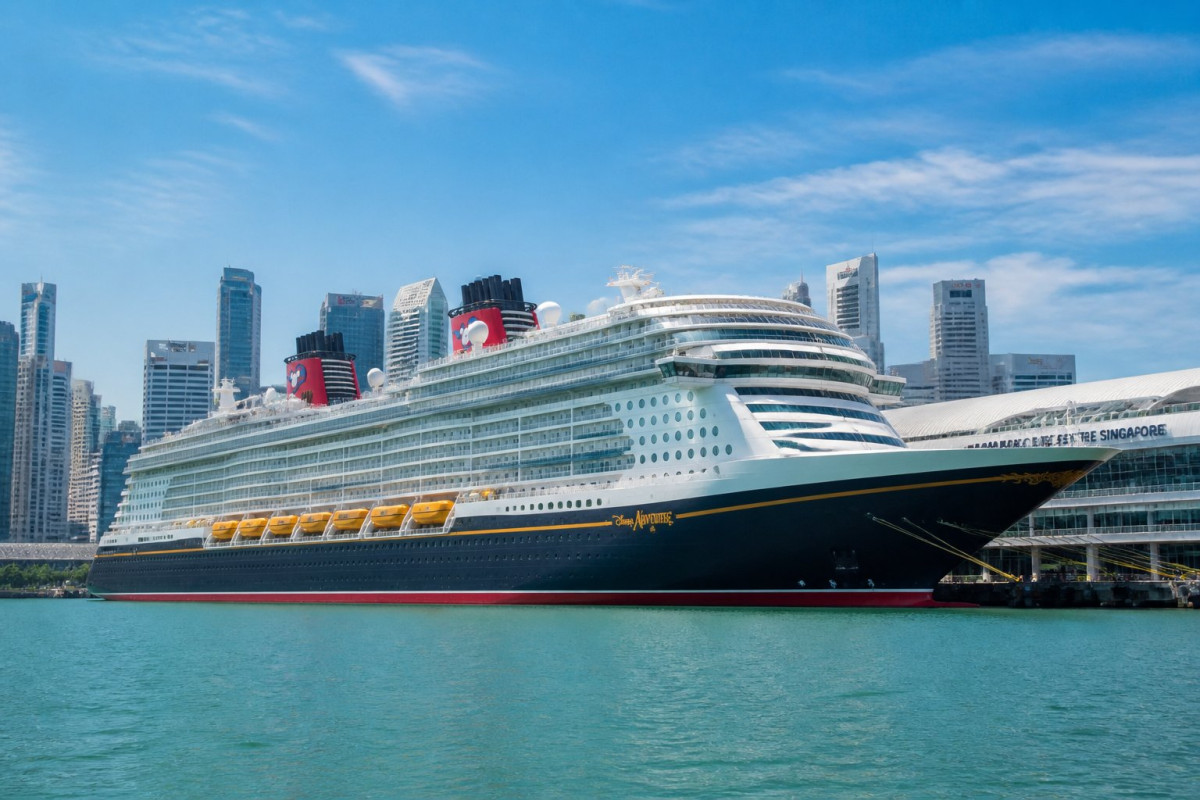
Disney Cruise Line’s launch of the Disney Adventure in Singapore is more than a fleet expansion. It is a clear signal that Asia has become one of the most important battlegrounds in global cruise tourism. As the largest ship in Disney’s fleet and the company’s first vessel purpose-built for the Asian market, the Disney Adventure represents a strategic shift in how cruise brands are designing products for regional travelers, family preferences, and year-round demand.
The timing matters. Cruise lines are competing fiercely for high-value, multi-generational travelers, and Asia is delivering exactly that audience. While headlines such as Norwegian Cruise Line Reports Record Passenger Demand for 2026 point to strong global appetite for cruise vacations, Disney’s move into Singapore and its announcement of a second dedicated ship in Tokyo in 2029 show how that demand is becoming increasingly localized. Travelers are no longer just looking for any cruise. They want culturally relevant experiences, convenient homeports, shorter itineraries, and premium entertainment designed around family connection.
For Singapore, the Disney Adventure is a tourism milestone. For Disney, it is a long-term commitment to Asia. And for the wider cruise industry, it offers a powerful case study in how to grow by listening closely to regional consumer behavior.
Key Facts
- Largest in the fleet: The Disney Adventure is the biggest ship Disney Cruise Line has introduced, with capacity for around 6,700 passengers.
- Built for Asia: It is Disney’s first ship specifically designed for the Asian market and sails from Marina Bay Cruise Centre Singapore.
- Expansion continues: After a record-breaking Singapore launch, Disney Cruise Line confirmed plans for another dedicated ship to be homeported year-round in Tokyo starting in 2029.
Why the Disney Adventure Matters Now
The Disney Adventure enters the market at a moment when cruise demand is broadening beyond traditional North American and European strongholds. Asia’s middle class continues to expand, regional air connectivity remains strong, and travelers are increasingly willing to spend on premium leisure experiences that combine convenience with entertainment. Disney is tapping into all three trends.
Unlike long-haul cruise vacations that require major planning and international flights, the Disney Adventure’s 3-night and 4-night itineraries are tailored for modern Asian travel patterns. These shorter sailings are well suited to school holidays, long weekends, and first-time cruisers who want a manageable introduction to the category. That product design is not accidental. It reflects a growing understanding that in Asia, flexibility and accessibility can be just as important as destination depth.
Singapore also offers a major advantage as a cruise hub. It is clean, efficient, globally connected, and highly trusted by international travelers. Marina Bay Cruise Centre Singapore gives Disney a premium base in a city already associated with world-class hospitality, family attractions, and strong transport infrastructure. That combination reduces friction for travelers and raises the overall appeal of the cruise experience.
Singapore’s Strategic Role in Disney’s Asia Play
Disney did not choose Singapore by chance. The city-state has spent years building its reputation as Southeast Asia’s leading cruise gateway. Its airport connectivity, stable regulatory environment, tourism ecosystem, and appeal to affluent regional travelers make it an ideal launchpad for a premium family cruise product.
From a business perspective, Singapore offers Disney several strategic benefits:
- Access to travelers from Southeast Asia, India, Australia, and Greater China
- A trusted homeport for first-time cruise guests
- Strong pre- and post-cruise tourism opportunities
- Operational efficiency and modern port facilities
- Brand alignment with premium, family-friendly travel
This matters because cruise growth today is not only about ship size. It is also about ecosystem strength. A successful homeport needs hotels, airlines, local transport, attractions, and tourism partnerships that make the full journey seamless. Singapore checks those boxes in a way few regional ports can.
How Disney Adventure Is Tailored for the Asian Market
The phrase “designed for the Asian market” is significant. It suggests more than route planning. It points to a broader rethinking of onboard experience, guest expectations, and travel behavior.
Asian family travel often includes multiple generations, with grandparents, parents, and children vacationing together. That means cruise products need to satisfy a wide range of ages, tastes, and activity preferences at the same time. Disney is especially well positioned here because its brand naturally spans generations. Grandparents recognize classic characters, parents value service and safety, and children connect with immersive storytelling.
The Disney Adventure’s shorter itineraries also reflect a practical understanding of regional demand. In many Asian markets, travelers prefer frequent, shorter premium breaks rather than one long annual vacation. This makes 3-night and 4-night sailings commercially attractive and easier to fill consistently throughout the year.
There is also a cultural dimension. Travelers in Asia often place a high value on hospitality, cleanliness, service standards, and food variety. While Disney has not positioned the ship simply as a Western import, its strategy suggests a more localized premium offering that can resonate with Asian guests without diluting the core Disney brand.
Main Analysis: What the Launch Says About the Cruise Industry
The Disney Adventure is not an isolated story. It sits within a much larger narrative of cruise industry reinvention, regionalization, and demand diversification. The headline Norwegian Cruise Line Reports Record Passenger Demand for 2026 captures one side of the market: consumers are booking cruises in large numbers, and confidence in the category is strong. Disney’s Asia expansion reveals another side: future growth will depend on where and how that demand is cultivated.
Several industry trends stand out.
1. Regional homeporting is becoming more important
Cruise lines increasingly understand that travelers prefer convenience. Homeporting ships closer to target audiences reduces travel barriers and improves booking conversion. Disney’s Singapore deployment and future Tokyo homeport strategy reflect this logic perfectly. Rather than asking Asian travelers to fly to distant embarkation ports, Disney is bringing the product to them.
2. Shorter itineraries are no longer secondary products
For years, shorter cruises were sometimes viewed as entry-level offerings. That perception is changing. Today, short itineraries can be premium, profitable, and highly strategic, especially in urban markets with strong weekend and holiday travel demand. The Disney Adventure’s 3-night and 4-night sailings align with this evolution.
3. Family travel remains one of the strongest segments
Multi-generational travel has become a resilient revenue driver. Families are willing to spend more on vacations that simplify logistics and deliver entertainment for all ages. Disney has a natural edge here, but competitors are also pursuing this segment aggressively through family suites, expanded kids’ clubs, and destination partnerships.
4. Asia is moving from potential to priority
For years, cruise executives spoke about Asia as a market of future promise. The Disney Adventure suggests that future has arrived. Demand is no longer theoretical. It is strong enough to justify a dedicated ship in Singapore and another year-round vessel in Tokyo by 2029.
Disney vs. Other Cruise Growth Signals
Comparing Disney’s move with broader industry momentum helps explain why this launch is so important. When reports state that Norwegian Cruise Line Reports Record Passenger Demand for 2026, they underline the scale of consumer enthusiasm across the sector. But Disney’s strategy differs in a few meaningful ways.
- Brand-led loyalty: Disney sells not just a cruise, but a storytelling ecosystem with deep emotional recognition.
- Family-first positioning: While many cruise lines target families, Disney is built around them from the ground up.
- Regional adaptation: The Disney Adventure is not simply redeployed capacity; it is a purpose-designed response to Asian demand.
- Destination strategy: Singapore and Tokyo are powerful urban gateways that support premium year-round operations.
That does not mean competitors are standing still. In fact, the broader demand environment is favorable for multiple brands. But Disney’s Asia strategy is notable because it combines strong consumer demand with a highly localized deployment model.
Benefits for Travelers
For consumers, the Disney Adventure offers several clear advantages, especially for families and first-time cruisers in Asia.
- Easy access: Singapore is one of the easiest cities in Asia to reach and navigate.
- Short, manageable sailings: Travelers can enjoy a premium cruise without committing to a week or more.
- Multi-generational appeal: The onboard experience is designed to entertain children, parents, and grandparents.
- Trusted brand experience: Disney’s reputation for service, safety, and themed entertainment adds confidence for new cruisers.
- Pre- and post-cruise options: Guests can combine the sailing with a broader Singapore vacation.
These benefits are especially powerful in a region where many travelers are still entering the cruise category for the first time. A short Disney sailing can serve as both a holiday and a trial experience, potentially creating long-term brand loyalty.
Benefits for Singapore and the Regional Economy
The impact extends well beyond the ship itself. Large-scale cruise deployments generate spending across hotels, airlines, food services, attractions, transport, and retail. A high-profile brand like Disney also adds destination prestige, helping Singapore strengthen its profile as a family tourism hub.
Economic benefits may include:
- Higher visitor spending before and after cruises
- More demand for hospitality and tourism services
- Increased international visibility for Singapore as a cruise gateway
- Stronger partnerships between cruise operators and local tourism stakeholders
These ripple effects help explain why cruise homeport competition is intensifying across Asia. Ports are not just competing for ships. They are competing for ecosystem value.
Challenges Disney and the Industry Must Navigate
Despite the optimism, success is not guaranteed. The Disney Adventure enters a promising but competitive environment, and several challenges remain.
- Pricing sensitivity: Disney is a premium brand, and affordability can become a barrier in some markets.
- Cultural localization: Delivering a globally recognizable product while meeting local expectations requires careful execution.
- Operational complexity: Large ships demand efficient embarkation, staffing, supply chains, and service consistency.
- Competition: Other cruise lines are also targeting Asia with family-friendly and short-cruise products.
- Economic volatility: Consumer travel spending can shift quickly due to inflation, currency movements, or geopolitical uncertainty.
Disney’s advantage is its brand strength, but premium positioning also raises expectations. Guests will expect exceptional service, smooth logistics, and a product that feels both magical and regionally relevant.
Expert Tips for Travelers Considering Disney Adventure
- Book early for peak periods. School holidays, festive seasons, and long weekends are likely to see the strongest demand.
- Plan extra time in Singapore. Turning the cruise into a broader city break can add significant value to the trip.
- Compare cabin categories carefully. Families should evaluate space, location, and convenience rather than choosing solely on price.
- Watch bundled offers. Cruise lines and travel advisors often package transfers, hotels, or onboard credits.
- Use a specialist travel advisor if needed. First-time cruisers may benefit from help with dining schedules, documentation, and family planning.
Future Outlook: From Singapore to Tokyo and Beyond
The announcement of a year-round Disney ship in Tokyo in 2029 is perhaps the strongest sign that this is a long-term strategy, not a one-off deployment. Tokyo offers access to one of the world’s most sophisticated travel markets, with strong domestic demand, high service expectations, and deep brand affinity for Disney.
Together, Singapore and Tokyo create a compelling Northeast and Southeast Asia network. This gives Disney broader geographic reach and allows the company to refine its regional offerings over time. It may also encourage rival cruise brands to accelerate their own Asia strategies.
Looking ahead, several developments seem likely:
- More cruise lines will deploy ships closer to major Asian source markets
- Short premium itineraries will continue gaining traction
- Family and multi-generational travel products will become even more specialized
- Homeports with strong infrastructure will capture outsized growth
- Brand differentiation will matter more as competition intensifies
In that context, the Disney Adventure is not just a new ship. It is a marker of where the market is heading.
If you are tracking the future of cruise travel in Asia, the Disney Adventure is a development worth watching closely. Whether you are a traveler planning your next family holiday, a tourism professional assessing regional trends, or an investor following the cruise sector, this launch offers valuable insight into where demand is moving next. Explore sailing options, compare Asia cruise homeports, and stay informed as Disney and other major lines reshape the region’s travel landscape.
Conclusion
The Disney Adventure’s Singapore debut marks a defining moment for both Disney Cruise Line and the wider Asian cruise market. It combines scale, brand power, and regional strategy in a way that few launches have managed in recent years. At the same time, Disney’s decision to place another ship in Tokyo by 2029 confirms that Asia is no longer a side opportunity. It is a central pillar of future cruise growth.
As industry headlines such as Norwegian Cruise Line Reports Record Passenger Demand for 2026 continue to reflect rising consumer enthusiasm, Disney’s expansion shows that the next phase of competition will be shaped by localization, convenience, and experience design. For travelers, that means better access and more tailored options. For destinations like Singapore and Tokyo, it means stronger tourism momentum. And for the cruise industry, it signals that Asia’s family travel boom is only just beginning.
Disney Cruise Line Frequently Asked Questions
What's Your Reaction?
 Like
0
Like
0
 Dislike
0
Dislike
0
 Love
0
Love
0
 Funny
0
Funny
0
 Wow
0
Wow
0
 Sad
0
Sad
0
 Angry
0
Angry
0


Comments (0)