
2026 Airline Profits Drop to $23B: Will Airfares Rise?
IATA’s 2026 outlook shows airline profits cut to $23 billion. Learn how fuel, costs, and capacity pressures may affect ticket prices.

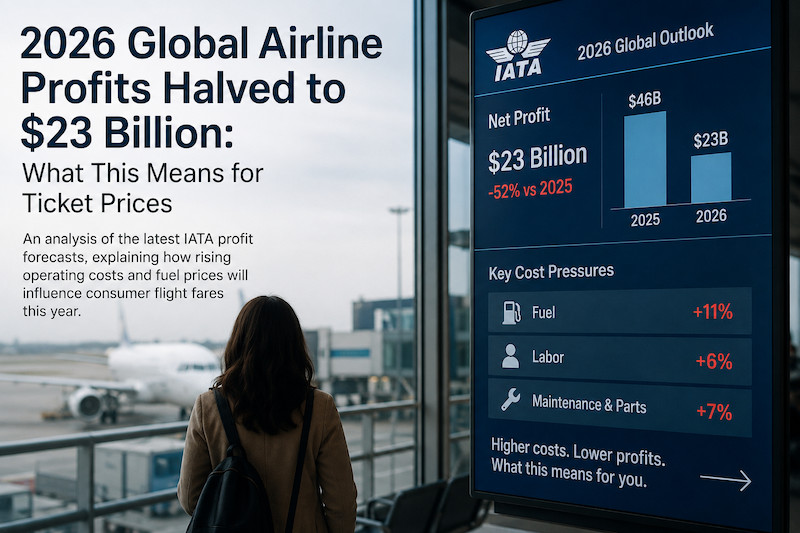
The latest industry outlook points to a much tougher year for airlines than many executives and travelers had hoped. According to updated IATA profit forecasts, global airline profits for 2026 are expected to fall to about $23 billion, roughly half the level many observers had associated with the sector’s recent recovery momentum. That headline matters not only to investors and airline management teams, but also to ordinary passengers wondering whether flight tickets will become more expensive in the months ahead.
At first glance, a profit figure in the tens of billions may still sound healthy. Yet in aviation, headline profits can be misleading. Airlines operate on notoriously thin margins, face large swings in fuel and labor expenses, and must absorb constant volatility from currency movements, airport charges, maintenance costs, aircraft financing, and geopolitical disruption. When projected profits are cut so sharply, it usually signals that carriers have less room to absorb rising costs internally. In practical terms, that often increases the likelihood that at least part of those costs will be passed on to consumers through higher fares, reduced promotional activity, or stricter ancillary pricing.
For travelers, the key question is not simply whether ticket prices will rise across the board. The more useful question is where, when, and by how much fares may change. Airlines do not price tickets in a single uniform way. They adjust fares route by route, cabin by cabin, and even day by day, depending on fuel costs, demand strength, competition, and available seats. That means the impact of weaker industry profitability will likely be uneven. Some routes may see noticeable fare pressure, while others could remain competitive if airlines need to fill capacity.
Why the profit downgrade matters
IATA’s lower forecast reflects a combination of rising operating costs and a more difficult earnings environment. The issue is not necessarily collapsing demand. In many markets, travel appetite remains resilient, especially for leisure trips and key international corridors. The problem is that costs are climbing faster than airlines can comfortably offset them. When that happens, revenue growth may continue while profitability still deteriorates.
Airline economics are highly sensitive to relatively small changes in cost assumptions. A modest increase in jet fuel prices can erase a significant share of margin. The same is true for labor contracts, maintenance events, aircraft leasing rates, and airport fees. Because many of these costs are either fixed or difficult to cut quickly, management teams are often left with limited options: improve efficiency, trim capacity, push ancillary sales, or raise fares where demand conditions allow.
This is why the halving of profit expectations is so important. It suggests the sector’s financial cushion is thinner than it appeared. In a fragile margin environment, airlines become more disciplined about discounting. They may still offer sales, but broad-based cheap fares become harder to sustain when every seat must contribute more to covering elevated costs.
The biggest driver: fuel prices
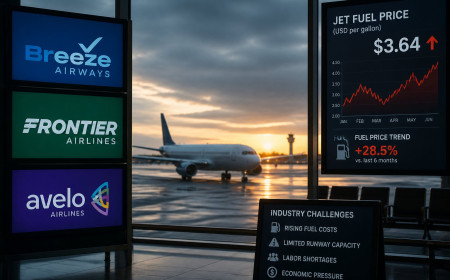
Fuel remains one of the most influential variables in airline pricing. Jet fuel is typically among the largest single expenses for carriers, and it can change quickly based on crude oil markets, refining capacity, regional supply constraints, and geopolitical tensions. Even if demand for flights remains strong, a sustained rise in fuel costs can materially alter airline pricing strategies.
When fuel becomes more expensive, airlines generally respond in several ways:
- Higher base fares on routes with strong demand and limited competition.
- Reduced discount inventory, especially during peak travel periods.
- Fuel-related surcharges in some international markets where pricing structures allow them.
- Network adjustments that prioritize more profitable routes and aircraft utilization.
- Greater emphasis on premium cabins and ancillary revenue to protect margins.
Not every airline is affected equally. Some carriers hedge fuel costs, locking in prices for part of their consumption. Others remain more exposed to spot market changes. Low-cost airlines, network carriers, and long-haul specialists all face different levels of vulnerability depending on fleet efficiency, route structure, and commercial strategy. Still, if fuel remains elevated across much of 2026, travelers should expect at least some upward pressure on fares, particularly on long-haul routes where fuel represents a larger share of trip economics.
Operating costs are rising beyond fuel
Fuel may dominate headlines, but it is only part of the story. Airlines are also dealing with broader operating cost inflation. Labor is a major factor. Across many regions, pilots, cabin crew, mechanics, and ground staff have secured or are seeking higher pay after years of operational strain and labor shortages. Those wage increases are understandable from a workforce perspective, but they add to the cost base that airlines must recover.
Maintenance is another growing burden. Supply chain bottlenecks, delayed parts availability, and engine-related inspections have increased both direct maintenance costs and indirect costs from aircraft downtime. When planes are unavailable, airlines may have fewer seats to sell, which can tighten capacity and support higher fares. Lease rates and financing costs have also become more relevant as interest rates and aircraft demand influence the cost of fleet expansion or replacement.
Then there are airport and air navigation charges. In many markets, airports continue to raise fees to fund infrastructure, recover losses, or support expansion projects. Those charges eventually feed into airline pricing models. For passengers, the effect may not always appear as a visible fee line item, but it can still contribute to a higher final ticket price.
Will ticket prices definitely go up?
The short answer is probably in many markets, but not uniformly. Airlines do not set fares solely based on costs. Demand, competition, seasonality, and capacity are equally important. If a route has intense competition, carriers may absorb some cost increases rather than lose market share. If demand softens unexpectedly, airlines may still discount to fill seats even in a high-cost environment. Conversely, if demand remains strong and capacity is constrained, fares can rise sharply.
In 2026, several scenarios could play out at the same time:
- Popular leisure routes may remain expensive during holidays because airlines know travelers are willing to pay.
- Business-heavy corridors could hold firm on pricing if corporate demand stays stable.
- Highly competitive short-haul markets may continue to offer selective bargains, especially from low-cost carriers.
- Long-haul international flights may face the strongest fare pressure because fuel, crew, and operational complexity are greater.
- Off-peak travel windows may still produce deals, but fewer ultra-cheap fares than travelers saw during earlier recovery phases.
So while a broad airfare surge is not guaranteed, the conditions do support a firmer pricing environment overall. Consumers should be prepared for fewer deep discounts and more variability between travel dates.
Capacity constraints could keep fares elevated
One of the most important but less visible influences on pricing is capacity. If airlines had abundant aircraft, plentiful crews, and smooth supply chains, they could add seats aggressively and compete harder on price. But the industry continues to face aircraft delivery delays, maintenance-related groundings, and operational constraints in certain regions. That means supply may not grow fast enough to fully relieve fare pressure, even if airlines want to expand.
Capacity constraints matter because airfare pricing is fundamentally about seat availability relative to demand. When there are fewer seats than the market wants at a given time, prices rise. This is especially true on major international routes, holiday periods, and destinations with limited airline competition. If the profit downgrade causes airlines to become even more cautious about adding unprofitable flying, capacity discipline could reinforce higher average fares.
From a consumer standpoint, this means that waiting for last-minute bargains may be riskier in 2026 than in softer market years. On routes where supply is tight, late-booking travelers could face significantly higher prices.
How different travelers may be affected
The impact of the weaker profit outlook will not be the same for every passenger segment.
Leisure travelers are likely to feel the most visible effect because they are highly price-sensitive and often compare multiple dates and destinations. They may notice that school holiday flights, summer departures, and nonstop options remain expensive longer than expected.
Business travelers may see less dramatic changes in some markets because their employers often prioritize schedule convenience over the absolute lowest fare. Airlines know this and may maintain premium pricing on key corporate routes.
Budget travelers will still find opportunities, but the cheapest fares may come with more restrictions. Expect continued emphasis on unbundled pricing, paid seat selection, baggage fees, and dynamic ancillary charges.
Long-haul passengers may be especially exposed to fuel-driven pricing, as intercontinental flights are more sensitive to energy costs and operational complexity.
Premium cabin travelers may see airlines protecting high-yield inventory more aggressively, though competition in some international business-class markets could still create tactical offers.
What airlines are likely to do next
Faced with lower projected profits, airlines will likely pursue a mix of defensive and commercial strategies rather than relying on fare increases alone. These may include:
- Improving route profitability by shifting capacity toward stronger markets.
- Retiring or reducing use of less fuel-efficient aircraft where possible.
- Expanding ancillary revenue through baggage, seating, lounge access, and bundled products.
- Using more sophisticated revenue management to maximize yield from each flight.
- Protecting premium demand while limiting unnecessary discounting in economy cabins.
For consumers, this means the total trip cost may rise even when the advertised base fare does not move dramatically. A ticket that looks competitive at first glance can become more expensive once baggage, seat selection, boarding priority, and flexibility are added. In a lower-profit environment, airlines have strong incentives to extract more value from each passenger beyond the initial fare.
What this means for airfare trends in 2026
The most realistic outlook is not a simple yes-or-no answer on ticket prices, but a pattern of selective inflation. Average fares may trend higher in many regions, especially where fuel remains expensive and capacity growth is constrained. However, travelers should not assume every route will become unaffordable. Competition still matters, and airlines will continue to use promotions tactically to stimulate demand, defend market share, or support new routes.
Expect the following broad trends:
- Higher fares during peak seasons and on high-demand international routes.
- Less aggressive discounting than in periods when airlines were focused primarily on rebuilding traffic.
- Greater fare dispersion, with larger gaps between basic economy and flexible or premium products.
- More emphasis on ancillary fees as a margin-protection tool.
- Continued opportunities for savings through early booking, flexible dates, and secondary airports.
In other words, 2026 is shaping up to be a year in which travelers may need to work harder to secure good value. The era of assuming that competition alone will keep prices low is less certain when the industry’s profit pool is shrinking.
How consumers can respond
Travelers are not powerless in this environment. A few practical strategies can help reduce the impact of rising airline costs on personal travel budgets:
- Book earlier for peak periods. If capacity is tight, waiting may cost more.
- Be flexible with travel days. Midweek departures often remain cheaper than Friday or Sunday flights.
- Compare total trip cost, not just base fare. Fees can change the value equation significantly.
- Consider nearby airports if ground transport options are reasonable.
- Use fare alerts and loyalty points to capture temporary pricing dips.
- Avoid peak holiday windows when possible, especially on long-haul routes.
These tactics will not eliminate market-wide fare pressure, but they can help travelers navigate a year in which airline pricing is likely to become more disciplined and less forgiving.
Bottom line
The reduction in projected global airline profits to $23 billion is more than an industry accounting story. It is a sign that the economics of flying are tightening again, largely because rising fuel and operating costs are eroding margins. For consumers, that does not automatically mean every ticket will become dramatically more expensive. But it does mean airlines have less room to absorb cost shocks, less incentive to discount broadly, and stronger motivation to protect revenue through higher fares, stricter inventory control, and expanded ancillary charges.
The result is likely to be a mixed but generally firmer airfare environment in 2026. Travelers on competitive short-haul routes may still find deals, especially outside peak periods. Those booking long-haul, holiday, or capacity-constrained flights should be prepared for higher prices and fewer bargains. The central takeaway is clear: when airline profits are cut sharply, consumers usually feel at least part of the pressure at the checkout stage.
Frequently Asked Questions
What's Your Reaction?
 Like
0
Like
0
 Dislike
0
Dislike
0
 Love
1
Love
1
 Funny
0
Funny
0
 Wow
0
Wow
0
 Sad
0
Sad
0
 Angry
0
Angry
0





Comments (0)