
Lufthansa Allegris First Class Lands in Major U.S. Cities
Lufthansa’s Allegris first class brings double-bed suites, caviar service, and elevated luxury to key U.S. routes.

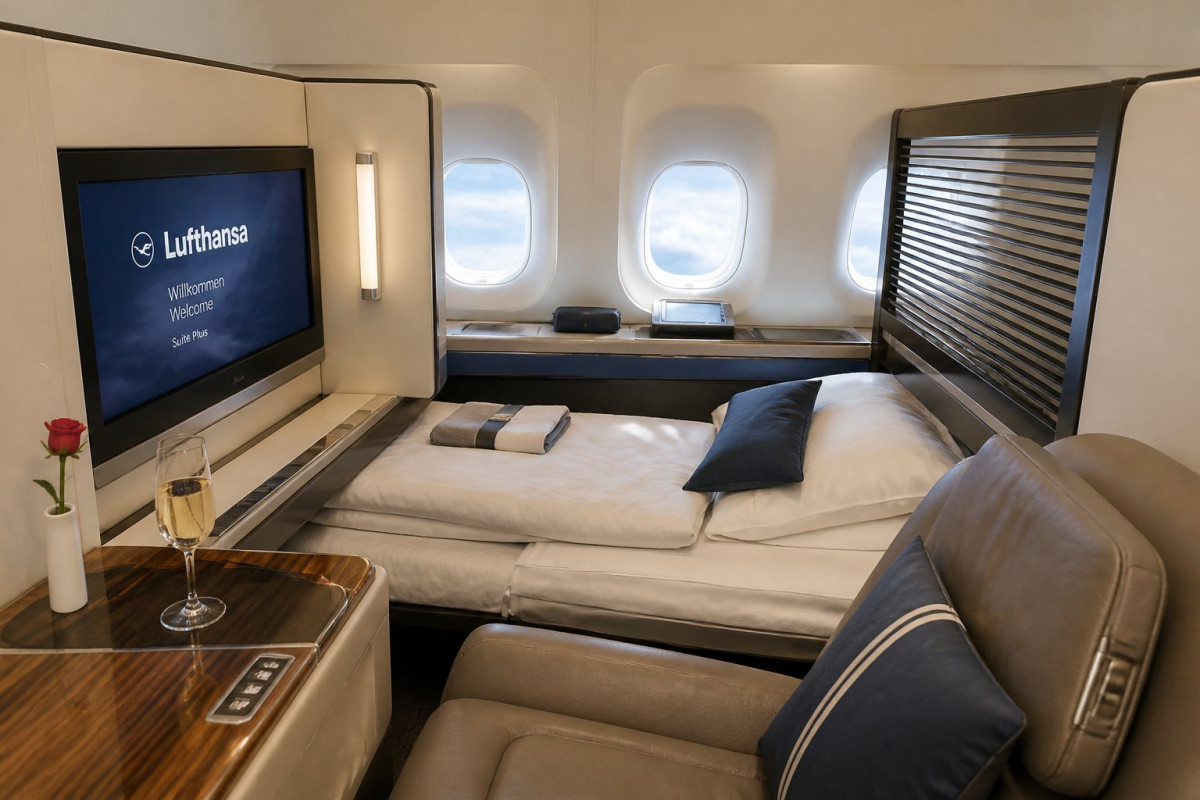
Lufthansa is raising the bar for long-haul luxury with a first-class product designed to feel less like a traditional airline seat and more like a private boutique hotel room in the sky. For travelers departing from major U.S. cities, the German flag carrier’s upgraded Allegris cabin signals a major shift in what premium air travel can look like on transatlantic routes. While airlines often promise elevated comfort, Lufthansa’s latest first-class vision stands out because it combines privacy, space, technology, and highly personalized service in a way that feels intentionally exclusive rather than merely expensive.
The headline feature drawing the most attention is the airline’s remarkable Suite Plus, a double cabin concept that allows two travelers to share a spacious enclosed suite and, notably, convert the seating area into a double bed. In a market where many premium cabins compete on incremental improvements, that detail alone places Lufthansa in a rarefied category. Add in caviar service, a large 43-inch 4K entertainment screen, tablet-based controls, and a “Do Not Disturb” function, and the result is an experience crafted for passengers who want the journey itself to feel as memorable as the destination.
For U.S.-based travelers, this matters because premium international flying has become increasingly competitive, especially on routes linking North America and Europe. Airlines are no longer simply selling transportation in first class; they are selling time, comfort, exclusivity, and the ability to arrive rested and impressed. Lufthansa’s Allegris rollout suggests the airline understands that top-tier passengers expect more than champagne and a wider seat. They want a cabin that feels private, intuitive, and thoughtfully luxurious from boarding to landing.
A new chapter for Lufthansa’s premium strategy
Lufthansa has spent years refining its premium image, and Allegris represents one of its most ambitious cabin investments to date. Rather than limiting upgrades to a single class, the airline has introduced refurbished versions of economy, premium economy, business, and first class. That broader redesign is significant because it shows a commitment to modernizing the entire onboard experience, not just polishing the most elite cabin for marketing appeal.
Still, first class remains the emotional centerpiece of the Allegris story. It is where Lufthansa can most clearly communicate its vision of modern luxury: understated, technologically advanced, and deeply service-oriented. In contrast to flashy gimmicks, the airline’s approach feels rooted in the idea that premium travelers value control and calm as much as glamour. Every design decision in the new first-class concept appears to serve that purpose, from enclosed walls and generous seating dimensions to customizable settings that reduce interruptions.
This strategy also positions Lufthansa strongly against competitors in the premium long-haul space. Travelers comparing first-class options often look at hard-product details first: seat width, privacy doors, bed comfort, storage, entertainment size, and suite configuration. Lufthansa’s answer is not merely competitive; in some respects, it is aspirational. The Suite Plus concept, in particular, gives the airline a talking point few others can match so directly.
Why the Suite Plus is such a major draw
The most talked-about feature of Lufthansa’s new first-class cabin is undeniably the Suite Plus, and for good reason. Designed as an extravagant double cabin, it offers a setup that caters especially well to couples or companions traveling together. Instead of sitting separately in adjacent premium seats, passengers can share a private enclosed space that feels far more intimate and residential than standard airline seating.
The ability to transform two wide seats into a double bed is what pushes the concept into true headline territory. On overnight flights between the United States and Europe, quality sleep is often the single most valuable luxury. A flat bed is expected in premium cabins, but a double bed inside a dedicated suite introduces a level of comfort and companionship rarely seen in commercial aviation. For honeymooners, anniversary travelers, high-net-worth leisure passengers, or simply those who value shared experiences, this feature is likely to be enormously appealing.
What makes the Suite Plus especially persuasive is that it is not luxury for luxury’s sake. It addresses a real emotional gap in premium travel: the fact that even the finest airline cabins often isolate travelers from the people they are flying with. Lufthansa offers a solution that preserves privacy from the rest of the cabin while allowing connection within the suite itself. That balance between exclusivity and togetherness may be one of the product’s most commercially powerful advantages.
There is also a branding benefit. In a crowded premium marketplace, standout products become identity markers. Just as certain airlines are immediately associated with onboard showers, ultra-private suites, or iconic lounge bars, Lufthansa now has a first-class feature that is instantly memorable. The Suite Plus is not simply a seat category; it is a statement about what the airline wants first class to represent in the coming years.
Privacy, technology, and control define the experience
Luxury travel today is increasingly about personalization, and Lufthansa’s Allegris first class appears designed around that expectation. The suite’s 43-inch monitor with 4K quality is more than just an entertainment upgrade. It reflects a recognition that premium passengers want a visually immersive environment that feels closer to home entertainment than conventional in-flight screens. On long-haul journeys, a display of that size can dramatically improve the experience of watching films, catching up on series, or simply following the flight with a greater sense of engagement.
The inclusion of a tablet to adjust suite settings reinforces the premium positioning. Rather than relying on scattered buttons or crew assistance for every minor preference, travelers can manage aspects of their immediate environment with ease. In modern luxury design, convenience often defines sophistication, and Lufthansa seems to understand that intuitive control is itself a form of comfort.
Then there is the “Do Not Disturb” button, a small but meaningful detail. First-class passengers often value uninterrupted rest more than overt attentiveness. A feature like this signals that Lufthansa is thinking beyond traditional notions of service and embracing a more contemporary understanding of privacy. True luxury is not just about being served constantly; it is about being understood well enough that service can become discreet, responsive, and invisible when desired.
Together, these elements create a cabin experience that feels less transactional and more tailored. The traveler is not simply occupying a premium seat. They are curating a private environment according to mood, schedule, and need. That distinction matters, especially for passengers who fly frequently and have become difficult to impress.
Caviar service still matters in first class
Even in an age of advanced cabin technology and design innovation, traditional markers of first-class indulgence continue to carry weight. Lufthansa’s caviar service is one of those enduring symbols. It signals ceremony, abundance, and a commitment to preserving the rituals that many travelers still associate with elite air travel.
In practical terms, dining remains one of the most memorable components of any long-haul premium journey. A beautifully presented meal can transform the pace of a flight, offering passengers not just nourishment but occasion. Caviar service, in particular, communicates that Lufthansa is not abandoning classic first-class expectations in pursuit of modern minimalism. Instead, the airline is blending heritage luxury with contemporary comfort.
That combination is important because high-end travelers are not a monolith. Some are drawn to innovation and sleek design; others still cherish the timeless cues of refined hospitality. Lufthansa’s Allegris first class appears to speak to both audiences. The result is a product that feels modern without losing the gravitas traditionally associated with international first class.
For many passengers, these culinary touches also reinforce the psychological value of the fare. First class is, by nature, a premium purchase, and travelers want visible and tangible confirmation that they are receiving something extraordinary. Caviar service, elevated table settings, and attentive meal pacing all help create that sense of distinction.
What this means for major U.S. gateways
The arrival of Lufthansa’s elevated first-class experience in major U.S. cities is especially significant because these markets are among the most competitive and visible in global aviation. Routes connecting cities such as New York, Los Angeles, Chicago, Miami, Boston, San Francisco, and Washington, D.C., to Europe attract a mix of business leaders, affluent leisure travelers, international connectors, and premium loyalty customers. These are exactly the passengers airlines fight hardest to win.
By introducing Allegris first class on key U.S. services, Lufthansa is strengthening its appeal at the point where consumer expectations are highest. American travelers booking transatlantic premium tickets often compare multiple carriers before committing. Schedule and price matter, but so do prestige, comfort, and the promise of a differentiated experience. Lufthansa now has a stronger story to tell in that decision-making process.
There is also a strategic network advantage. Lufthansa’s hubs in Germany offer broad onward connectivity across Europe, the Middle East, Africa, and parts of Asia. For U.S. travelers, the first-class proposition is therefore not only about the transatlantic segment itself but about beginning a larger international itinerary in exceptional comfort. A standout first-class product can make Lufthansa more attractive not just for travel to Germany, but for onward journeys across the airline’s wider network.
For premium corporate travelers, the cabin may also offer productivity and recovery benefits. While first class is often framed around leisure indulgence, many business passengers value privacy, rest, and reduced stress above all else. A spacious suite, minimal interruption, and quality sleep can directly affect performance upon arrival. Lufthansa’s new product appears well positioned to meet those priorities.
How Allegris reflects broader changes in luxury aviation
Lufthansa’s upgraded first class is arriving at a time when the definition of luxury in aviation is evolving. Travelers increasingly expect experiences that are both high-touch and high-tech. They want elegance, but they also want smart design. They want attentive service, but on their own terms. They want exclusivity, but not stiffness. The best premium cabins now succeed by making the passenger feel empowered rather than overwhelmed.
Allegris reflects that shift clearly. The product does not rely only on visual prestige. Instead, it emphasizes how the passenger lives in the space: how they sleep, how they watch, how they dine, how they control their surroundings, and how much privacy they can preserve. These priorities mirror wider trends in luxury hospitality, where personalization and seamlessness have become more important than overt extravagance alone.
At the same time, Lufthansa is tapping into a renewed appetite for aspirational travel. After years of disruption and changing travel patterns, many consumers are more selective about where they spend on premium experiences. When they do choose to splurge, they want something unmistakably special. A first-class suite with a double bed and caviar service is exactly the kind of product that captures imagination and justifies aspiration.
That is why the Allegris launch has resonance beyond Lufthansa itself. It illustrates how airlines are rethinking the emotional value of premium cabins. The goal is no longer just to transport passengers comfortably. It is to create an experience worth talking about, worth photographing, and, most importantly, worth choosing again.
The bottom line for luxury travelers
Lufthansa’s Allegris first class is more than a cabin refresh. It is a carefully constructed statement about the future of premium long-haul travel. With the Suite Plus double cabin, convertible double bed, 43-inch 4K screen, tablet controls, privacy features, and classic touches like caviar service, the airline has assembled a product that feels both contemporary and indulgent. For travelers flying from major U.S. cities, it offers a compelling new reason to consider Lufthansa for transatlantic and beyond-Europe itineraries.
What makes the experience especially persuasive is that it goes beyond surface-level luxury. It addresses the real desires of premium passengers: deeper rest, more personal space, more privacy, more intuitive control, and more meaningful comfort. In that sense, Lufthansa is not just improving first class. It is redefining what many travelers may now expect from it.
For anyone who sees flying as part of the journey rather than merely the means to an end, Lufthansa’s latest first-class evolution deserves close attention. In a category where true innovation is rare, Allegris manages to feel fresh, distinctive, and genuinely elevated. And in an era when airlines compete fiercely for premium loyalty, that may be the most valuable upgrade of all.
What's Your Reaction?
 Like
0
Like
0
 Dislike
0
Dislike
0
 Love
1
Love
1
 Funny
0
Funny
0
 Wow
0
Wow
0
 Sad
0
Sad
0
 Angry
0
Angry
0







Comments (0)