
Why the U.S. Budget Airline Model Is Losing Altitude
If you want to make smarter travel decisions in this changing market, keep following airline strategy, fare trends, and route developments.

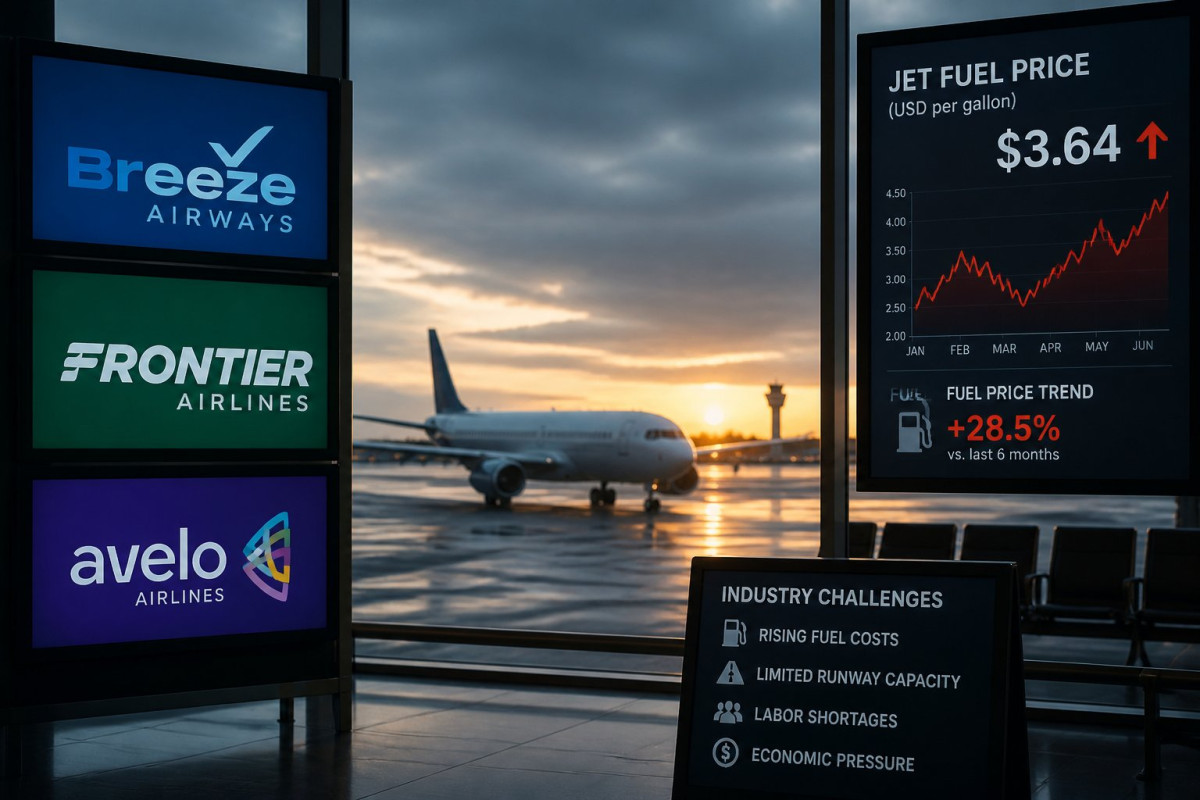
The U.S. budget airline model is under more pressure than many travelers realize. For years, ultra-low-cost carriers promised a simple bargain: strip away the extras, sell the cheapest possible seat, and let passengers pay only for what they use. That formula helped airlines such as Spirit, Frontier, Allegiant, and newer entrants like Avelo and Breeze carve out space in one of the world’s most competitive aviation markets. But the economics that once made that strategy compelling are becoming harder to sustain.
Spirit’s bankruptcy has become the clearest symbol of the strain. While some rivals may benefit in the short term by picking up aircraft, airport slots, or price-sensitive customers, the larger story is not about one airline’s missteps. It is about a structural shift in the U.S. market. Major network carriers such as Delta, United, and American have become more sophisticated at defending their turf. They can use loyalty programs, premium cabins, massive schedules, and co-branded credit cards to keep customers in their ecosystems. At the same time, many travelers are showing a greater willingness to pay for comfort, flexibility, and perks rather than simply chasing the lowest base fare.
The challenge is also geographic. Unlike Europe, where many low-cost routes are relatively short and dense, U.S. flights often cover much longer distances. That raises fuel burn, crew costs, and operational complexity. In other words, the very map of the United States makes the classic low-cost model harder to run profitably. Jet fuel prices matter, but they are far from the only reason the runway is getting shorter for budget airlines.
This matters for consumers, investors, airport operators, and the broader travel industry. If low-cost carriers struggle, travelers may face fewer fare wars and less competition. Smaller cities could lose service options. At the same time, the next phase of the market may create opportunities for airlines that can blend affordability with reliability and a more appealing customer experience. Understanding where the U.S. budget airline model stands today helps explain where domestic air travel is headed next.
Key Facts at a Glance
- Spirit’s bankruptcy is a warning sign for the broader low-cost segment, not just an isolated event.
- Major airlines now compete more aggressively for price-sensitive travelers through basic economy fares while keeping premium upsell options.
- Loyalty programs and credit cards give large carriers a powerful revenue and retention advantage over smaller low-cost rivals.
- Traveler preferences have shifted toward premium seating, reliability, flexibility, and bundled value.
- Longer average U.S. routes make the classic ultra-low-cost model less efficient than in Europe.
- Breeze Airways, Frontier, and Avelo may gain some short-term benefits from Spirit’s troubles, but they still face the same structural pressures.
Why the Low-Cost Formula Worked for So Long
To understand why the low-cost carriers in the U.S. are under stress, it helps to remember why the model succeeded in the first place. Budget airlines simplified operations, packed more seats onto aircraft, charged extra for bags and seat assignments, and focused on keeping labor and airport costs lower than those of legacy competitors. They appealed to leisure travelers, families, and anyone willing to trade comfort for savings.
For a long period, that strategy worked because it targeted a real gap in the market. Many travelers did not need lounge access, free checked bags, or elite status. They simply wanted to get from one city to another at the lowest possible price. In many markets, the arrival of a low-cost carrier pushed down fares for everyone. That made these airlines important not only as businesses but as competitive forces.
Yet the success of the model also encouraged larger airlines to adapt. Legacy carriers learned to segment their products more effectively. Basic economy allowed them to meet low fares with low fares, while premium economy, business class, and loyalty perks protected margins. That narrowed the pricing advantage that budget airlines once relied on.
Spirit’s Bankruptcy Is a Symptom, Not the Whole Story
The headlines around Spirit Airlines bankruptcy naturally focus on one company, but the underlying issues stretch across the sector. Spirit built its brand around ultra-low fares and aggressive ancillary fees. That approach generated attention and often traffic, but it also left the airline exposed when costs rose and consumer patience for a no-frills experience weakened.
Operational disruptions can be especially damaging for budget airlines. When a carrier has a smaller network and fewer spare aircraft, delays and cancellations can cascade more quickly. Passengers may tolerate a bare-bones product if the fare is dramatically cheaper, but they are less forgiving when reliability suffers. In recent years, travelers have become increasingly sensitive to service quality, schedule stability, and rebooking options.
Spirit’s troubles also show how difficult it is for smaller carriers to navigate industry shocks. Fuel volatility, aircraft delivery delays, labor shortages, and maintenance constraints can hit all airlines, but large network carriers typically have more financial flexibility and broader revenue streams. They can offset weakness in one area with strength in another. Ultra-low-cost carriers have less room for error.
How Delta, United, and American Changed the Competitive Game
The biggest shift in domestic aviation may be the way large airlines now out-compete budget rivals on more than just network size. Delta, United, and American are no longer simply premium brands charging higher fares across the board. They have become highly segmented retailers. They can offer:
- Basic economy to match or approach low-cost pricing in many markets
- Frequent flyer programs that make travelers think long term rather than trip by trip
- Co-branded credit cards that generate substantial revenue and deepen customer loyalty
- Premium cabins and extra-legroom seats that capture higher-spending demand
- Larger schedules that provide more flexibility and recovery options during disruptions
This combination is difficult for low-cost carriers to match. A traveler comparing fares may find that the price gap between a budget airline and a legacy carrier has narrowed after factoring in bag fees, seat selection, and change flexibility. If the major airline also offers miles, a better schedule, and a more reliable connection network, the value equation changes.
That is especially true for affluent leisure travelers and small-business passengers, two groups that have become increasingly important. Even travelers who remain price-conscious are often willing to pay a little more for a more predictable experience.
Why Traveler Preferences Are Moving Upmarket
One of the most important airline industry trends is the growing demand for premium products. This does not mean every traveler suddenly wants a lie-flat seat, but it does mean many customers are prioritizing comfort and convenience more than they did before. Several factors are driving this change.
- Post-pandemic travel behavior has placed a premium on smoother, less stressful journeys.
- Higher-income leisure travelers are spending more on experiences and are less focused on rock-bottom fares.
- Remote and hybrid work has blurred the line between business and leisure travel, creating demand for flexibility and comfort.
- Airline merchandising has normalized paid upgrades, making premium options more accessible.
For budget carriers, this trend creates a strategic dilemma. If they stay relentlessly bare-bones, they risk losing relevance with travelers who want more. If they add amenities, they risk increasing costs and diluting the simplicity that made the model work. Some airlines are trying to split the difference by offering extra-legroom seats, bundled fares, or more polished service. But that can place them in a crowded middle ground between ultra-low-cost and full-service competition.
The Geography Problem: Why the U.S. Is Not Europe
Comparisons between the American and European low-cost sectors are common, but they can be misleading. In Europe, low-cost carriers often thrive on short-haul, high-frequency routes linking dense population centers. Quick turnarounds and relatively short stage lengths can support efficient operations. Travelers are also accustomed to using secondary airports and accepting a no-frills experience for short trips.
In the United States, many routes are much longer. Flying from the Northeast to Florida, the Midwest to the Southwest, or the West Coast to major leisure destinations involves more fuel, more crew time, and often greater exposure to weather and air traffic disruptions. Longer flights can make passengers more sensitive to comfort and service. They also reduce some of the cost advantages that low-cost airlines depend on.
There is another issue: airport geography. While some U.S. budget airlines have used secondary airports effectively, the country does not always offer the same density of convenient alternatives seen in Europe. In many metropolitan areas, the primary airport remains the most practical option, which can mean higher fees and tougher competition.
What Breeze, Frontier, and Avelo Can Gain—and What They Still Risk
Breeze Airways and Avelo, along with Frontier, may benefit from Spirit’s weakness in several ways. They may be able to attract displaced customers, hire experienced workers, or expand in markets where Spirit once had a strong presence. Frontier, in particular, overlaps with Spirit in the ultra-low-cost space and could capture travelers who still prioritize the cheapest fare.
But those gains should not be mistaken for a sector-wide victory. These airlines still face the same core pressures:
- Rising operating costs beyond fuel, including labor and maintenance
- Aircraft delivery uncertainty and fleet planning challenges
- Intense fare competition from larger airlines
- Consumer demand that increasingly favors reliability and comfort
- Limited loyalty ecosystems compared with major carriers
Breeze has tried to differentiate itself with underserved routes and a somewhat more elevated product than traditional ultra-low-cost airlines. Avelo has focused on secondary airports and point-to-point leisure demand. Those strategies may help, but they do not eliminate the broader market constraints. The real test is whether these carriers can build durable customer loyalty without losing cost discipline.
Benefits and Drawbacks of the Budget Airline Model
The U.S. budget airline model still offers real benefits, but its drawbacks are becoming harder to ignore.
Benefits
- Lower entry-level fares: Budget airlines can still make air travel accessible for price-sensitive consumers.
- Competitive pressure: Their presence often forces larger airlines to lower fares on overlapping routes.
- Service to underserved markets: Some low-cost carriers open routes that major airlines overlook.
- Simple fare choice: Travelers who do not need extras can avoid paying for bundled services they will not use.
Drawbacks
- Fee sensitivity: The final price can rise quickly once bags, seats, and other extras are added.
- Operational vulnerability: Smaller networks can make irregular operations more disruptive.
- Weak loyalty pull: Limited rewards programs reduce repeat-customer stickiness.
- Comfort concerns: Tighter seating and fewer amenities matter more on longer U.S. routes.
- Margin pressure: Competing solely on price becomes dangerous when larger airlines can match fares selectively.
Main Analysis: Is the Model Broken or Just Evolving?
It would be too simplistic to say the budget airline model is dead. A better conclusion is that it is evolving under harsher conditions. There is still demand for low fares, and there will always be travelers who prioritize price above all else. The question is whether a pure ultra-low-cost strategy can remain broadly profitable in the United States without adaptation.
The most likely answer is that successful airlines will need a hybrid approach. They may keep lean cost structures while improving reliability, refining bundles, and offering a slightly better onboard experience. They may focus more tightly on niche routes where major carriers are weaker, rather than trying to challenge large airlines head-on in too many markets.
Another important shift is revenue mix. Legacy carriers have shown that loyalty and premium upselling are powerful profit engines. Budget airlines may need to find their own versions of these tools, even if on a smaller scale. That could mean subscription-style perks, smarter fare families, or more targeted partnerships.
Technology and data will matter too. Airlines that can price dynamically, market more precisely, and optimize route planning in real time will have a stronger chance of surviving. The old formula of simply offering the cheapest seat is no longer enough. In a market where major carriers can discount aggressively and still monetize customers elsewhere, low-cost airlines need more than low cost. They need strategic differentiation.
Expert Tips for Travelers and Industry Watchers
- Compare the total trip cost, not just the base fare. Budget airlines can still offer value, but only if the add-on fees do not erase the savings.
- Consider reliability as part of value. A slightly higher fare may be worth it if schedule recovery options are better.
- Watch underserved routes. Airlines like Breeze and Avelo may be strongest where they avoid direct battles with major hubs.
- Pay attention to loyalty economics. Frequent travelers often get more long-term value from major carriers’ rewards programs.
- Track product changes. If low-cost carriers add bundles or premium seating, they may be signaling a strategic shift rather than simple price competition.
Future Outlook: What Happens Next?
The future of low-cost carriers in the U.S. will likely be defined by consolidation, specialization, and product refinement. Some airlines may shrink to protect margins. Others may pursue selective growth in leisure-heavy or underserved markets. A few may reposition themselves away from the harshest version of the ultra-low-cost model.
Major airlines are unlikely to surrender the low end of the market, especially as basic economy remains a useful defensive tool. At the same time, premium demand appears resilient, giving large carriers another advantage. That means smaller airlines must be sharper about where they compete and how they present value.
For consumers, the outcome may be mixed. There will still be deals, but perhaps fewer dramatic fare wars than in the past. Travelers may need to be more strategic about timing, route choice, and total-trip pricing. For the industry, the next few years will reveal whether the U.S. budget airline model can reinvent itself for a market that increasingly rewards scale, loyalty, and product segmentation.
Conclusion
The story of the U.S. budget airline model is no longer just about cheap tickets and stripped-down service. It is about whether a once-disruptive strategy can survive in a market now dominated by sophisticated legacy competitors, premium-minded consumers, and geographic realities that make low-cost flying more difficult than many assume. Spirit’s bankruptcy may create openings for Breeze, Frontier, and Avelo, but it does not erase the bigger truth: the old playbook is losing effectiveness.
That does not mean low-cost airlines have no future. It means their future will depend on adaptation. The carriers that succeed are likely to be those that combine affordability with smarter network planning, better reliability, and a clearer value proposition. Price will still matter, but it will not be enough on its own.
If you want to make smarter travel decisions in this changing market, keep following airline strategy, fare trends, and route developments. Compare total trip value before booking, watch how carriers adjust their products, and explore how changing industry dynamics could affect your next flight. The next chapter in U.S. aviation is already taking shape, and informed travelers will be best positioned to benefit from it.
Frequently Asked Questions
What's Your Reaction?
 Like
0
Like
0
 Dislike
0
Dislike
0
 Love
0
Love
0
 Funny
0
Funny
0
 Wow
0
Wow
0
 Sad
0
Sad
0
 Angry
0
Angry
0











Comments (0)