
Flights Cancelled Across America: What Travelers Need to Know
Flights cancelled throughout America are disrupting travel in Texas, Florida, Illinois, Massachusetts, Georgia and beyond. Here’s what it means now.

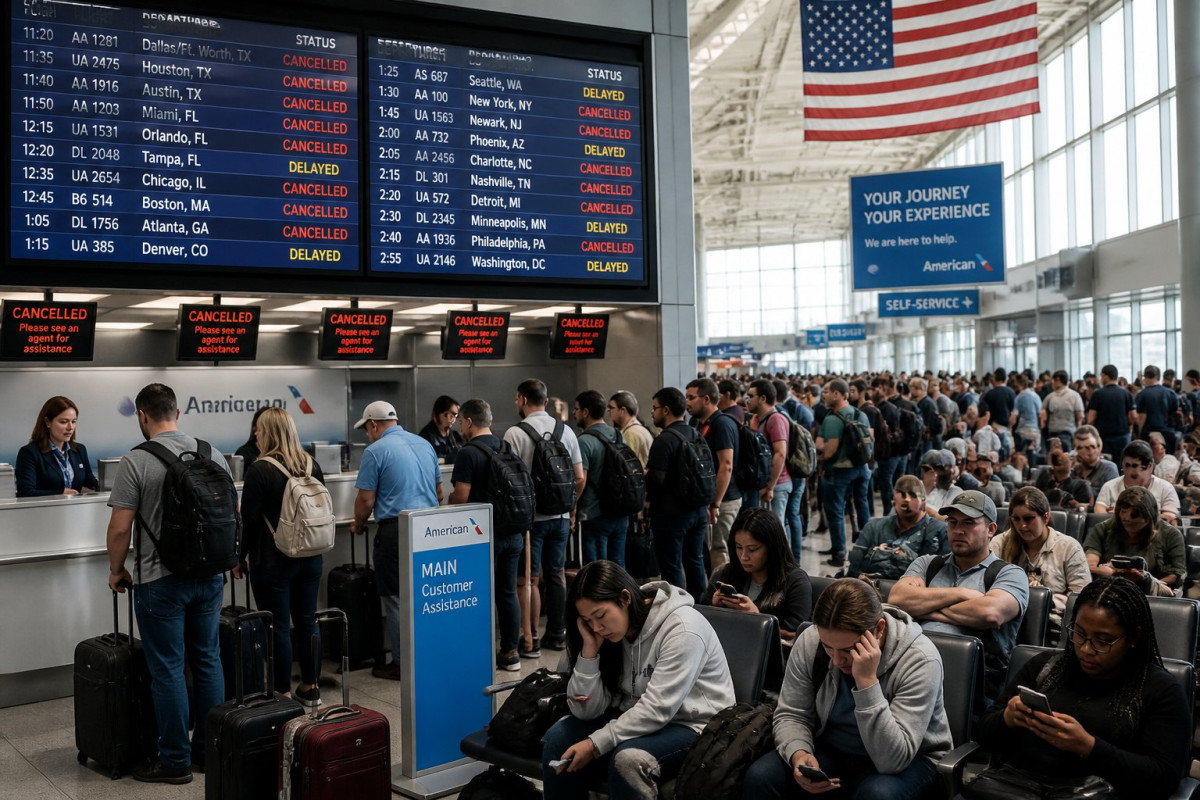
When I see headlines about flights cancelled throughout America, I know the story is about far more than delayed vacations or missed connections. It is about a transportation system under pressure, families scrambling to rebook, business travelers losing valuable time, and airports across the country trying to manage a chain reaction that can spread in hours. With major disruptions affecting states such as Texas, Florida, Illinois, Massachusetts, Georgia, and others, this moment matters because air travel is deeply tied to how Americans work, move, and stay connected.
What makes this wave of cancellations especially important is its scale and ripple effect. A storm system in one region, an air traffic control slowdown, crew availability issues, or operational constraints at a major hub can quickly spill into other parts of the country. In today’s tightly scheduled airline network, one cancellation rarely stays isolated. It often triggers missed aircraft rotations, crew timing conflicts, gate shortages, and rebooking bottlenecks that frustrate passengers long after the original disruption has passed.
For travelers, the key question is not only why flights are being cancelled, but what to do next. For the airline industry, the bigger issue is how to improve resilience in a system that increasingly faces severe weather, staffing strain, aging infrastructure, and rising passenger demand. In this article, I break down the key facts, what is driving the disruption, the benefits and drawbacks of current airline responses, expert-backed travel tips, and what may happen next.
The latest round of flight disruptions across the United States has placed a spotlight on the fragility of domestic air travel. From large hubs in Texas and Florida to busy airports in Illinois, Massachusetts, and Georgia, cancellations are affecting both short-haul and long-haul itineraries. Travelers are dealing with long customer service lines, limited hotel availability, and a shrinking number of same-day alternatives.
As someone looking at this through both a journalistic and strategic lens, I believe the issue deserves attention because it reveals how interconnected the airline ecosystem has become. A disruption is no longer just a local problem. It becomes a national travel event, amplified by peak-season demand, social media, and the expectation that airlines should respond instantly. Understanding the causes and consequences can help passengers make smarter decisions and help readers see the broader industry trends behind the headlines.
Key Facts Section
- Multiple states impacted: Flight cancellations have affected major travel corridors in Texas, Florida, Illinois, Massachusetts, Georgia, and additional states, showing how quickly regional disruptions can become nationwide.
- Weather and operations are key drivers: Severe weather, air traffic restrictions, aircraft rotation issues, crew scheduling limits, and airport congestion often combine to produce widespread cancellations.
- Travelers face a domino effect: One cancelled flight can trigger missed connections, baggage delays, rebooking challenges, and higher last-minute travel costs across the network.
Main Analysis
The phrase flights cancelled throughout America captures a broad reality: the U.S. air travel system is highly efficient when conditions are stable, but it can become extremely vulnerable when several stress points appear at once. To understand the current disruption, it helps to examine the most common causes.
Why cancellations spread so quickly
Airlines operate on intricate schedules designed to maximize aircraft use. A single plane may complete several flights in one day, often moving between major hubs and secondary cities. If a thunderstorm grounds departures in Texas, for example, that aircraft may arrive late to Florida, miss a scheduled turnaround, and then fail to operate an evening segment to Illinois or Georgia. The result is not just one cancelled flight, but a chain of operational failures.
Weather remains one of the biggest triggers. Summer thunderstorms, strong winds, lightning, low visibility, and ground stops can all reduce airport capacity. In places like Florida and Texas, weather can be both sudden and intense, creating immediate delays. In the Northeast, including Massachusetts, congestion and weather often combine to slow traffic in one of the country’s busiest airspaces. Chicago in Illinois is another critical pressure point because it serves as a central connector for domestic travel. Atlanta, Georgia, one of the largest hubs in the world, can magnify delays across dozens of destinations when schedules tighten.
The role of airline hubs
Not all airports have the same influence. Some airports function as strategic hubs, meaning they connect large volumes of passengers and aircraft. When a hub experiences cancellations, the impact is magnified. Atlanta in Georgia, Dallas-Fort Worth and Houston in Texas, Orlando and Miami in Florida, Chicago in Illinois, and Boston in Massachusetts all play major roles in domestic and international routing.
Hub dependence offers efficiency when operations run smoothly, but it also creates concentration risk. If too many flights pass through a small number of major airports, disruptions at those points can spread rapidly. This is one reason travelers often feel that a problem in one state suddenly affects flights nationwide.
Staffing and infrastructure pressures
Another factor behind US flight cancellations is the pressure on staffing and infrastructure. Airlines have rebuilt capacity in recent years, but staffing across the industry has remained uneven. Pilots, flight attendants, maintenance teams, baggage handlers, and customer service staff all play a role in keeping flights on time. If one area falls short, recovery becomes harder.
Air traffic control constraints also matter. When controllers reduce the number of planes that can safely depart or arrive in crowded airspace, airlines are forced to delay or cancel flights. This is not simply an airline issue; it is a systemwide challenge. Airports, federal agencies, and carriers all share responsibility for making the network more resilient.
How passengers are affected
For travelers, the impact is immediate and personal. A cancelled flight can mean:
- Missing a wedding, cruise departure, job interview, or family event
- Losing prepaid hotel nights or tour reservations
- Paying more for alternative transportation
- Facing long waits for rebooking assistance
- Spending unexpected time in crowded terminals
Passengers with connections are often hit hardest. A nonstop route may be easier to replace, but a multi-leg itinerary can collapse quickly when one segment is removed. Families with children, elderly travelers, and passengers with medical needs may face additional challenges when overnight delays occur.
Industry trends shaping the disruption
Several larger trends are making these events more common and more visible. First, travel demand remains strong, especially during holidays and peak leisure periods. Full flights leave fewer empty seats available for rebooking. Second, severe weather events appear to be creating more frequent operational interruptions in key regions. Third, travelers now expect real-time updates and faster service, which increases pressure on airline apps, airport staff, and customer support channels.
I also see a growing divide between airlines that invest heavily in digital self-service tools and those that still struggle with disruption management. The best-performing carriers are improving mobile rebooking, baggage tracking, proactive alerts, and compensation workflows. These tools do not eliminate cancellations, but they can reduce stress and speed up recovery.
Comparing airline and airport response strategies
Airlines generally respond to mass cancellations in a few ways: automatic rebooking, travel waivers, hotel or meal assistance when required, and schedule adjustments to stabilize operations. Some carriers are better than others at communicating clearly. Low-cost airlines may offer lower fares in normal times, but they often run leaner schedules with fewer backup options. Larger network carriers may provide more rebooking pathways because they operate broader route maps and alliance partnerships.
Airports also vary in how well they handle disruption. Large airports may have more amenities, airline lounges, and customer service desks, but they can also become crowded quickly. Smaller airports may be calmer, yet they often have fewer flight alternatives. For travelers, the best option depends on route flexibility, airline policies, and how fast the disruption is evolving.
Benefits and Drawbacks
Although cancellations are frustrating, there are a few practical benefits to the way modern systems handle them, alongside serious drawbacks.
Benefits
- Safety comes first: Cancellations due to weather or operational risk are often the safest decision, even when they are inconvenient.
- Digital tools are improving: Many airlines now offer app-based rebooking, alerts, and refund options that reduce the need to wait in line.
- Travel waivers can add flexibility: During major disruptions, airlines may allow date changes without standard fees.
- Operational resets can prevent worse chaos: Sometimes cancelling early helps airlines avoid deeper network collapse later in the day.
Drawbacks
- Passengers absorb the stress: Travelers often bear the emotional and financial cost of hotel stays, meals, and missed plans.
- Limited rebooking options: Full flights make it difficult to find same-day alternatives.
- Uneven customer service: Response quality varies widely by airline, airport, and time of day.
- Economic ripple effects: Cancellations affect tourism, business meetings, airport vendors, and local transportation providers.
Expert Tips
When airport cancellations today begin spreading across multiple states, preparation can make a major difference. Here are the strategies I recommend.
- Book early flights when possible. Morning departures are generally less likely to be affected by accumulated delays from earlier disruptions.
- Choose nonstop routes. Every connection adds another opportunity for disruption.
- Download your airline’s app. Rebooking through the app is often faster than standing in line.
- Monitor weather at both ends of your trip. Your departure airport may be clear while your connection city is under severe delay.
- Know your rights and policies. Check refund rules, travel waivers, and compensation standards before you travel.
- Carry essentials in your hand luggage. Keep medication, chargers, toiletries, and a change of clothes with you.
- Consider travel insurance. For expensive or time-sensitive trips, it can provide valuable protection.
- Stay flexible. Nearby airports, alternate airlines, and adjusted travel dates may open better options.
I also recommend that travelers think strategically about hub selection. If you are booking a trip during a storm-prone season, a slightly longer itinerary through a less congested airport may sometimes be safer than routing through an ultra-busy hub with little margin for disruption.
Future outlook
Looking ahead, I expect flight disruptions to remain a recurring issue, especially during peak travel periods and severe weather seasons. However, the long-term picture is not entirely negative. Airlines are investing in smarter scheduling tools, predictive maintenance, customer-facing technology, and operational analytics. Airports are modernizing terminals and trying to improve passenger flow. Federal attention on air traffic modernization could also help over time, though infrastructure changes rarely happen quickly.
The larger challenge is balancing demand growth with system resilience. Americans want affordable, frequent flights, but reliability requires investment in staffing, technology, spare capacity, and infrastructure. Those improvements can raise costs in the short term, yet they may be necessary if the industry wants to reduce the frequency and severity of nationwide cancellation waves.
For travelers, this likely means a new era of planning. Flexibility, digital readiness, and awareness of network risk will become as important as finding the lowest fare. The smartest passengers will not just ask, “What is the cheapest ticket?” but also, “How resilient is this itinerary if something goes wrong?”
Frequently Asked Questions
1. Why are flights cancelled throughout America all at once?
Because the airline network is interconnected. Severe weather, air traffic control restrictions, crew limitations, or operational issues at major hubs can quickly affect flights in many states.
2. Which states are seeing major impacts?
Recent disruptions have affected Texas, Florida, Illinois, Massachusetts, Georgia, and other states with high-traffic airports and major airline hubs.
3. Can I get a refund if my flight is cancelled?
In many cases, yes. If the airline cancels your flight and you choose not to travel, you may be entitled to a refund. Specific policies vary, so check directly with your carrier.
4. What is the fastest way to rebook after a cancellation?
The fastest option is usually the airline’s mobile app or website. If that fails, call customer service while also waiting in line at the airport to increase your chances of a quicker solution.
5. How can I reduce the chance of being stranded?
Book nonstop flights, travel early in the day, avoid tight connections, monitor weather, and keep essentials in your carry-on. Travel insurance can also help with unexpected costs.
Conclusion
The surge in flights cancelled throughout America is a reminder that air travel remains both essential and vulnerable. From Texas and Florida to Illinois, Massachusetts, Georgia, and beyond, the current disruption shows how quickly local problems can become national travel headaches. Weather, staffing, infrastructure, and hub dependence all play a role, but so does the industry’s ability to communicate clearly and recover efficiently.
I believe travelers benefit most when they understand the bigger picture. Cancellations are not always avoidable, but confusion can be reduced. With better planning, smarter booking decisions, and stronger digital tools, passengers can navigate disruption more effectively. At the same time, airlines and airports must continue investing in resilience if they want to meet rising expectations and restore confidence during peak travel periods.
If you are flying soon, do not wait until you reach the airport to prepare. Check your flight status, review your airline’s cancellation policy, and build a backup plan now. Stay informed, travel strategically, and keep exploring trusted updates so you can move through disruption with more confidence and less stress.
What's Your Reaction?
 Like
0
Like
0
 Dislike
0
Dislike
0
 Love
0
Love
0
 Funny
0
Funny
0
 Wow
0
Wow
0
 Sad
0
Sad
0
 Angry
0
Angry
0










Comments (0)