
Copa Airlines Expands Routes Across the Americas
Copa Airlines expands routes across Latin America, the Caribbean and North America with new flights, fleet upgrades, Starlink Wi-Fi and Panama stopovers.

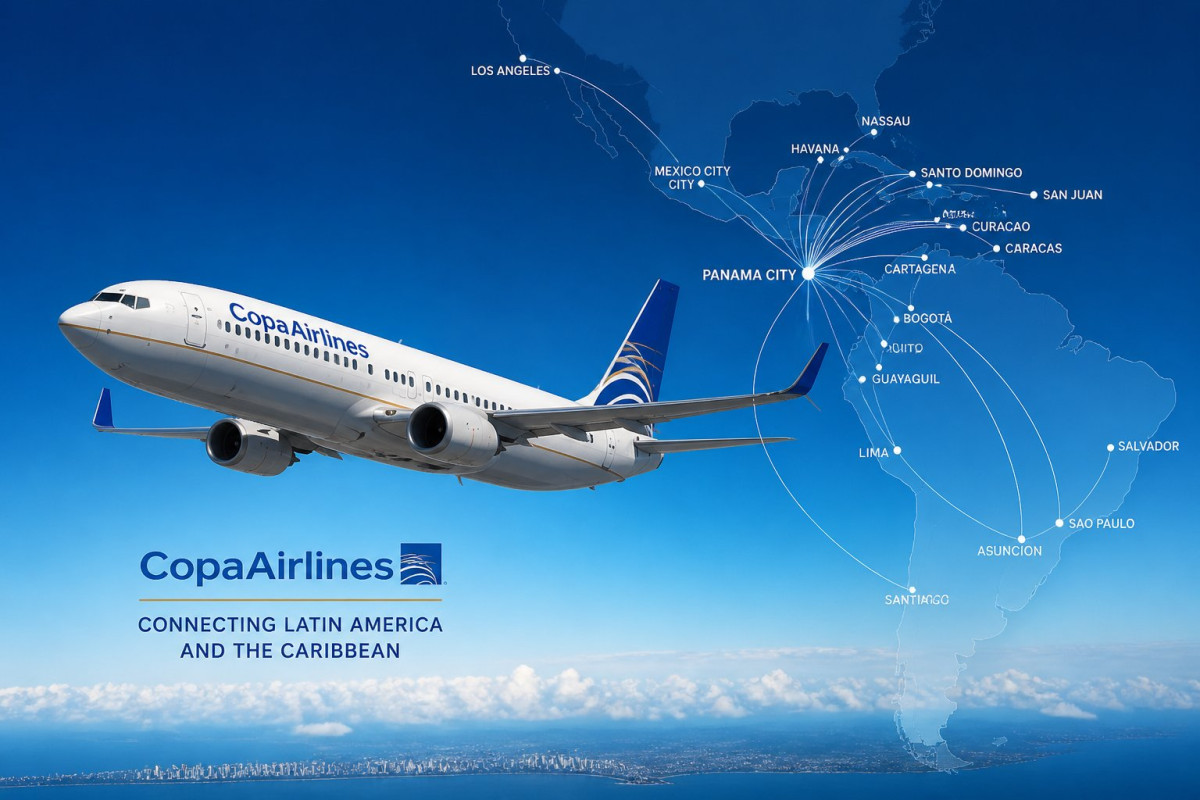
Copa Airlines is making one of the most assertive network plays in the Western Hemisphere, and the timing matters. As airlines worldwide compete for premium leisure travelers, visiting friends and relatives traffic, and resilient business demand, Copa is using a strategy that has long set it apart: funneling passengers through Panama City with fast, efficient connections across the Americas. The latest expansion wave shows that the airline is not merely adding flights. It is deepening its role as a bridge between North America, Latin America, and the Caribbean while investing in the aircraft and onboard technology needed to support that ambition.
The headline development is clear: Copa Airlines Expands Routes Across Latin America, the Caribbean and North America through a mix of new destinations, restored services, higher frequencies, and product upgrades. From Los Cabos in Mexico to Salvador Bahía in Brazil, from Santiago de los Caballeros in the Dominican Republic to San Diego and Fort Lauderdale in the United States, the airline is widening its reach at a time when connectivity has become a competitive advantage. Add a major Boeing 737 MAX order and the rollout of Starlink Wi-Fi, and Copa is signaling confidence in both regional demand and its own long-term model.
For travelers, tourism boards, airport operators, and aviation watchers, this expansion is significant because it reflects a larger trend: secondary and underserved markets are becoming more important in international aviation. Instead of relying only on giant hub-to-hub routes, airlines increasingly want networks that can efficiently connect mid-sized cities, leisure destinations, and diaspora-heavy markets. Copa has built much of its reputation on exactly that formula.
Copa Airlines has spent years refining a network centered on Tocumen International Airport in Panama City, widely marketed as the Hub of the Americas. The model is straightforward but powerful. By operating a dense bank of arrivals and departures, Copa can connect passengers from dozens of cities with relatively short layovers and fewer operational complications than many larger hubs in North America or Europe. That efficiency has helped the carrier maintain relevance far beyond Panama's domestic market size.
Now, the airline is pushing further. It operates more than 90 destinations across 32 countries and is increasing flight frequencies while reopening and launching routes that strengthen both leisure and business connectivity. The move comes as travel demand across the Americas continues to normalize and evolve. Travelers want more nonstop options, smoother regional links, and better inflight connectivity. Airlines, meanwhile, want aircraft that offer lower fuel burn, stronger economics, and flexibility across short- and medium-haul sectors. Copa's latest decisions align neatly with those priorities.
Key Facts
- Network scale: Copa Airlines serves more than 90 destinations in 32 countries through Panama City.
- Expansion focus: The carrier is adding and restoring routes in Mexico, Brazil, the Dominican Republic, and the United States while increasing frequencies in strategic markets.
- Growth platform: Copa has secured a fleet agreement for up to 40 Boeing 737 MAX aircraft and is introducing Starlink high-speed Wi-Fi, a first for a Latin American airline.
Main Analysis
Copa's route strategy reveals a disciplined understanding of geography and demand flows. Panama sits in a uniquely advantageous position, allowing flights from North America to connect southward and flights from South America to connect northward with relatively little backtracking. This creates efficient itineraries that can be especially appealing when compared with longer routings through congested mega-hubs.
The airline's latest network changes are not random additions. They reinforce a system built around connectivity, schedule utility, and market diversification.
Los Cabos adds a high-value leisure market
The addition of Los Cabos gives Copa access to one of Mexico's most recognizable premium leisure destinations. The market is attractive not only for inbound tourism but also for how it plugs into broader regional demand. Los Cabos draws travelers from South America and the Caribbean who may prefer a one-stop option through Panama rather than more complicated routings through Mexico City or U.S. gateways.
Strategically, this route also helps Copa strengthen its footprint in Mexico while improving links to western leisure markets. Although Riviera Maya and Los Cabos serve different coasts and traveler profiles, both fit into a broader tourism portfolio that allows Copa to capture demand from vacationers looking for beach destinations with strong hotel infrastructure. In a region where leisure recovery has often outpaced corporate travel, that matters.
Salvador Bahía deepens Brazil exposure
The reactivation of Salvador Bahía is especially notable because Brazil remains South America's largest aviation market and one of its most complex. For any airline seeking meaningful regional relevance, selective strength in Brazil is essential. Salvador offers Copa a point of access to northeastern Brazil, a region with both tourism appeal and strong domestic economic importance.
Restoring service there strengthens Copa's Brazilian network beyond the country's largest business centers. It also supports inbound tourism and visiting-friends-and-relatives traffic, both of which can be less volatile than some corporate segments. In practical terms, Salvador gives travelers from Central America, the Caribbean, and parts of North America another efficient one-stop option into Brazil.
Santiago de los Caballeros boosts Dominican Republic connectivity
The return of Santiago de los Caballeros adds depth to Copa's Caribbean positioning. The Dominican Republic is a major tourism destination, but it is also an important origin-and-destination market shaped by family ties, commerce, and migration patterns. Serving Santiago, not just the country's best-known resort zones, allows Copa to tap into a broader traveler base.
This is a classic example of Copa's network logic. Instead of focusing only on marquee capitals, the airline often succeeds by linking commercially relevant secondary cities through Panama. That creates practical value for travelers who might otherwise face multiple connections or limited schedules.
North American growth sharpens the funnel into Latin America
Copa's North American expansion is equally important because the United States remains a major source market for traffic into Latin America and the Caribbean. Adding San Diego as the airline's 17th U.S. destination expands its West Coast reach and gives Southern California travelers another gateway into the region. San Diego is a logical addition: it has strong demographic ties to Latin America, substantial business activity, and a large traveler base that values convenience.
Meanwhile, Fort Lauderdale's upgrade to daily nonstop service reflects confidence in South Florida demand. Fort Lauderdale complements Miami's broader aviation ecosystem while appealing to leisure passengers, cruise travelers, and communities with close ties to the Caribbean and Latin America. Daily service improves schedule reliability and connection opportunities, which is critical for a hub-and-spoke airline.
Together, these U.S. moves help Copa strengthen what industry analysts often call the funnel effect: attracting passengers from North American gateways and distributing them across a broad southern network through one central hub.
Fleet modernization underpins the expansion
Route growth is only sustainable if the fleet can support it efficiently. Copa's agreement for up to 40 Boeing 737 MAX aircraft is therefore more than a procurement headline. It is a foundational piece of the airline's expansion strategy.
The 737 MAX family offers several advantages relevant to Copa's model:
- Improved fuel efficiency, which helps reduce operating costs on competitive regional routes.
- Extended range and flexibility, allowing the airline to serve a wider mix of destinations with narrowbody aircraft.
- Commonality benefits, simplifying training, maintenance, and fleet planning.
- Better economics per seat, especially important when balancing frequency growth with profitability.
For an airline that thrives on high aircraft utilization and tight connection banks, these efficiencies can translate directly into stronger margins and more route flexibility. In today's market, where fuel costs, supply chain disruptions, and aircraft delivery delays continue to shape airline planning, a clear fleet roadmap is a major competitive asset.
Starlink Wi-Fi marks a product shift
Copa's plan to roll out Starlink high-speed, low-latency Wi-Fi is another strategically smart move. Becoming the first airline in Latin America to adopt the technology gives the carrier a product differentiator at a time when passenger expectations are changing quickly. Travelers increasingly view onboard connectivity not as a luxury but as part of the core experience.
The significance goes beyond marketing. Reliable, fast Wi-Fi can influence airline choice, especially for:
- Business travelers who need to remain productive in flight
- Leisure travelers who value entertainment and social connectivity
- Premium passengers comparing airlines on service quality
- Frequent flyers who increasingly expect seamless digital experiences
Compared with older inflight internet systems, low-latency satellite connectivity can offer a more usable experience for messaging, browsing, and even more data-intensive tasks. For Copa, this supports a broader brand proposition: efficient regional travel without sacrificing modern passenger expectations.
The Panama Stopover Program remains a smart loyalty tool
One of Copa's most distinctive commercial products is its Panama Stopover Program, which allows passengers to extend their layover in Panama City for up to seven days at no additional airfare. This initiative does more than promote tourism. It enhances the value of connecting through Panama rather than viewing it as a purely functional transit point.
From a tourism and economic perspective, the program helps Panama capture hotel stays, dining spend, retail activity, and local experiences from passengers who otherwise would have simply changed planes. For travelers, it turns a connection into a dual-destination trip, often at minimal extra cost.
This is particularly effective in a competitive regional environment. If two one-stop itineraries are similarly priced, the option to explore Panama City, the Panama Canal, or nearby attractions can become a meaningful deciding factor. It is a strong example of how airline strategy and destination marketing can reinforce each other.
Benefits for travelers, airports, and regional tourism
The expansion creates several tangible benefits across the travel ecosystem.
Benefits
- More one-stop access: Travelers gain easier connections between secondary cities across the Americas.
- Greater schedule choice: Increased frequencies improve flexibility and reduce missed-opportunity travel windows.
- Tourism stimulation: New and restored routes can boost visitor arrivals in leisure and cultural destinations.
- Improved passenger experience: New aircraft and Starlink Wi-Fi raise product quality.
- Economic spillover: Airports, hotels, restaurants, and local businesses benefit from stronger air links.
For destinations such as Los Cabos and Salvador, stronger international air service can support tourism development and diversify source markets. For U.S. cities like San Diego and Fort Lauderdale, Copa's growth offers travelers more efficient access to Latin America without relying entirely on traditional mega-hubs.
Challenges Copa will need to manage
Even strong expansion plans come with risks. Airline growth is rarely linear, and Copa will need to navigate several challenges carefully.
- Competitive pressure: Legacy airlines, low-cost carriers, and regional players continue to compete aggressively on fares and network reach.
- Operational complexity: More destinations and higher frequencies increase the need for tight schedule discipline at the Panama hub.
- Macroeconomic volatility: Currency swings, inflation, and uneven consumer spending can affect demand across Latin America.
- Aircraft delivery uncertainty: Industry-wide supply chain issues could complicate fleet expansion timelines.
- Geopolitical and regulatory factors: Bilateral agreements, airport constraints, and shifting travel rules can influence route performance.
Still, Copa has historically been regarded as one of the more operationally disciplined carriers in the region, which may help it absorb some of these pressures better than less focused competitors.
Industry perspective: why this expansion fits broader trends
From an industry standpoint, Copa's moves align with several powerful aviation trends. First, airlines are increasingly prioritizing network resilience through diversification. Serving a wide variety of city pairs reduces dependence on any single market. Second, narrowbody aircraft are becoming even more central to international growth thanks to improved economics and range. Third, passenger experience is becoming a sharper competitive battleground, making technology upgrades like Starlink more relevant.
Copa also benefits from a structural reality: many travelers across the Americas still face fragmented connectivity. Large global alliances and major hub carriers offer broad options, but not always the most direct or time-efficient ones for secondary city pairs. Copa's Panama model remains well suited to filling those gaps.
Expert Tips
- Check stopover eligibility: If your itinerary connects in Panama City, compare the cost of a standard connection versus a multi-day stopover to maximize value.
- Book early on new routes: Introductory schedules and launch periods can offer better availability and pricing.
- Compare total travel time, not just fare: Copa's hub model can save hours compared with multi-stop alternatives.
- Watch for Wi-Fi rollout timelines: Starlink availability may vary by aircraft as the installation progresses.
- Use secondary city access strategically: Copa often provides efficient links to destinations that are harder to reach through larger hubs.
Future outlook
Looking ahead, Copa appears well positioned to continue expanding selectively rather than indiscriminately. That distinction matters. The most successful airlines in today's environment are not necessarily the ones growing fastest, but the ones growing with discipline. Copa's combination of geographic advantage, fleet modernization, hub efficiency, and product enhancement gives it a strong platform.
If demand remains stable and aircraft deliveries stay on track, the airline could further strengthen its role as one of the Americas' most important connectors. Additional opportunities may emerge in underserved secondary cities, high-yield leisure markets, and U.S. gateways with strong Latin American ties. The Starlink rollout could also help elevate Copa's brand perception among travelers who increasingly compare airlines on digital experience as much as schedule and price.
Importantly, the phrase Copa Airlines Expands Routes Across Latin America, the Caribbean and North America captures more than a list of route announcements. It reflects a broader strategic push to own a distinct space in hemispheric travel: efficient, well-timed, and increasingly passenger-friendly connectivity through Panama.
If you regularly travel between North America, Latin America, and the Caribbean, now is a good time to review Copa's updated network, compare connection options through Panama City, and explore whether the Panama Stopover Program can add value to your next trip.
Conclusion
Copa Airlines is not simply adding flights for the sake of growth. It is reinforcing a carefully built network strategy that connects the Americas through one of the region's most efficient hubs. New service to Los Cabos, restored flights to Salvador Bahía and Santiago de los Caballeros, stronger U.S. access through San Diego and Fort Lauderdale, a major Boeing 737 MAX commitment, and the introduction of Starlink Wi-Fi all point to the same conclusion: Copa is investing in scale, reliability, and customer relevance at the same time.
For travelers, that means more options and better connectivity. For destinations, it means stronger access to international demand. For the industry, it is a reminder that a focused hub strategy can still deliver powerful results in a competitive market. Anyone tracking aviation in the region should pay close attention, because Copa's next phase of growth could reshape how passengers move across the Americas for years to come.
Copa Airlines Expands Routes Across the Americas, FAQ's
What's Your Reaction?
 Like
0
Like
0
 Dislike
0
Dislike
0
 Love
0
Love
0
 Funny
0
Funny
0
 Wow
0
Wow
0
 Sad
0
Sad
0
 Angry
0
Angry
0













Comments (0)