
Hotel Indigo Stockholm Debuts in Kvarnholmen, Nacka
IHG brings Hotel Indigo to Stockholm with a new waterfront signing in Kvarnholmen, blending design, culture and archipelago access.

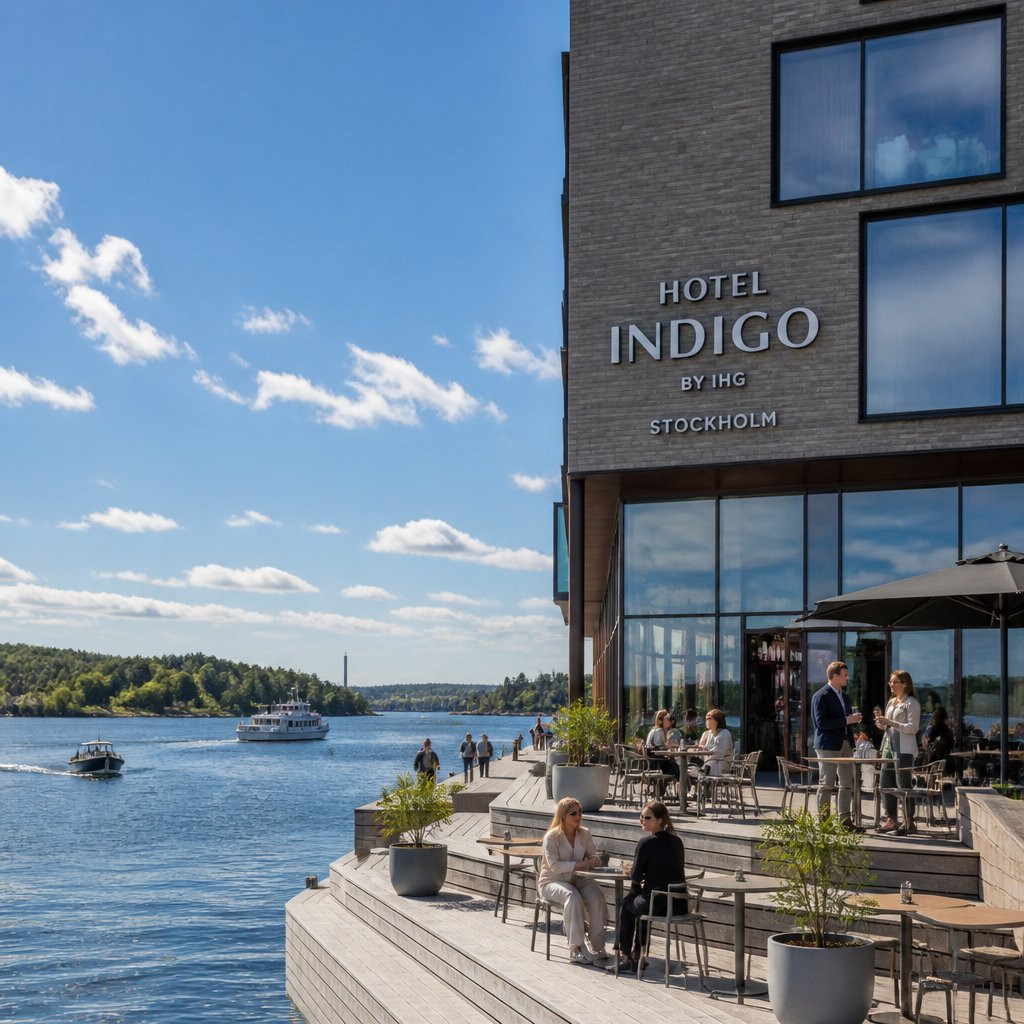
I see the signing of Hotel Indigo Stockholm in Kvarnholmen as far more than a routine hotel development announcement. To me, it signals a meaningful shift in how Stockholm’s hospitality scene is evolving. IHG is not simply planting a flag in Sweden with another branded property; it is introducing a lifestyle concept that depends on neighbourhood identity, local storytelling and design-led guest experiences. In a destination as layered and visually distinctive as Stockholm, that matters.
The newly signed Hotel Indigo will open in Kvarnholmen, a waterfront district in Nacka on Stockholm’s eastern shore. What makes this location so compelling, in my view, is that it sits at the intersection of urban regeneration, maritime character and modern Scandinavian living. Kvarnholmen is no longer just a former industrial site with historical significance. It is becoming one of the capital region’s most intriguing emerging districts, where converted heritage buildings, new homes, sea views and cultural energy create the exact kind of local texture the Hotel Indigo brand is built to interpret.
As I look at the wider context, this signing also arrives at a time when Stockholm continues to strengthen its position as one of Northern Europe’s most attractive leisure and business travel destinations. The city blends world-class design, sustainability leadership, culinary innovation and seamless access to nature in a way few capitals can match. Travelers increasingly want hotels that feel rooted in place rather than interchangeable, and that is precisely where Hotel Indigo has carved out global relevance.
Why this Swedish debut matters
I believe the Swedish debut of Hotel Indigo is strategically important for IHG because Sweden has long been a market where design awareness, lifestyle travel and sustainability expectations run high. Entering Stockholm with a neighbourhood-focused brand makes sense because the city’s identity is not defined by one central district alone. Instead, Stockholm’s appeal is made up of distinct pockets: Gamla Stan’s historic charm, Södermalm’s creative pulse, Östermalm’s refinement, Djurgården’s green cultural landscape and now increasingly, waterfront districts like Kvarnholmen that offer a fresh perspective on metropolitan living.
Hotel Indigo has built its reputation on ensuring no two properties look or feel the same. That promise is especially powerful in Stockholm, where travelers often want a more intimate relationship with the city than a conventional chain hotel can provide. IHG’s decision to place the brand in Kvarnholmen suggests confidence not only in the destination, but also in the district’s ability to become a magnet for visitors seeking authenticity beyond the obvious tourist core.
Globally, Hotel Indigo has surpassed 325 open and pipeline hotels and expanded across nearly 50 countries. I see that growth as evidence that the brand’s concept continues to resonate with owners and guests alike. It occupies a strong middle ground between boutique individuality and the reassurance of a major international hotel group. For Stockholm, this means guests can expect a property with local personality supported by IHG’s global systems, loyalty ecosystem and operational expertise.
Kvarnholmen’s transformation is the real story behind the hotel
What fascinates me most about this project is the setting. Kvarnholmen has a remarkable backstory. Historically associated with Sweden’s industrial and milling heritage, the peninsula became known for major industrial operations, including the legacy of the old KF milling complex. Over time, the area’s identity shifted from production to possibility. Today, it is being reshaped into a modern mixed-use waterfront neighbourhood where residential development, adaptive reuse, public spaces and improved connectivity are creating a new chapter for this part of Nacka.
That transformation is exactly the kind of narrative Hotel Indigo tends to embrace. The brand thrives where a neighbourhood has a strong sense of place, visual cues from the past and a living local culture that can be translated into interior design, food and beverage concepts, art programming and guest storytelling. In Kvarnholmen, I can easily imagine a hotel that references the district’s industrial architecture, maritime light, Baltic views and contemporary Nordic aesthetics without feeling staged or overly thematic.
For visitors, the appeal is practical as well as emotional. Kvarnholmen offers proximity to central Stockholm while delivering a calmer, more residential and scenic atmosphere. It places guests close to the water, near ferry routes and within reach of the archipelago experience that many international travelers dream about when visiting Sweden. At the same time, it connects to the growing cultural and culinary dynamism of greater Stockholm, allowing the hotel to serve as both a retreat and a launchpad.
A brand built on neighbourhood storytelling
I have always found Hotel Indigo’s positioning interesting because it rejects the idea that global hospitality must be standardized to be successful. Instead, the brand leans into local identity. Each property is expected to draw inspiration from the neighbourhood around it, whether through architecture, menus, artwork, music, materials or service rituals. In a city like Stockholm, where design literacy is high and guests notice details, this approach can be a competitive advantage.
If executed well, Hotel Indigo Stockholm could become more than a place to sleep. It could function as a cultural translator for Kvarnholmen, introducing guests to the district’s history, waterfront rhythms and emerging lifestyle scene. I would expect elements such as locally influenced dining, interiors inspired by Scandinavian minimalism and industrial textures, and curated recommendations that push travelers beyond the standard city checklist.
This matters because modern travelers increasingly value context. They want to know where they are, not just what room category they booked. A hotel that reflects its surroundings can deepen the travel experience and create a stronger emotional connection to the destination. In Stockholm, where many visitors already arrive with expectations of clean design, sustainability and quality of life, Hotel Indigo has an opportunity to exceed those expectations by making the neighbourhood itself part of the stay.
What this means for Stockholm’s hotel market
From my perspective, the signing also tells us something broader about Stockholm’s hospitality pipeline. The city has long attracted strong demand from both international leisure travelers and corporate visitors, but growth has increasingly favored hotels that offer distinct identity rather than purely functional accommodation. Travelers are comparing not just price and location, but also atmosphere, social spaces, design and the sense of discovery a hotel can provide.
That trend has supported the rise of lifestyle and soft-brand properties across Europe, and Stockholm is a natural fit for it. The city’s global image is tied to innovation, architecture, gastronomy and sustainability. A neighbourhood-led lifestyle brand entering the market aligns with those associations. It also creates healthy competition, especially in the upscale segment, where travelers may be choosing between independent boutique hotels, established Nordic brands and international lifestyle concepts.
I also think the Nacka location is telling. As Stockholm grows, adjacent districts and municipalities are becoming more relevant to the visitor economy. Travelers are more open than ever to staying outside the traditional core if the experience is compelling and transport links are convenient. Waterfront districts in particular carry strong appeal, especially for guests who want scenic calm without sacrificing city access. Kvarnholmen fits that profile well.
The likely guest appeal
If I were to profile the likely audience for Hotel Indigo Stockholm, I would include several overlapping groups:
- Design-conscious leisure travelers who want a hotel with personality and a strong visual identity.
- Weekend city breakers looking for a fresh Stockholm base beyond the busiest central districts.
- Bleisure guests combining work and leisure, who value connectivity, comfort and a memorable setting.
- Loyal IHG members eager to experience a new brand entry in Sweden while earning or redeeming points.
- Archipelago-curious visitors who want easier access to the water and eastern approaches to the city.
For these segments, the hotel’s success will likely depend on how convincingly it balances local authenticity with premium comfort. Guests will expect strong design, high-quality food and beverage, intuitive service and a location story that feels real rather than manufactured.
Food, drink and design could define the property
One reason I think this hotel has strong potential is that Stockholm rewards hospitality concepts that treat dining and design as central, not secondary. Hotel Indigo’s brand DNA already emphasizes food, drink and local trends, which should translate well in a Scandinavian capital known for ingredient-led cuisine, specialty coffee, craft beverages and understated but thoughtful interiors.
I would expect the most successful version of this hotel to include a restaurant or bar that attracts locals as well as guests. In emerging urban districts, hospitality venues often help shape neighbourhood identity. If the property embraces Swedish produce, seasonal menus, contemporary Nordic flavors and a waterfront social atmosphere, it could become a destination in its own right. That local pull is especially important for lifestyle hotels because it signals authenticity. A busy room is good; a busy room filled with locals is better.
Design will be equally critical. Stockholm visitors are visually literate. They appreciate craftsmanship, natural materials, functional beauty and spaces that feel calm rather than cluttered. Kvarnholmen’s industrial past offers a rich source of inspiration, from brick and steel references to maritime tones and panoramic light. I would hope to see a design language that feels unmistakably Swedish but not predictable.
Accessibility and destination value
Another reason I find this signing persuasive is the balance it offers between destination immersion and accessibility. Kvarnholmen gives travelers a sense of separation from the busiest tourist zones, yet it remains tied to the broader Stockholm experience. Guests can explore the city centre, move toward the archipelago and enjoy the evolving local scene in Nacka. That flexibility is increasingly valuable in urban travel, where visitors often want both energy and breathing room.
For international travelers unfamiliar with Stockholm’s geography, the eastern waterfront setting may actually become a selling point rather than a drawback. Stockholm is a city best understood through its relationship with water, islands and shoreline transitions. Staying in Kvarnholmen could give guests a more experiential understanding of that identity than a purely central stay.
Why IHG’s timing looks smart
I see IHG’s timing as smart because the company is entering with a brand that is already globally recognized but still fresh in the Swedish context. That creates novelty without the risk of launching an unproven concept. With more than 325 open and pipeline Hotel Indigo properties worldwide, the brand has enough momentum to reassure owners and enough flexibility to adapt to local market conditions.
Stockholm also remains attractive for long-term hotel investment because it combines strong destination appeal with a reputation for stability, innovation and quality of life. Even in a competitive environment, hotels that offer differentiated experiences in compelling submarkets tend to stand out. Kvarnholmen is exactly the kind of submarket that can benefit from being discovered at the right moment.
In my view, this is not just a hotel opening to watch. It is a signal of where urban hospitality is heading in Scandinavia: toward locally grounded, design-aware, experience-led stays that connect travelers to neighbourhoods in meaningful ways.
What travelers should watch for next
As more details emerge, I will be watching several factors closely:
- Design narrative and how deeply it reflects Kvarnholmen’s industrial and waterfront identity.
- Food and beverage concept and whether it is strong enough to attract local residents.
- Transport positioning and how the hotel communicates access to central Stockholm and the archipelago.
- Sustainability approach because Swedish travelers and international guests alike increasingly expect credible environmental commitments.
- Neighbourhood partnerships with local artists, makers, food producers and cultural organizations.
- Pricing strategy relative to central Stockholm lifestyle and upscale hotels.
If these elements are handled thoughtfully, I believe Hotel Indigo Stockholm could become one of the most talked-about new hospitality additions in the capital region. Its success will not depend solely on the strength of the IHG name, but on whether it truly captures the spirit of Kvarnholmen and gives guests a reason to choose this neighbourhood over more established addresses.
My overall view is clear: the Swedish debut of Hotel Indigo feels well judged, well timed and full of potential. Stockholm has no shortage of beautiful hotels, but this project has the chance to offer something more specific and memorable: a stay that reflects a transforming waterfront district, embraces local design culture and opens a new lens on the Swedish capital. If the final product lives up to the promise of the signing, it could become a benchmark for future lifestyle hotel development in Sweden.
FAQ
- 1. Where will the new Hotel Indigo in Stockholm be located?
The hotel is planned for Kvarnholmen in Nacka, a waterfront neighbourhood on Stockholm’s eastern shore known for its ongoing urban transformation and industrial heritage.
- 2. Why is this opening significant for IHG?
This is the Swedish debut of Hotel Indigo by IHG, marking the brand’s first entry into Sweden and expanding its presence in the Nordic lifestyle hospitality market.
- 3. What makes Kvarnholmen attractive to travelers?
Kvarnholmen offers waterfront views, access to central Stockholm, proximity to the archipelago and a blend of historic industrial character with modern Scandinavian development.
- 4. What is Hotel Indigo known for?
Hotel Indigo is known as IHG’s neighbourhood hotel brand, with each property designed to reflect local culture, architecture, food, drink and community identity.
- 5. Is Kvarnholmen close to Stockholm city centre?
Yes. While it feels more relaxed and residential than the city core, Kvarnholmen benefits from convenient access to central Stockholm and surrounding waterfront areas.
- 6. Who is the new hotel likely to appeal to?
The property is likely to attract design-focused leisure travelers, IHG loyalty members, weekend visitors, bleisure guests and travelers seeking a more local Stockholm experience.
External links
- Hotel Indigo official brand page
- IHG Hotels & Resorts official website
- Visit Stockholm tourism guide
- Visit Nacka destination information
- Visit Sweden official travel site
- Stockholm Archipelago official guide
Internal links for GloVacations.com
What's Your Reaction?
 Like
0
Like
0
 Dislike
0
Dislike
0
 Love
0
Love
0
 Funny
0
Funny
0
 Wow
0
Wow
0
 Sad
0
Sad
0
 Angry
0
Angry
0












Comments (0)