
Princess Cays Phased Out: What It Means for Cruisers
Princess Cruises is phasing out Princess Cays, its Eleuthera beach retreat. A critical look at why, what replaces it, and how itineraries and guests are affected.

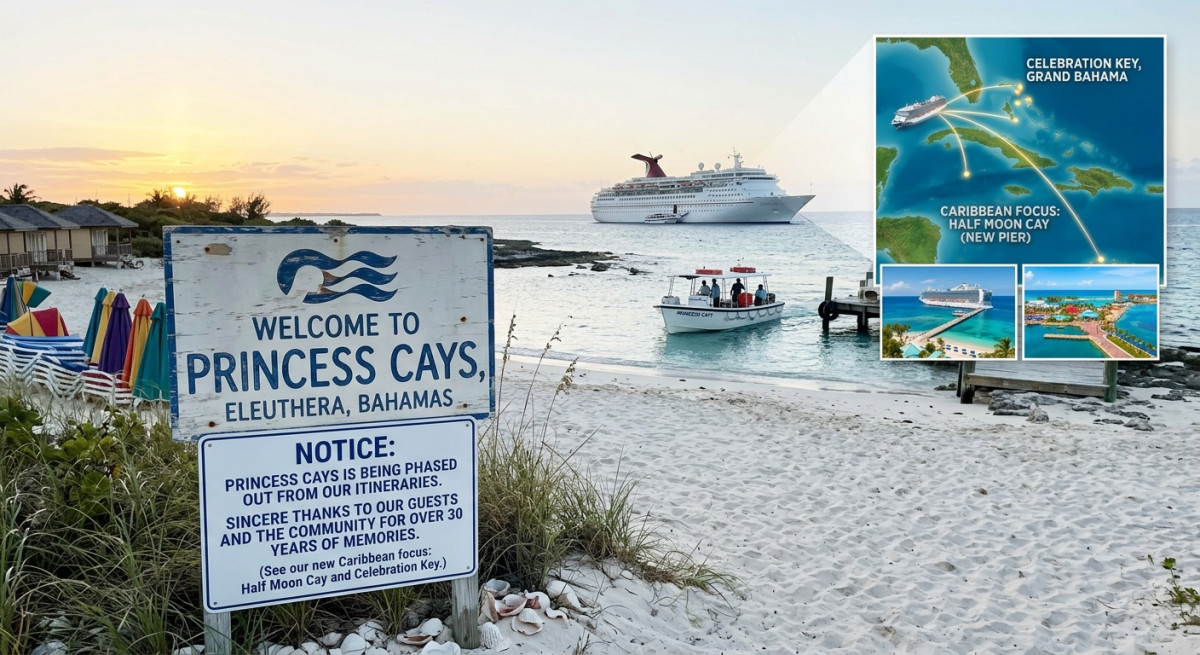
Princess Cruises has signaled that it will phase out calls at Princess Cays, the private beach destination it has operated on the southern tip of Eleuthera in the Bahamas for decades, as the line reshapes its Caribbean deployment around other ports and new destination experiences. The move removes one of the industry's oldest private-island-style stops from Princess itineraries and reflects a broader strategic pivot within Carnival Corporation toward higher-capacity, purpose-built destinations such as Celebration Key on Grand Bahama and the redeveloped Half Moon Cay experience.
For guests, the practical consequences are immediate: fewer Princess sailings will include the Eleuthera stop, replacement ports will appear on affected itineraries, and the tender-based beach day that defined countless Eastern Caribbean cruises will gradually disappear from the brand's schedule. For the industry, the decision is a case study in how private destinations have evolved from simple beach concessions into billion-dollar infrastructure investments — and why an aging, tender-dependent site struggles to justify its place on a modern deployment map.
What Princess Cays Was, and Why It Mattered
Princess Cays occupies a leased stretch of land on the southern end of Eleuthera, an elongated Bahamian island roughly 50 miles east of Nassau. Unlike Disney's Castaway Cay or Royal Caribbean's Perfect Day at CocoCay, it was never a true private island — it was a fenced, developed beachfront enclave on an inhabited island, accessible only by tender because no pier could accommodate large ships.
That distinction is central to understanding why the destination is being retired. Princess Cays offered a half-day beach experience: barbecue lunch, rented floats and clamshells, snorkel gear, a small local craft market, and a long ribbon of sand. It was pleasant, functional and, by the standards of the 1990s, competitive. By the standards of 2020s cruising, it was modest.
Still, the destination carried genuine value. It gave Princess a branded Bahamian stop it controlled, it kept guest spending onboard the company's own ledger rather than a third-party port, and it provided a low-friction beach day for passengers who did not want to navigate an unfamiliar city. Its loss is not trivial, even if the commercial logic behind the decision is sound.
The Core Reasons Behind the Phase-Out
1. Tendering Is the Fundamental Constraint
Every guest who visited Princess Cays had to board a tender. Tendering imposes hard limits: it caps how many passengers can reach shore in a given window, it consumes hours of the port day, and it is exquisitely vulnerable to weather. Moderate swell or wind has repeatedly forced cancellations at the destination over the years, producing a sea day where guests expected a beach.
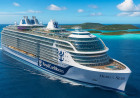
Modern ships have made this worse rather than better. As Princess introduced larger vessels — including the Sphere-class ships carrying well over 4,000 guests — the arithmetic of moving passengers ashore by small boat became increasingly unworkable. A destination that could reasonably serve a 2,600-guest ship becomes a logistical bottleneck for a vessel nearly twice that size, especially as the broader industry keeps moving toward mega-ship deployment.
2. The Private Destination Arms Race Raised the Bar
Competing lines have invested heavily in exclusive destinations with pier access, water parks, cabanas, beach clubs and high-margin premium experiences. Royal Caribbean's CocoCay development set a new benchmark for what guests expect from a "private island" day. MSC built Ocean Cay, alongside continued Bahamas private-island expansion such as MSC Cruises Sandy Cay. Norwegian expanded its Great Stirrup Cay offering. Carnival Corporation itself committed to Celebration Key, a purpose-built, pier-served destination on Grand Bahama designed to handle multiple large ships simultaneously.
Against that backdrop, an aging tender-only beach with limited infrastructure looks less like an asset and more like a legacy obligation. Guests increasingly compare private destinations directly when choosing a cruise line, and Princess Cays consistently ranked below the flagship developments in that comparison.
3. Corporate Consolidation of Destination Assets
Carnival Corporation operates multiple brands sharing overlapping Caribbean deployment. Concentrating capital and passenger volume into a smaller number of high-capacity, corporation-owned destinations delivers better returns than maintaining several mid-tier sites. Directing Princess ships toward Celebration Key and the enhanced Half Moon Cay product allows the corporation to amortize its major investments across more brands and more passengers.
This is not sentiment; it is portfolio management. Princess Cays served a Princess-only audience on a leased site with limited expansion potential. The replacements serve the entire corporate fleet.
4. Itinerary Flexibility and Deployment Economics
Princess has been expanding its presence in Alaska, Europe, Japan and world cruising while reshaping Caribbean sailings around ports that offer stronger shore excursion revenue and better guest satisfaction scores. Eleuthera's location made it a convenient filler stop on Fort Lauderdale round-trips, but "convenient filler" is precisely the category most vulnerable when a line rebuilds its itinerary portfolio.
The Critical Case: What Princess Is Giving Up
The strategic logic is defensible, but the decision deserves scrutiny rather than applause. Several genuine costs accompany the phase-out.
- Loss of a differentiated, low-density experience. Princess Cays was quiet, uncommercial and unhurried compared with the water-slide-and-DJ model dominating newer private destinations. A meaningful segment of Princess's core demographic — older, repeat, experience-oriented cruisers — valued exactly that character.
- Homogenization of the Bahamian product. Consolidating multiple brands into shared mega-destinations means guests sailing different lines increasingly encounter similar experiences. Distinctiveness is a competitive asset that is easy to surrender and difficult to rebuild.
- Local economic disruption. Vendors, craft sellers, transport operators and staff on southern Eleuthera built livelihoods around cruise ship calls. Redirecting that traffic toward a corporate development elsewhere in the Bahamas concentrates economic benefit and removes it from a smaller community.
- Erosion of nostalgia equity. Cruise brands trade heavily on repeat business and emotional loyalty. Princess Cays appeared in decades of family photo albums. Retiring it carries reputational friction that spreadsheets rarely capture.
- Crowding risk at replacement destinations. Purpose-built mega-destinations promise capacity, but concentrating several ships from multiple brands at a single site creates its own congestion problems. Guests who disliked tender queues may simply trade them for queues at food venues, beach chairs and shuttle trams.
How the Change Affects Booked and Future Cruises
The phase-out is expected to unfold gradually rather than through a single hard cutoff, with calls thinning across successive Caribbean seasons. Guests should approach the transition with a few practical expectations.
- Itinerary substitutions are likely. Cruise contracts permit lines to change ports. Affected sailings will typically receive a replacement call — commonly another Bahamian or Eastern Caribbean port — or an additional sea day.
- Compensation is not guaranteed. Port substitutions rarely trigger refunds. Port fees and taxes may be adjusted, and pre-booked shore excursions at the removed stop are refunded, but the fare itself generally stands.
- Verify before assuming. Travelers who booked specifically for the Eleuthera beach day should confirm the current itinerary through the booking confirmation or travel advisor rather than relying on the brochure they saw at the time of purchase.
- Replacement ports may carry different costs. A developed destination day can involve paid cabanas, premium beach clubs and add-on experiences that the older beach model did not require, raising the effective cost of a "free" port day.
- Weather reliability should improve. Pier-served destinations dramatically reduce cancellation risk, which is a real and underappreciated benefit for guests who lost port days to swell in the past.
Where Princess Guests Will Go Instead
Princess is aligning its Caribbean deployment with Carnival Corporation's flagship destination investments and with established Bahamian and Eastern Caribbean ports. The likely mix includes:
- Celebration Key on Grand Bahama — the corporation's purpose-built, pier-accessible destination designed for multiple large ships and multiple brands.
- Half Moon Cay — the long-admired Bahamian private island shared within the corporate portfolio, undergoing significant enhancement including pier infrastructure.
- Nassau — a heavily redeveloped port with expanded cruise facilities, though one that draws mixed guest reviews for congestion and vendor pressure.
- Traditional Eastern and Western Caribbean ports — including established stops that support strong shore excursion revenue and repeat-guest interest.
The substitution is not like-for-like. Guests trading a quiet tendered beach for a high-capacity engineered destination will find more amenities and more people. Whether that constitutes an upgrade depends entirely on what a traveler wanted from the day.
A Framework for Evaluating the Decision
Assessing whether the phase-out is a smart move requires separating four distinct lenses.
Operational Lens
Clearly positive for the line. Eliminating tender operations reduces crew workload, weather-related cancellations, guest complaints and insurance exposure. Pier-served calls also allow longer effective port hours.
Financial Lens
Favorable in the medium term. Concentrated destinations generate higher onboard-adjacent spending through cabanas, beach clubs, dining upgrades and excursions. Capital already committed elsewhere in the corporation benefits from additional passenger throughput.
Guest Experience Lens
Genuinely mixed. Reliability and amenities improve; intimacy, calm and distinctiveness decline. Loyal Princess cruisers who prized the unhurried character of the Eleuthera beach are unlikely to view the replacement as equivalent, regardless of how many slides and bars it contains.
Community and Sustainability Lens
The weakest part of the case. Redirecting thousands of passengers away from a smaller Bahamian community toward a corporate-owned enclave concentrates economic benefit and reduces the share of spending that reaches independent local operators. Cruise lines routinely emphasize local economic contribution in their sustainability reporting; consolidating into proprietary destinations quietly works against that narrative.
What This Signals About the Future of Cruise Private Destinations
The retirement of Princess Cays fits a clear industry pattern. Private destinations are no longer supplementary beach days — they are anchor assets used to differentiate brands, capture spending and control the guest experience end to end. That transition rewards scale and punishes legacy sites that cannot be expanded or pier-served.
Several second-order effects are worth watching:
- Fewer, bigger destinations. Expect continued consolidation, with corporations concentrating investment into flagship sites serving multiple brands.
- Rising monetization of the beach day. Premium cabanas, adults-only zones and paid attractions increasingly convert a formerly inclusive day into a tiered one.
- Growing scrutiny of local benefit. Bahamian policymakers and community groups have raised persistent questions about how much cruise revenue actually reaches residents when lines operate enclosed destinations.
- A market gap for quiet ports. As mainstream lines chase scale, smaller and premium operators may find opportunity in exactly the low-density beach experience Princess is retiring.
Practical Guidance for Travelers Booking Caribbean Sailings
- Check the itinerary at the point of final payment, not at the point of deposit. Deployment changes frequently occur in between.
- Ask what the replacement port actually offers. A substituted stop may require paid transport to reach a decent beach, changing the cost profile of the day.
- Book premium beach venues early if visiting a developed destination. Cabanas and clubs at high-capacity sites sell out well before sailing.
- Consider ship size in relation to port type. Larger vessels concentrate more guests into the same shoreside space, and peak-hour congestion is predictable.
- Retain documentation of the original itinerary if the destination was central to the purchase decision, and raise concerns with the line or travel advisor promptly rather than after sailing.
The Bottom Line
Phasing out Princess Cays is a rational decision reached for defensible reasons: tendering no longer scales with modern ship sizes, competing private destinations have raised guest expectations, and Carnival Corporation has strong incentives to concentrate passengers at its purpose-built Bahamian assets. The operational and financial arguments are difficult to dispute.
The critique lies elsewhere. In optimizing for throughput and per-guest spending, the industry is steadily eliminating the quieter, less commercial experiences that many long-time cruisers valued most, while shifting economic benefit from independent island communities toward corporate enclaves. Princess Cays was never the best private destination in the Caribbean, but it was a distinctive one — and distinctiveness is proving to be the least protected asset in modern cruise strategy.
Frequently Asked Questions
Why is Princess Cruises phasing out Princess Cays?
The destination is tender-only, which limits how many guests can go ashore and makes calls vulnerable to weather cancellations, particularly with today's larger ships. Princess is redirecting Caribbean deployment toward pier-served destinations within Carnival Corporation's portfolio, including Celebration Key and an enhanced Half Moon Cay, which offer greater capacity and better reliability.
Was Princess Cays actually a private island?
No. Princess Cays was a leased and developed beachfront enclave on the southern tip of Eleuthera, an inhabited Bahamian island, rather than a standalone private island like Castaway Cay or CocoCay. Guests reached it exclusively by tender because the site had no pier capable of berthing large cruise ships.
What happens to cruises already booked with Princess Cays on the itinerary?
Cruise lines reserve the contractual right to change ports, so affected sailings will generally receive a substituted call or an additional sea day rather than a refund. Pre-purchased shore excursions at the removed stop are refunded, and port taxes may be adjusted, but travelers should confirm current itineraries directly through their booking or travel advisor.
Which destinations will replace Princess Cays on Princess itineraries?
Replacements are expected to include Carnival Corporation's purpose-built Celebration Key on Grand Bahama, the enhanced Half Moon Cay, Nassau, and established Eastern and Western Caribbean ports. These stops offer pier access, larger capacity and more extensive amenities, though they also concentrate far more passengers into a single destination on any given day.
Does the closure affect the local Eleuthera community?
Yes. Vendors, craft sellers, transport operators and site staff on southern Eleuthera depended on regular cruise ship calls for income, and redirecting ships to a corporate-owned destination elsewhere in the Bahamas concentrates that spending away from the community. This dimension has drawn criticism from observers who question how much cruise revenue reaches independent local businesses under enclosed private-destination models.
Frequently Asked Questions
What's Your Reaction?
 Like
0
Like
0
 Dislike
0
Dislike
0
 Love
0
Love
0
 Funny
0
Funny
0
 Wow
0
Wow
0
 Sad
0
Sad
0
 Angry
0
Angry
0




Comments (0)